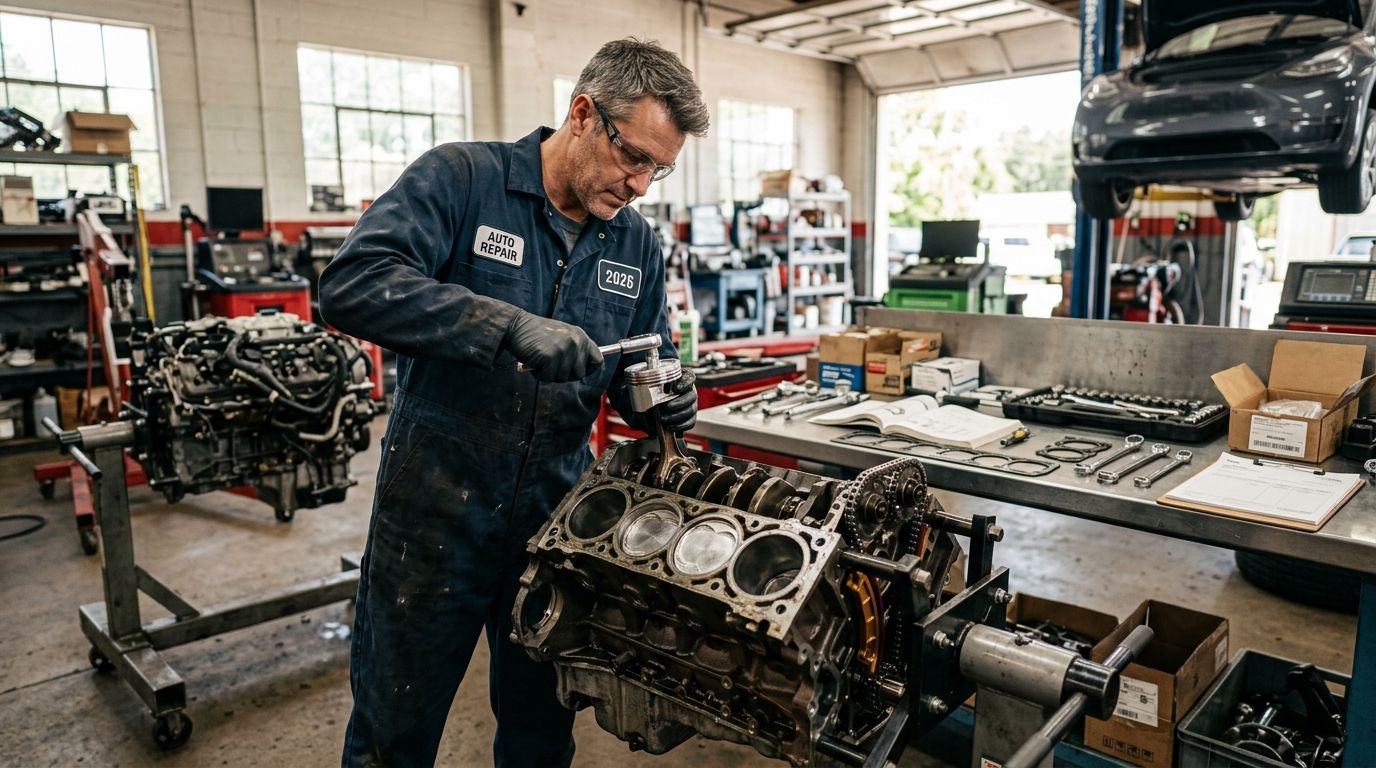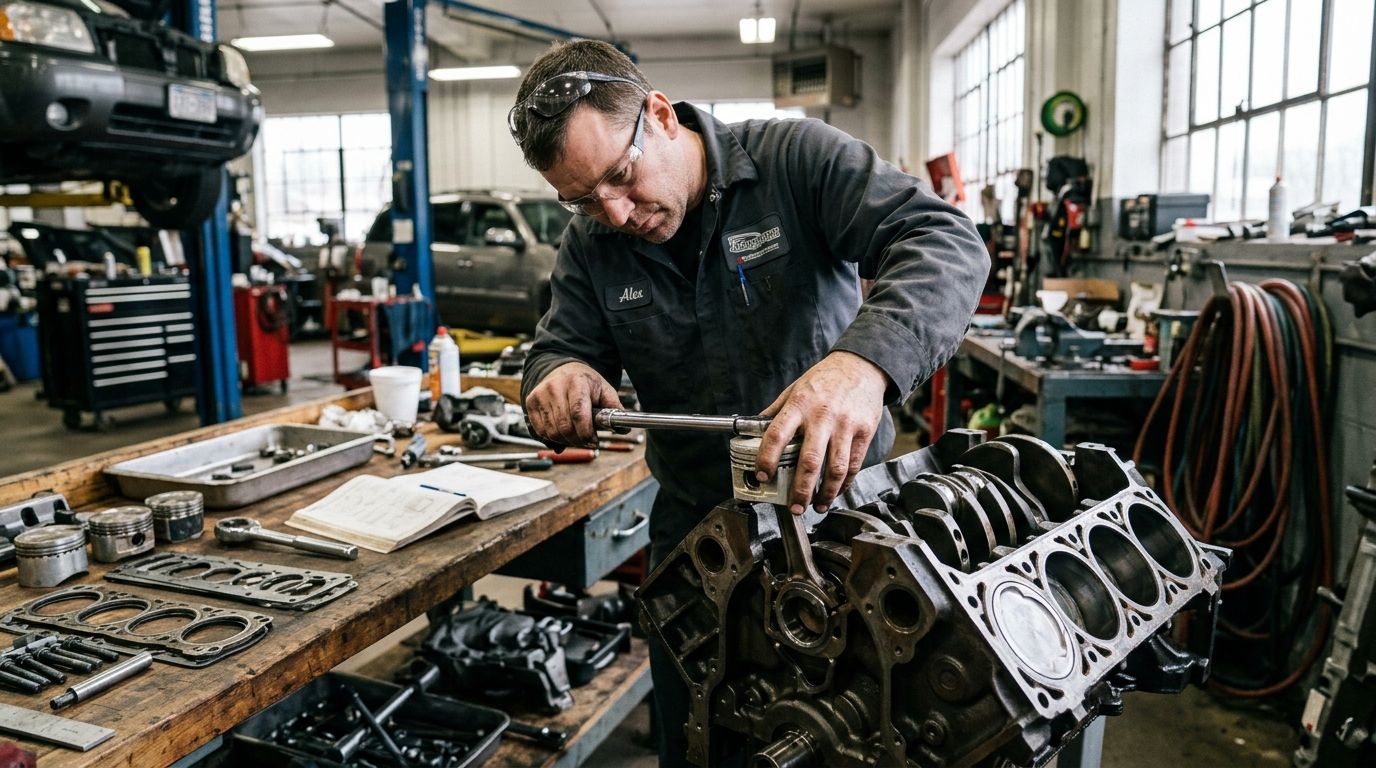
A professional engine rebuild typically takes 4 weeks on average in an Australian workshop in 2026, ranging from 1 week for a basic street rebuild using in-stock parts to 12 weeks or more for a custom stroker or forged performance build. That range only covers labour and machining time — parts lead time on forged pistons, connecting rods and billet crankshafts is the real variable that pushes a job from a fast turnaround into a multi-month wait.
- A basic street engine rebuild takes 1 to 2 weeks; a custom stroker or forged rebuild runs 6 to 12 weeks or longer in 2026.
- Machining, teardown and assembly labour is rarely the bottleneck — parts lead time on forged conrods, pistons and billet cranks usually is.
- Ordering long-lead components like SPOOL H-Beam conrods or a billet crankshaft before teardown finishes can cut weeks off total downtime.
- Race and motorsport-spec rebuilds with custom machining and dyno tuning commonly take 8 to 16 weeks from drop-off to completion.
Why this matters
Workshops quote engine rebuild time in weeks, but the number that actually matters is when the car goes back on the road, not when the block goes back together. A shop can knock out assembly labour on a stock-bore rebuild in a few days once parts are on the bench.
The wait almost always sits upstream of that: machine shop queues, gasket kit availability, and lead time on forged pistons, conrods or a billet crankshaft if the build steps outside stock replacement parts. Spool Imports supplies the internal components workshops are waiting on — forged pistons, H-Beam and X300 conrods, billet cranks, bearings and fasteners — so ordering the right parts early is the single biggest lever a builder has over total rebuild time in 2026.
How long does an engine rebuild take?
A full rebuild moves through five stages, and each one adds its own chunk of time. The table below breaks down where the weeks actually go on a typical rebuild.
| Stage | Typical time | Notes |
|---|---|---|
| Teardown and inspection | 1-3 days | Includes measuring bores, crank journals and deck height |
| Machining (bore, hone, deck) | 3-10 days | Depends on machine shop backlog, not the engine itself |
| Parts sourcing | 1 day to 10+ weeks | The biggest variable; in-stock parts vs backordered forged components |
| Assembly | 2-5 days | Piston-to-bore, ring gap and bearing clearance checks add time here |
| Tuning and running-in | 1-2 days plus dyno booking | Applies mainly to built engines running a standalone ECU |
The machining and assembly rows barely move between a stock rebuild and a stroker build. Parts sourcing is where the timeline splits.
Basic street rebuild: 1 to 2 weeks
A stock-displacement rebuild using OEM-spec pistons, standard bearings and a factory-style gasket kit is the fastest job on the bench. If the block checks out within tolerance and parts are held in stock, a workshop can turn the job around in 1 to 2 weeks including machining. Best for: daily-driven engines going back to factory spec with no power increase planned. Skip this path if the build is heading toward forced induction or a power target above factory output — the bottom end usually needs upgrading anyway.
Stroker or forged performance rebuild: 6 to 12 weeks
Once the build includes a stroker kit, forged pistons and H-Beam or I-Beam conrods, the timeline stretches out because these components are manufactured or imported to order rather than sitting on a generic parts shelf. A billet crankshaft in particular can carry a longer lead time than a cast or forged factory-spec crank, since it is machined from solid stock to the specific stroke and journal sizes the build needs. Best for: turbocharged street builds and daily-strip cars chasing four-digit power without a full motorsport spec. Order the long-lead items — pistons, conrods, crank — as soon as the block is confirmed for machining, not after.
Full race or motorsport-spec rebuild: 8 to 16 weeks
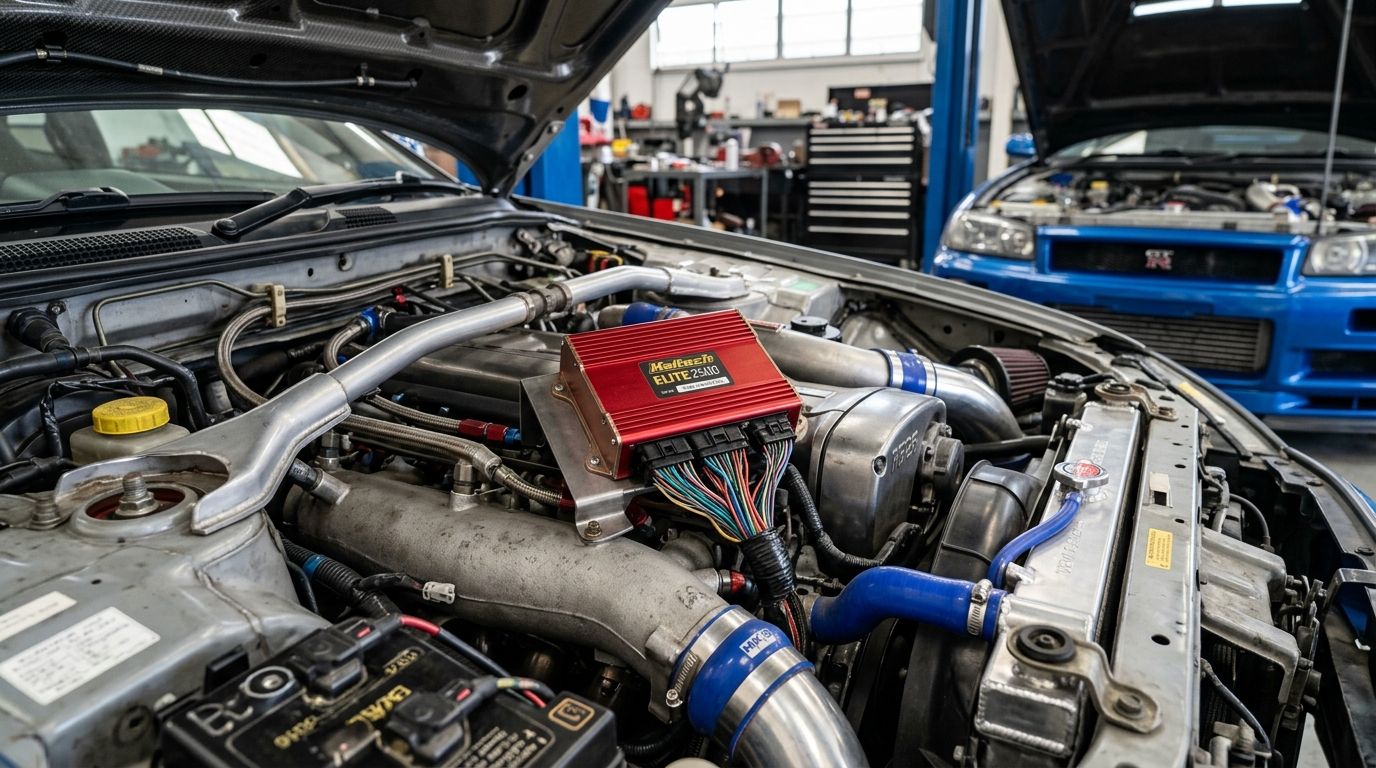
Race-spec builds add dry-sump systems, custom valvetrain, standalone ECU wiring and dyno tuning on top of the forged bottom end, and every one of those systems has its own supplier lead time. A workshop running a Haltech ECU install alongside the mechanical build often schedules tuning as a separate final stage, which adds days to weeks depending on dyno availability. Best for: dedicated race engines and high-boost combinations where reliability under sustained load matters more than turnaround speed. This is not the build to rush — a rebuild that skips clearance checks to hit a deadline usually comes back apart.
Why rebuild time varies
- Parts lead time on forged components — forged pistons, H-Beam conrods and billet crankshafts are made to spec rather than pulled off a generic shelf, and lead time varies by supplier and by how far the spec sits from a common combination.
- Machine shop backlog — boring, honing and decking are usually outsourced, and a busy machine shop can add a week or more regardless of how fast the engine builder works.
- Custom machining requirements — stroker kits often need block clearancing for rod-to-block or piston-to-block contact, which adds machining time a stock rebuild never needs.
- Fastener and gasket kit availability — ARP fasteners and multi-layer steel gasket kits are usually in stock, but custom bolt lengths for non-standard deck heights can add a short wait.
- Trade workshop scheduling — a rebuild competing with other jobs on the same hoist takes longer in elapsed weeks even if the actual labour hours are low.
- ECU tuning and dyno bookings — any rebuild running a standalone ECU needs a tuning slot booked separately, and dyno availability can add days on top of the mechanical build.
How long does it take to machine an engine block?
Machining a block for boring, honing and decking typically takes 3 to 10 days once it is on the machine shop's schedule, not counting the wait to get a slot booked. Backlog at the machine shop, not the machining work itself, is usually what stretches this stage out in 2026 — a shop running full capacity can push a straightforward job out by a week or two before it even starts.
Does a stroker kit take longer to rebuild than a stock-displacement engine?
Yes, a stroker kit rebuild takes longer than a stock-displacement rebuild, mainly because the forged pistons, conrods and crankshaft in a stroker combination are ordered to the specific stroke and bore rather than picked from generic stock. Block clearancing for the longer stroke and larger rotating mass also adds machining time that a stock rebuild skips entirely.
Can you speed up an engine rebuild?
Yes, the fastest way to speed up an engine rebuild is to order long-lead parts — forged pistons, conrods and a billet crankshaft if the build needs one — as soon as the block is confirmed for machining, instead of waiting for teardown to fully finish first. Running parts sourcing in parallel with machining, rather than in sequence, is usually where builders claw back the most time.
Get the parts list sorted before teardown finishes
Check compatible pistons, conrods and crankshafts for your platform.
FAQ
How long does an engine rebuild take on average in 2026?
An engine rebuild takes about 4 weeks on average in 2026, ranging from 1 to 2 weeks for a basic street rebuild to 12 weeks or more for a stroker or forged build. The actual assembly labour is usually only a few days; parts lead time is what stretches the total.
How long does it take to rebuild a turbo engine?
A turbo engine rebuild takes 6 to 12 weeks when it includes forged pistons, upgraded conrods and a standalone ECU tune, longer than a naturally aspirated stock rebuild. Add extra time if the turbo itself needs sizing or replacement alongside the internals.
Why is my engine rebuild taking longer than quoted?
Most rebuilds run past the original quote because of parts backorders on forged pistons, conrods or a billet crankshaft, or because the machine shop has a longer queue than expected. Ask the workshop specifically which stage is holding the job up rather than accepting a general delay.
Does a full engine rebuild include machining?
Yes, a full engine rebuild includes machining the block for boring, honing and decking, which typically adds 3 to 10 days depending on machine shop backlog. This is separate from the assembly labour and usually happens before parts are fitted.
How long does an engine rebuild take with a Haltech ECU install?
Adding a Haltech ECU install and tune to an engine rebuild typically adds several days to a couple of weeks on top of the mechanical build, mostly waiting on wiring completion and a dyno tuning slot. Schedule the tuning appointment as soon as the mechanical timeline is confirmed to avoid it becoming the final bottleneck.
Can a workshop rebuild an engine in one week?
A workshop can rebuild an engine in about 1 week only when it is a basic stock-displacement rebuild using parts held in stock and the block passes machining checks without complications. Anything involving forged internals, a stroker kit or custom machining will not fit into a one-week window.
What takes longest in an engine rebuild?
Parts sourcing takes longest in most engine rebuilds, particularly lead time on forged pistons, conrods and billet crankshafts built to a specific spec rather than held as generic stock. Machining and assembly labour combined are usually shorter than the wait for these components to arrive.
One last thing
The stage builders most often get wrong isn't the machining or the assembly — it's the order they schedule things in. Waiting until the block comes back from the machine shop before ordering forged pistons, conrods or a billet crankshaft turns a 6-week rebuild into a 10-week one for no mechanical reason. Order the long-lead components the moment the block is confirmed for machining and they land around the same time the block does.