Drag radial sizing splits into three wheel diameters — 15, 17 and 18 inch — and the overall diameter you end up with depends far more on section width and aspect ratio than on the wheel size stamped on the barrel. This chart calculates overall diameter for the common drag radial sizes fitted in Australia so you can compare rollout, gearing and clearance before you order rubber.
- The drag radial tyre size chart spans 25.4 in to 29.9 in overall diameter across 15, 17 and 18-inch wheels in 2026.
- 315/60R15 is the tallest common fitment at 29.9 in; 315/30R18 is the shortest at 25.4 in despite the bigger wheel.
- Moving from 275/60R15 to 315/60R15 adds roughly 1.9 in of overall diameter and changes rollout accordingly.
- Low-profile 17 and 18-inch drag radials suit big-brake, big-power builds where guard clearance is tight.
Why this matters
Overall diameter drives three things on a street and strip car: rollout at launch, speedo/wheel-speed accuracy, and how much air gap you've got left inside the guard once you're running a bigger tub or tyre. Get the diameter wrong and your diff gearing works against you, or the tyre rubs on the inner guard the first time it grows under load.
If you're building toward a dedicated drag radial for a street and strip build, the wheel diameter you already run — or plan to run — narrows your section width and aspect ratio choices before you even look at compound. That's the starting point for this chart.
Drag radial tyre size chart by wheel diameter
The table below lists the section widths commonly run at each wheel diameter and the overall diameter calculated from the tyre's own size designation (aspect ratio times section width, doubled, plus wheel diameter). These are the sizes that show up across drag radial ranges in Australia in 2026, from small-tyre index classes on 15s through to Pro-style radial builds on 18s.
| Wheel diameter | Common section widths | Calculated overall diameter | Typical use |
|---|---|---|---|
| 15 in | 275/60R15, 315/60R15 | 28.0 – 29.9 in | Small-tyre and index radial classes, budget street-strip builds |
| 17 in | 275/40R17, 315/40R17, 335/40R17 | 25.7 – 27.6 in | Pro-radial style builds, better big-brake clearance |
| 18 in | 305/35R18, 315/30R18, 345/35R18 | 25.4 – 27.5 in | Big-power builds running factory-style 18-inch wheels |
| All (15–18 in) | 275mm – 345mm | 25.4 – 29.9 in | Full drag radial size range currently common in Australia |
315/60R15 leads the whole chart at 29.9 in overall diameter; 315/30R18 trails at 25.4 in — a shorter tyre than any 15-inch fitment, despite sitting on the biggest wheel in the table. That's the low-profile sidewall doing the work, not the wheel diameter.
Inside each wheel size the spread runs close to 2 in top to bottom: 1.9 in on both the 15s and 17s, 2.1 in on the 18s. That's enough to shift your diff's effective gearing by a noticeable margin if you swap section width without checking OD first.
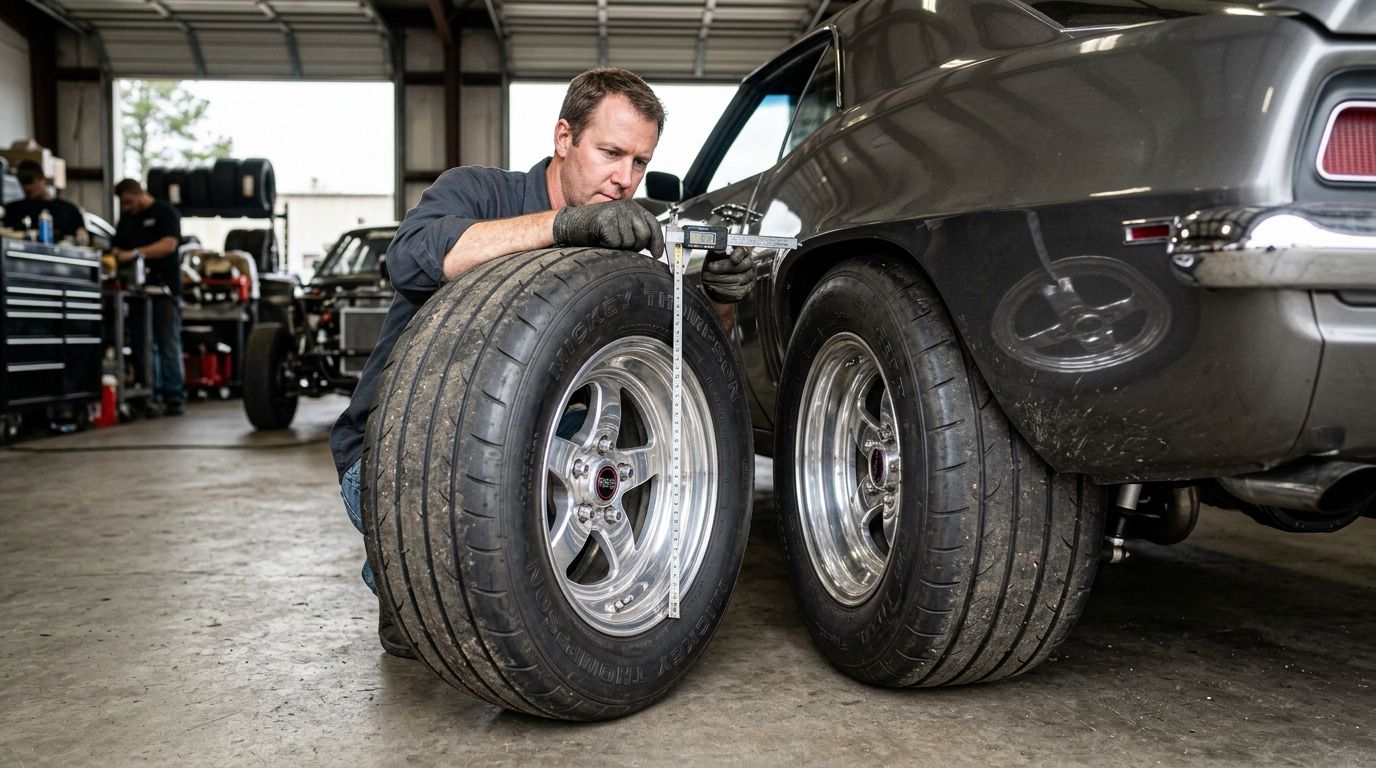
Overall diameters here are calculated directly from the tyre's size designation using the standard sidewall-height formula, not measured off a mounted tyre. Manufacturer construction, tyre pressure and mould tolerance all shift the real-world number by a small amount either side of the calculated figure. The one thing this chart can't tell you is growth under launch RPM — drag radials stretch under centrifugal load at the moment of the hit, so the static calculated diameter always understates what the tyre actually measures the instant it's spinning at speed.
How to use these benchmarks
- Match new tyre OD to your current gearing before you order. Going from 275/60R15 (28.0 in) to 315/60R15 (29.9 in) changes rollout by roughly 7%, which moves your effective diff ratio and your shift points on a manual box.
- Chase a bigger section width without going taller by moving to a lower-profile wheel. A 315/30R18 (25.4 in) clears a tight guard far more easily than a 315/60R15 (29.9 in) at the same section width.
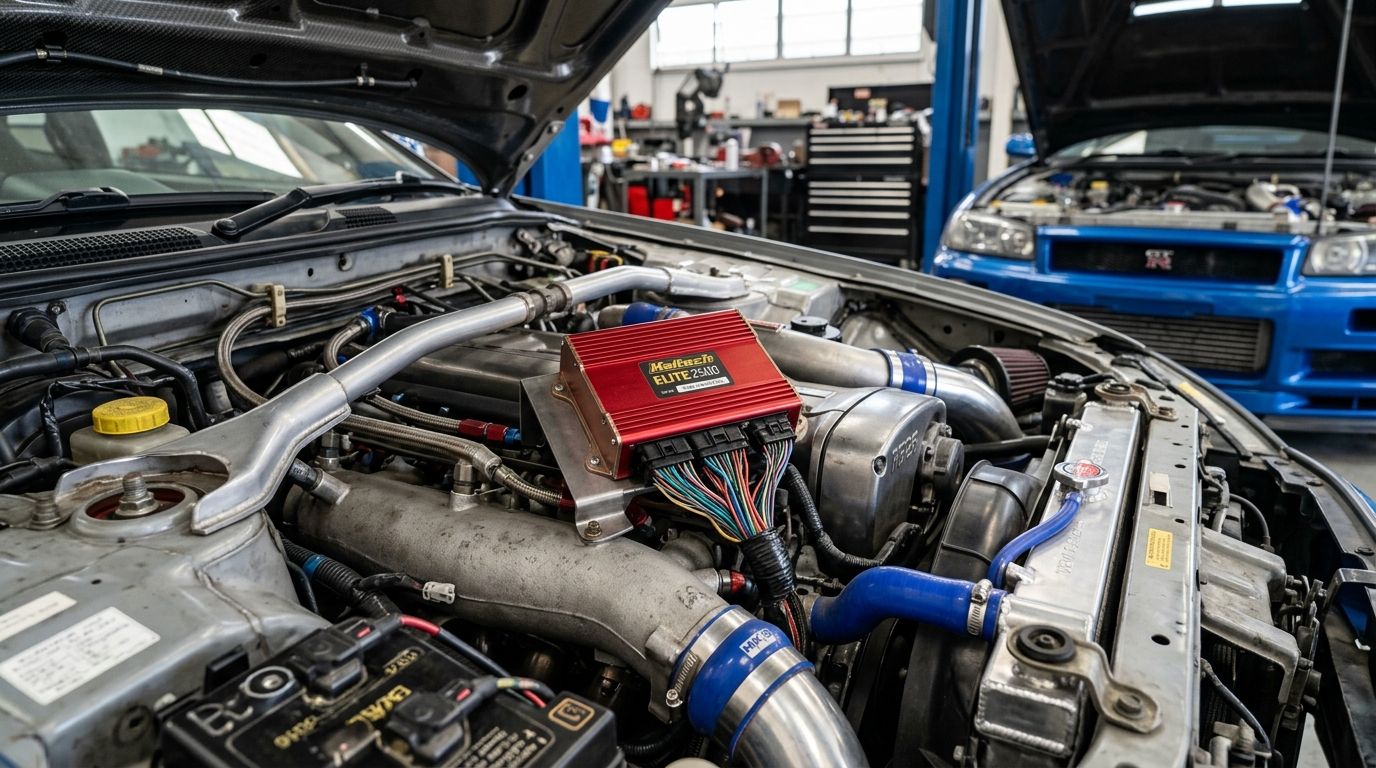
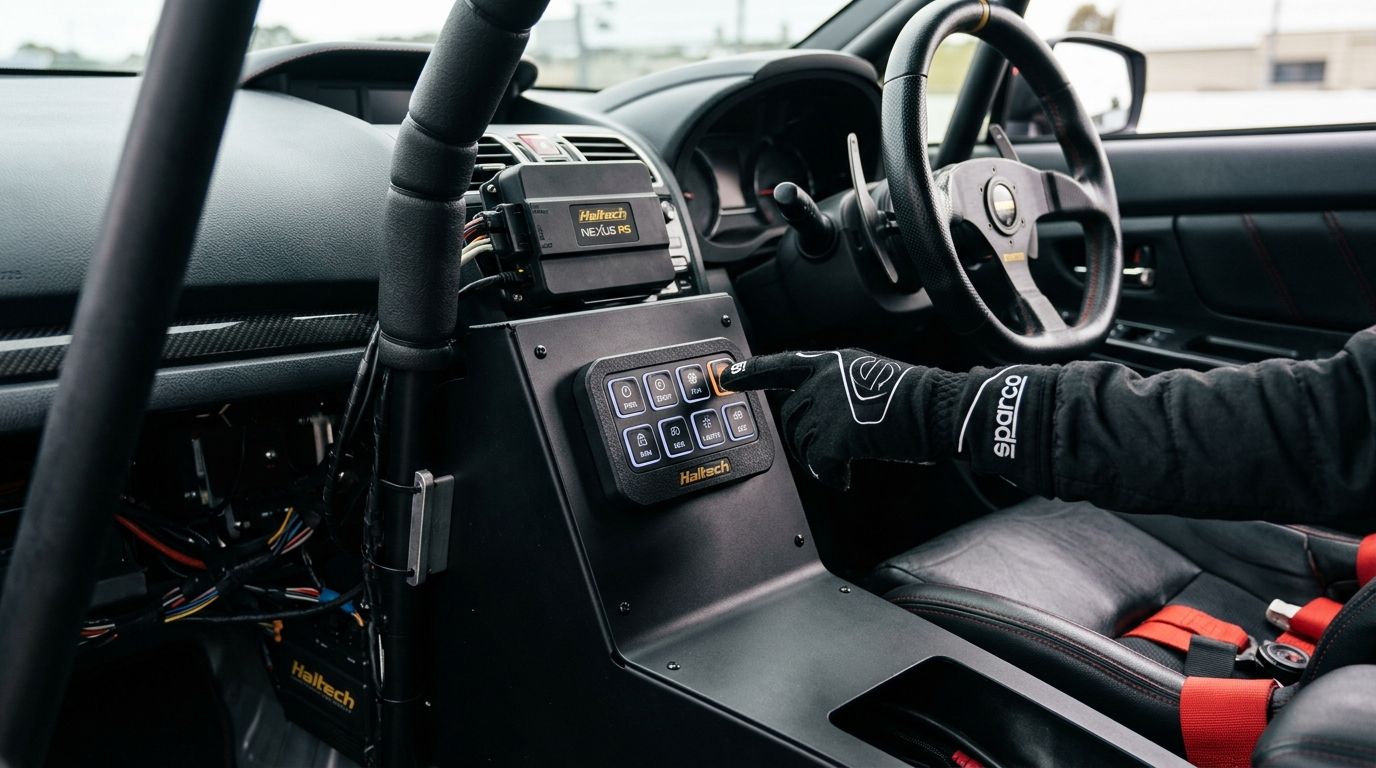
- Confirm any Haltech wheel-speed input against your actual fitted OD, not the nominal spec, particularly if the ECU is running traction control or a 2-step off wheel speed — see the Haltech ECU specs benchmark by model for what each model expects on that input.
- Check guard and chassis clearance on the actual wheel and offset you're running, not just the tyre size — a wheel brand for a Commodore muscle car build with the wrong offset will eat clearance a size chart can't show you.
Section width, aspect ratio and traction
Section width and aspect ratio don't move independently once you've picked a wheel diameter — a 15-inch wheel only comes in 60-series drag radials in the sizes covered here, while 17 and 18-inch wheels run 30 to 40-series. That's why a 335/40R17 and a 345/35R18 land close together in overall diameter (27.6 in vs 27.5 in) despite different wheel sizes: the aspect ratio is doing the compensating.
For a big-power six-cylinder or LS-based build running a turbo brand for a big power six-cylinder swap, the wider section widths at 315mm and 335mm put more rubber on the ground for launch, but they also load the diff and axle harder. Match tyre choice to the power level you're actually running, not the biggest size that physically fits.
Fitment checklist before you order
- Confirm inner guard clearance at full compression, not static ride height.
- Check the wheel's backspacing against the tyre's actual section width, which typically runs wider than the size designation on a drag radial.
- Re-check diff gearing and speedo calibration any time overall diameter changes by more than half an inch.
- Confirm your ECU's wheel-speed input is scaled to the new OD before the first pass, not just the old tyre's number.
FAQ
What is the standard drag radial tyre size chart for 2026?
It splits by wheel diameter: 15-inch drag radials run 28.0-29.9 in overall diameter, 17-inch run 25.7-27.6 in, and 18-inch run 25.4-27.5 in, based on calculated size from each tyre's own designation.
What's the tallest drag radial you can run on a 15-inch wheel?
315/60R15 calculates out at 29.9 in overall diameter, the tallest common size in this chart across any wheel diameter.
Does moving to a 17 or 18-inch wheel change your drag radial's overall diameter?
Yes, usually down. Most 17 and 18-inch drag radials run 25.4-27.6 in overall diameter, shorter than the 28.0-29.9 in typical of 15-inch fitments, because the lower-profile sidewalls compensate for the bigger wheel.
How much rollout difference is there between 275/60R15 and 315/60R15?
Roughly 1.9 in of overall diameter, about a 7% difference in rollout, which shifts your effective diff gearing and shift points.
Do drag radials grow in diameter under load?
Yes. Radial construction stretches under centrifugal load at launch RPM, so the tyre's actual diameter at the hit is taller than the static calculated overall diameter used in size charts.
What section width suits a street and strip build?
It depends on power level and wheel diameter available — narrower 275mm sections suit lighter street cars with moderate power, while 315mm and up suit higher-horsepower builds that need more contact patch at launch.
Does tyre diameter affect Haltech wheel-speed calibration?
Yes. Wheel-speed inputs used for traction control or 2-step need to be scaled to the tyre's actual fitted overall diameter, not the nominal size, or the ECU reads speed incorrectly.
Is a 315/30R18 shorter than a 275/60R15?
Yes. A 315/30R18 calculates to 25.4 in overall diameter, shorter than a 275/60R15 at 28.0 in, despite sitting on a wheel three inches bigger in diameter.
One last thing
The number that trips builders up most isn't in any size chart: a drag radial's static calculated diameter and its diameter at 6,000 RPM under load aren't the same tyre. Budget for growth when you're setting guard clearance and gearing, not just the number stamped on the sidewall.