ARP fasteners for engine reconditioners are head studs, rod bolts, main studs and accessory bolts machined from ARP2000, ARP8740 or L19 stock, torqued using the stretch method rather than a single fixed torque number. Trade workshops running multiple rebuilds a week use them to lock in one fastener spec per platform instead of guessing at factory bolt torque on every job.
- ARP fasteners for engine reconditioners run from ARP8740 (190,000 psi) to ARP2000 (200,000 psi) tensile rating depending on load.
- ARP2000 suits boosted and high-rpm rebuilds; ARP8740 chromoly covers standard performance and daily-driven work.
- Trade workshops should standardise stretch-method torque specs per platform instead of factory bolt-torque figures.
- Spool Imports stocks ARP fastener kits and runs trade accounts for reconditioners handling volume rebuilds in 2026.
- Best for: workshops rebuilding multiple platforms per week that need consistent, warranty-safe fastener specs.
Why ARP fasteners matter for trade engine reconditioners
A reconditioner isn't building one engine and moving on. The same shop might torque a Barra head this week, an RB30 main cap next week and a set of LS rod bolts the week after, and every one of those jobs carries a warranty tail. ARP fasteners for a high horsepower LS engine build sets out the grade selection for LS platforms specifically, and the same logic applies across every platform a reconditioning shop touches.
Comebacks on fastener failure are expensive in ways a comeback on a gasket isn't — a stretched or under-torqued head stud can take out a bore, a cam, or a customer relationship in one hit. Spool Imports runs trade accounts and phone support from 8am to 2pm AET specifically because reconditioners need fastener specs confirmed before the engine goes back together, not after.
Audit fastener stock before every rebuild goes back together
Most fastener failures in a reconditioning shop trace back to stock mix-ups, not bad parts. Before a rebuild leaves the bench, check what's actually in the box against what the job needs.
- Confirm bolt length and thread pitch against the specific block casting, not just the engine family
- Check whether the kit is single-use or rated for reuse under ARP's own guidance
- Match the lubricant supplied with the kit — ARP fasteners are rated using ARP's specified assembly lube, not engine oil or moly paste from another brand
- Separate head stud, main stud and rod bolt stock by platform on the shelf, not by bin size
- Log which stretch or torque figure applies to that exact part number before it's fitted
Match fastener grade to the load the engine will actually see
Grade selection is where most of the comeback risk gets built in or engineered out. A reconditioner running a mixed workload — daily drivers through to boosted track cars — needs more than one grade on the shelf.
- ARP8740 chromoly (190,000 psi tensile) covers naturally aspirated and mild street performance rebuilds
- ARP2000 (200,000 psi tensile) is the standard step-up for boosted, high-rpm and stroker combinations
- L19 and CA625+ grades suit sustained high-cylinder-pressure applications where 8740 and 2000 margins get thin
- Head stud diameter and thread engagement matter as much as grade — a bigger stud in the wrong grade doesn't fix clamping load
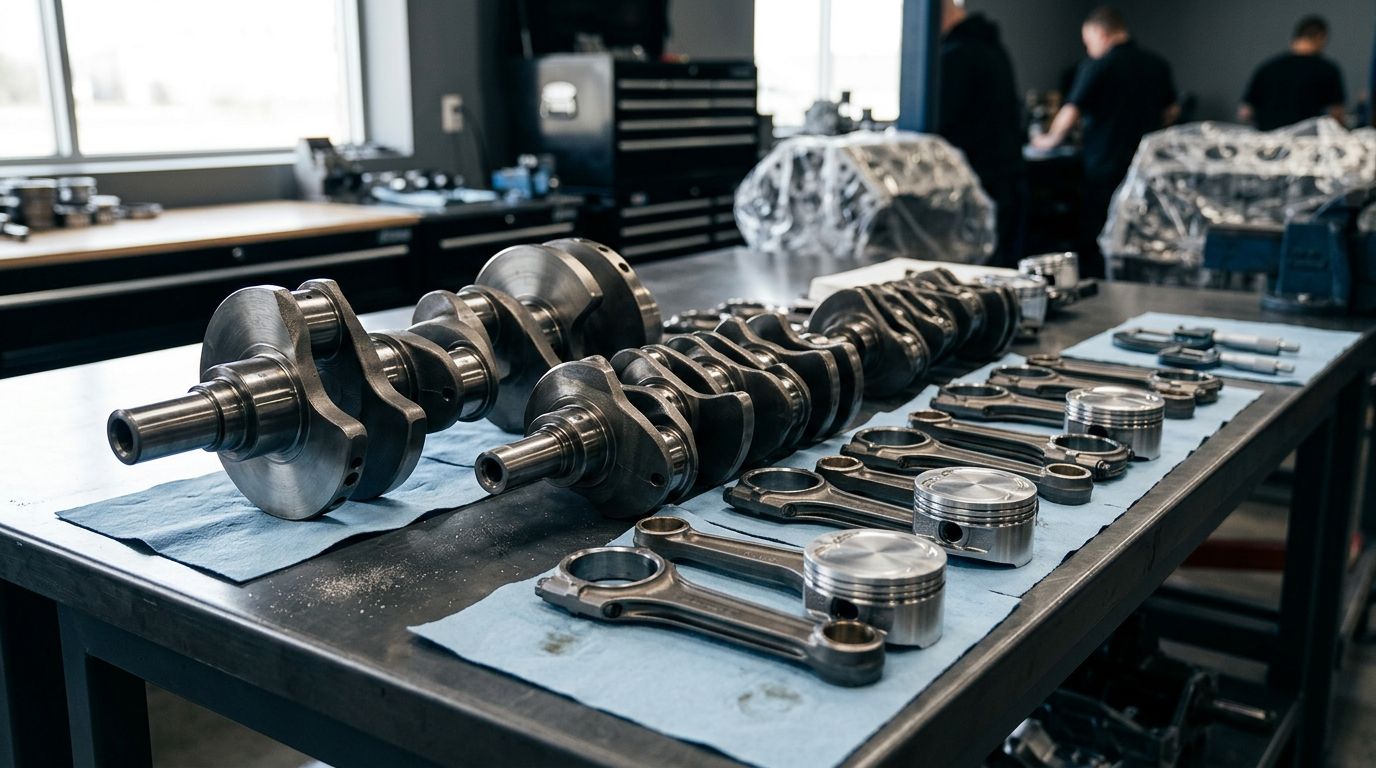
- Cross-check crank and rod selection against fastener grade; a billet crankshaft build pushing higher cylinder pressure needs the fastener spec to match, not lag behind
Standardise head stud and main stud kits per platform family
A shop that rebuilds the same handful of platforms repeatedly — Barra, RB30, 1JZ, LS — gets far more value from standardising one head stud and main stud kit per platform than stocking whatever's cheapest per job.
- Pick one head stud spec per platform for the standard reconditioning tier, and a second spec for the boosted tier
- Keep main stud and cap fastener kits matched to whether the block is running a standard or aftermarket main cap
- Document the stretch figure for each kit against the platform, not against a generic factory manual number
- Review the spec annually against ARP's published data — updated kits do change bolt length and thread spec over time
Track reuse and replacement policy for every trade job
Trade reconditioning work carries warranty exposure that DIY builds don't, so reuse policy needs to be a shop standard, not a per-tech decision.
- Set a house rule on whether rod bolts get reused at all on trade jobs, separate from what's technically permitted
- Record fastener replacement on the job card so warranty claims can be traced back to what was actually fitted
- Flag any fastener that's been stretched past ARP's stated limit for scrapping, not re-torquing
- Keep a running log of kits used per engine so a comeback doesn't require guessing what grade was fitted
Stock rod bolts, main studs and accessory bolts by platform, not by size
Inventory built around bolt size instead of platform application is the fastest way to fit the wrong grade under time pressure.
- Group ARP kits on the shelf by platform (Barra, RB30, LS, 1JZ, RB25, EJ255) rather than by thread size alone
- Stock accessory bolts — flywheel, flexplate, harmonic balancer, water pump — alongside the main fastener kit for that platform
- Reference the platform's own build documentation, such as the 1000hp Barra engine combination guide, when deciding which fastener tier a customer's target power level actually needs
- Keep a small buffer of common wear items (rod bolts, head stud nuts) so a mid-job failure doesn't stall the bay
Torque and stretch every fastener to spec, every time
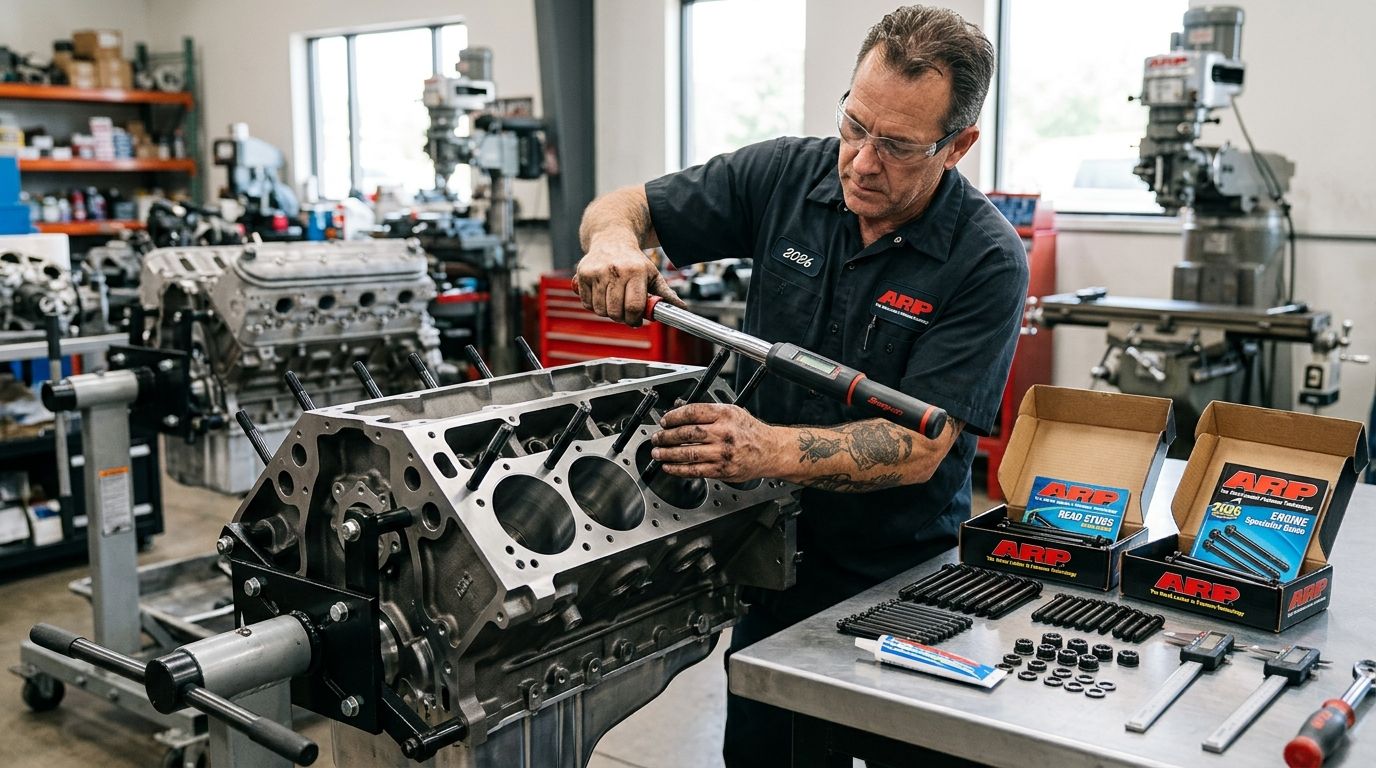
ARP fasteners are engineered around bolt stretch, and torque value alone is a proxy, not the actual spec. Skipping the stretch check to save five minutes is the single biggest fastener-related comeback risk in a reconditioning shop.
- Use a bolt stretch gauge on rod bolts and main studs where ARP specifies a stretch figure
- Apply ARP's specified assembly lubricant consistently — swapping lubricants changes the torque-to-clamp relationship
- Torque in the sequence and stage pattern specified for that fastener, not the factory service manual sequence
- Re-check stretch after the first heat cycle on high-output builds before the engine goes back to the customer
When bearing clearance and fastener stretch both need checking on the same rebuild, cross-reference against the shop's own racing engine bearing clearance data — bearing crush and fastener clamp load are set by the same bolt.
Document fastener specs per job for warranty and comeback protection
A fastener spec that only exists in a technician's memory doesn't protect the shop on a comeback six months later.
- Record grade, torque/stretch figure and lubricant used on the job card for every fastener set fitted
- Photograph stretch gauge readings on high-value jobs as part of the build file
- Keep ARP's published spec sheet for each kit on file, referenced against the job card
- Note any deviation from standard spec (customer-supplied parts, non-standard combinations) explicitly
Confirm ARP fastener specs before you rebuild
Trade accounts and phone support (8am-2pm AET) for engine reconditioners.
Comparing ARP fastener grades for reconditioning work
| Grade | Tensile rating | Best for | Key limitation |
|---|---|---|---|
| ARP8740 chromoly | 190,000 psi | Standard street and mild performance rebuilds | Margin gets thin under sustained boost or high rpm |
| ARP2000 | 200,000 psi | Boosted, high-rpm and stroker combinations | Requires stretch-method torque, not a simple spec-sheet number |
| L19 / CA625+ | Highest tier in the ARP range | Sustained high cylinder pressure, competition use | Cost and availability limit it to specific high-load jobs |
| Factory OEM bolts | Varies by manufacturer | Unmodified, stock-power rebuilds only | Not rated for repeated high-clamp reconditioning work |
Common mistakes trade reconditioners make with ARP fasteners
- Torquing to the factory service manual figure instead of the ARP spec sheet — factory numbers assume factory bolts, not ARP2000 or L19 stock
- Reusing rod bolts across multiple trade jobs without a house policy — reuse decisions need to be documented, not left to individual technicians
- Mixing lubricants between kits — a moly lube from one kit used on another bolt changes the torque-to-clamp relationship
- Skipping the stretch gauge on high-output rebuilds to save time — torque value alone doesn't confirm clamp load on ARP2000 or L19 fasteners
- Stocking fasteners by bolt size instead of by platform — the fastest way to fit the wrong grade under time pressure on a busy bench
FAQ
What's the best ARP fastener grade for a high-horsepower reconditioning job?
ARP2000, rated to 200,000 psi tensile, is the standard step-up for boosted and high-rpm rebuilds in 2026. Naturally aspirated or mild street rebuilds are generally covered by ARP8740 chromoly at 190,000 psi.
Is ARP2000 better than ARP8740 for daily-driven rebuilds?
ARP8740 is usually the better fit for daily-driven, unmodified or mildly modified engines because it covers that load range without the extra cost of ARP2000. ARP2000 earns its place once boost, rpm or cylinder pressure push past what 8740's margin comfortably handles.
How much do ARP fasteners for engine reconditioners cost?
Pricing varies by platform, kit type and grade, so check current listings for the specific kit a job needs. Trade accounts through Spool Imports give reconditioners a consistent way to price fastener kits across repeat platform work.
Can ARP rod bolts be reused after a rebuild?
Reuse depends on the specific kit and ARP's own guidance for that part number, and trade shops should set a house policy rather than deciding per job. Any bolt stretched past its stated limit should be scrapped, not re-torqued.
What torque method do ARP fasteners use?
ARP fasteners are engineered around the stretch method, where bolt stretch measured with a gauge confirms clamp load rather than torque value alone. Torque figures on the spec sheet are a reference point, not a substitute for checking stretch on rod bolts and main studs.
Do ARP head studs need a different torque spec than factory head bolts?
Yes, ARP head studs use their own stage sequence and torque or stretch figure specific to the stud grade, not the factory service manual sequence. Applying factory torque numbers to ARP2000 or L19 studs risks under-clamping the head.
What lubricant should be used when torquing ARP fasteners?
Use the assembly lubricant specified for that ARP kit, since torque-to-clamp relationships are calibrated against ARP's own lube, not generic engine oil or moly paste. Swapping lubricants between kits changes the actual clamp load at a given torque reading.
One last thing
The fastener grade printed on the box matters less than whether the stretch gauge got used — a shop running ARP2000 studs but torquing to a fixed number off an old service manual is getting less clamp reliability than a shop running ARP8740 correctly stretch-checked. Fix the method before upgrading the grade.