Professional engine builders sourcing engine parts need forged components, verified tolerances and supply that doesn't run out mid-build, not another catalogue to browse. A workshop turning over multiple rebuilds a month carries different risk than a single enthusiast buying parts for one engine: a bearing clearance mistake or a mismatched fastener spec becomes a comeback, a warranty claim and a reputation problem, not just a blown weekend.
- Engine parts for professional engine builders means forged, dimensionally verified components with trade-level supply consistency.
- SPOOL H-Beam and X300 300M I-Beam conrods suit repeat high-horsepower rebuilds where comebacks aren't an option.
- Bearing clearance and piston-to-wall clearance still decide reliability more than any single brand name.
- ARP fasteners specified by stretch, not torque alone, cut warranty comebacks on rod and head bolts.
- CP-Carrillo through Spool Imports gives workshops piston stock depth that single-build buyers rarely need.
Why this matters for professional engine builders
A workshop building four or five engines a month can't treat every job as a one-off parts pick. The same rod bolt spec, the same bearing clearance range and the same fastener brand need to work across a Barra build this week and an RB30 next week, or the build file becomes unmanageable.
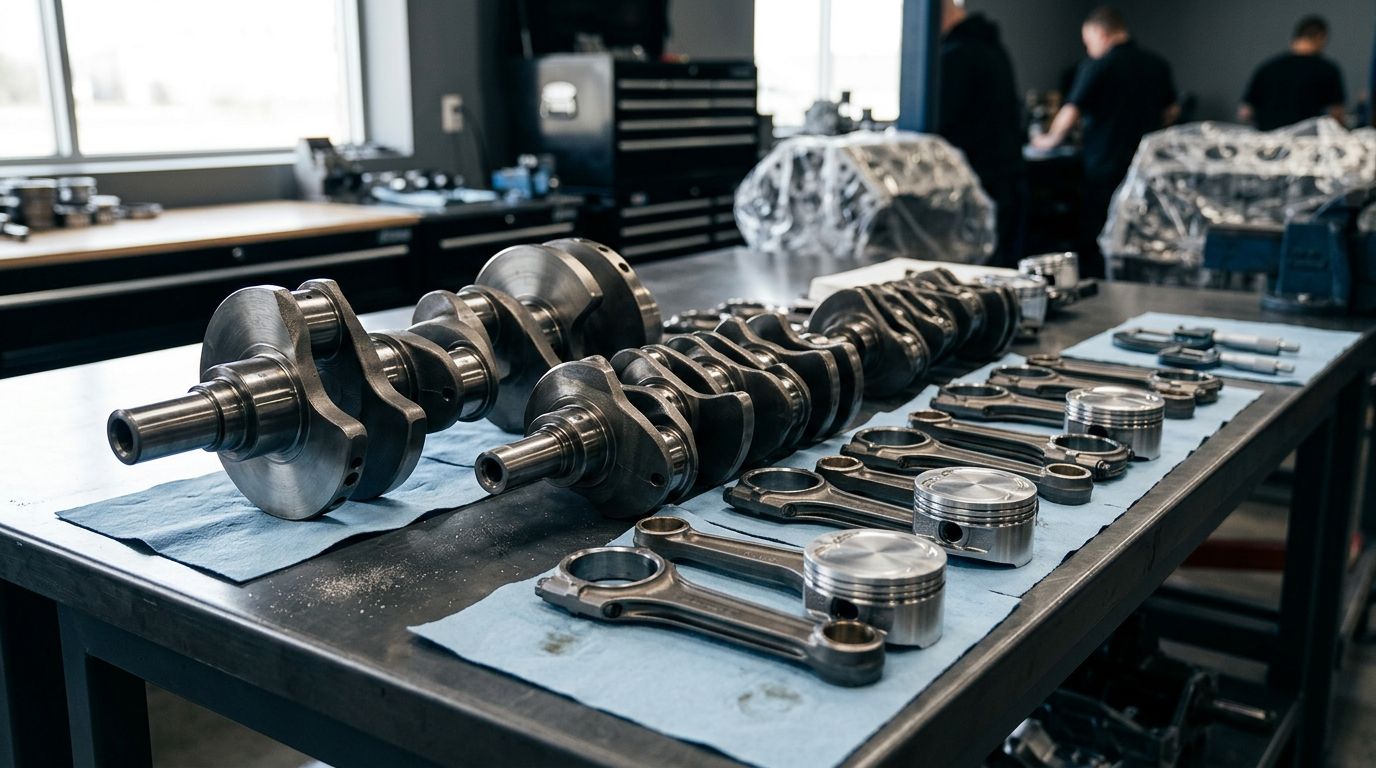
That consistency is why professional builders standardise on component families rather than shopping part-by-part. Getting the crankshaft selection wrong at the start compounds through every stage that follows, from bearing clearance to balancing, which is why a workshop should choose a billet crankshaft against the block and target power before any other rotating-assembly component is ordered.
Spool Imports supplies both sides of that equation: distributed brands like ARP, CP-Carrillo, ACL Race Series and Kelford Cams, and SPOOL's own forged H-Beam and X300 300M I-Beam connecting rods and billet cranks built for repeat high-output work. The parts have to hold tolerance the tenth time through the shop, not just the first.
Update your tolerance-verification process
Check fits before assembly, not after a knock shows up on the second start.
- Measure bearing running clearance with Plastigauge or a dial bore gauge before final assembly.
- Check piston-to-wall clearance against the piston manufacturer's spec sheet, not a generic "typical" figure.
- Confirm ring end gap for the actual bore size and expected boost or compression.
- Log deck height and check block flatness before ordering a head gasket kit.
- Cross-check crankshaft journal diameters against the bearing set before either sits on the shelf.
Standardise fastener specification across every build
Fastener failure is one of the more preventable comebacks in a professional shop, and it usually comes down to a shortcut on spec, not a bad part.
- Specify ARP fasteners for high-horsepower LS builds by stretch measurement, not torque wrench reading alone, since stretch accounts for friction and lubricant variance that torque alone misses.
- Keep a fastener log per build for warranty and comeback tracking.
- Re-use torque plates for head gasket and align-hone work on repeat platforms.
- Stock common fastener kits for the platforms the workshop runs most, rather than ordering per job.
- Link fastener choice to the connecting rod and crankshaft brand already specified, since bolt stretch specs are set by the rod manufacturer.
Match the crankshaft and rotating assembly to the block and target power
The crankshaft sets the ceiling for everything else in the bottom end.
- Choose between a cast, forged or billet crankshaft based on target power and RPM ceiling, not budget alone.
- Confirm crank journal size, stroke and counterweight profile against the block and conrod length before ordering.
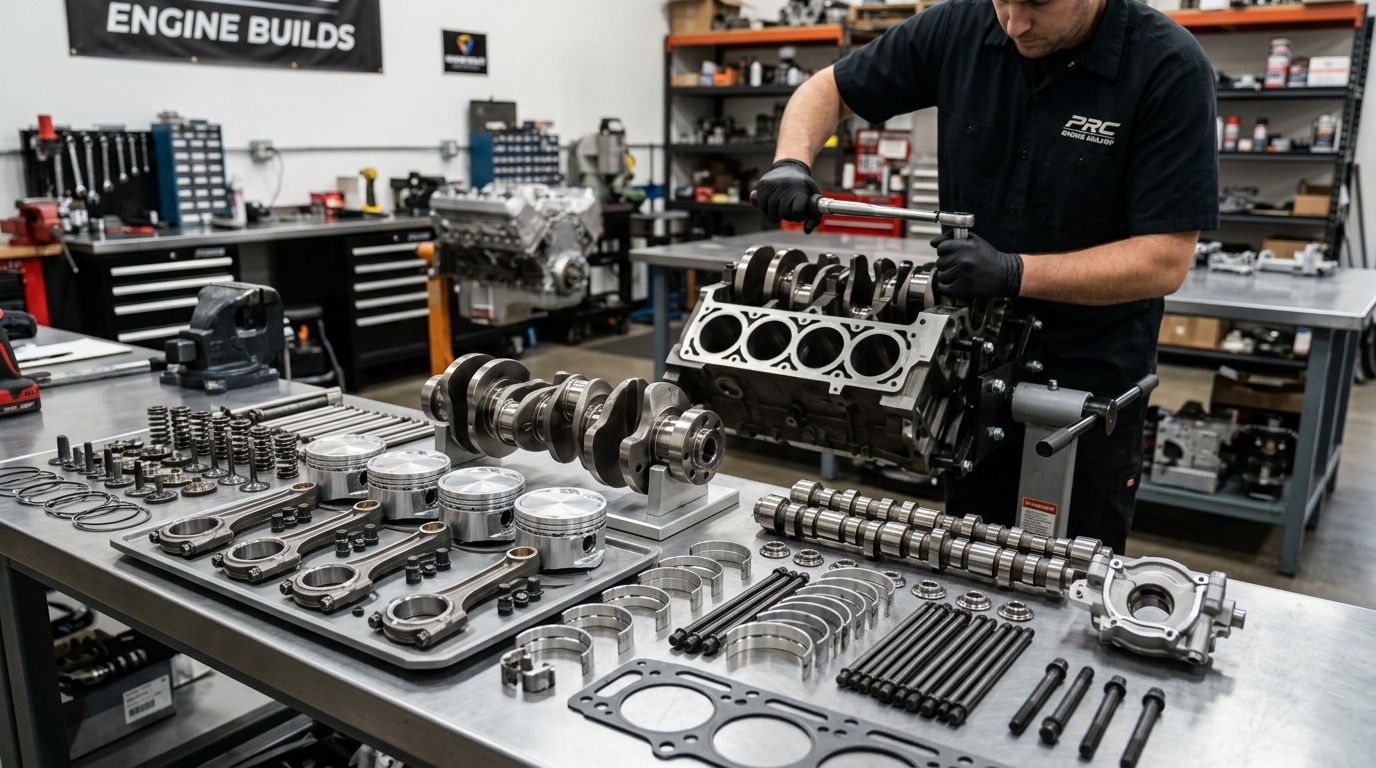
- Balance the full rotating assembly as a set: crank, rods, pistons, pins and bearings together.
- Check oil clearance at every main and rod journal against the bearing manufacturer's spec, not a single average figure.
- Flag any external balance requirement early, since it changes flywheel and balancer selection.
Build a bearing clearance and oil control checklist
Oil control problems show up as bearing failures months later, which makes them expensive to trace back.
- Set bearing clearance from the manufacturer's spec, typically running toward the wider end of the published range on turbocharged applications with higher oil temperatures.
- Check oil pump gear wear and clearance on platforms known for premature gear wear before it becomes a bearing problem.
- Confirm oil pickup depth and baffle clearance after any crank or rod change.
- Match bearing crush height to the housing bore, since incorrect crush kills oil film under load.
- Keep a spare bearing set on the shelf in the size the workshop's most common platform actually needs.
For detailed clearance numbers and selection criteria across bearing brands, see racing engine bearings for a high-revving build.
Specify camshaft and valvetrain to the intended rev range and boost
A camshaft swap is not a bolt-in exercise once spring pressure and clearance are involved.
- Set valve spring pressure to suit the camshaft's lift and the engine's redline, not a generic "upgraded" spring.
- Confirm retainer and locater compatibility before ordering springs separately from the cam.
- Check rocker geometry and pushrod length after any cam or head change.
- Match camshaft duration and overlap to the turbo's spool characteristics on forced-induction platforms.
- Verify valve-to-piston clearance on paper before the engine goes together, not after a bent valve.
Set up engine management and calibration before first start
Tuning problems traced back to parts selection cost more time than any other comeback category.
- Confirm injector sizing and fuel pump capacity against target power before the tune, not during it.
- Log base timing, knock thresholds and target air-fuel ratio for the specific combination.
- Keep wiring and sensor documentation with the build file for future diagnosis.
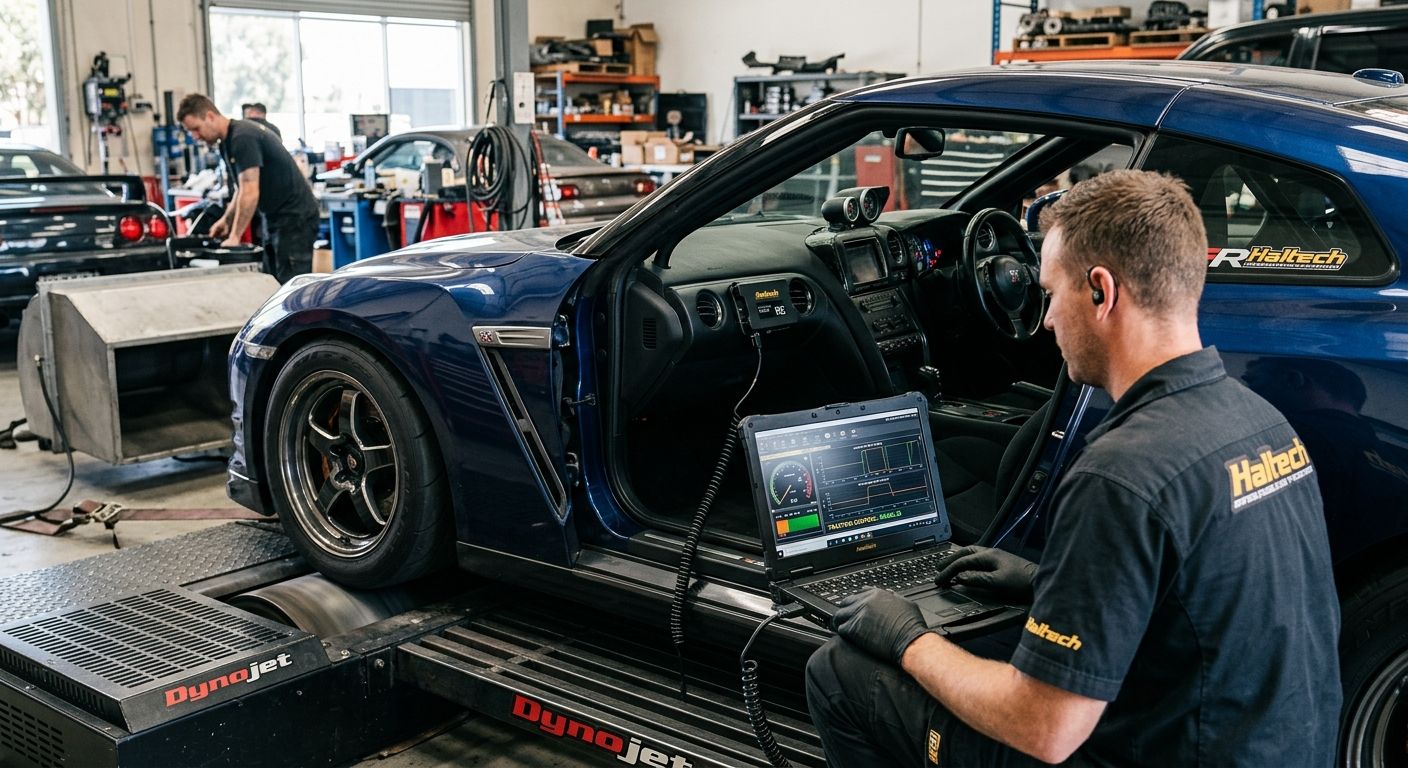
- Use a dyno or road tune to confirm the combination matches the parts specified, not the parts catalogue.
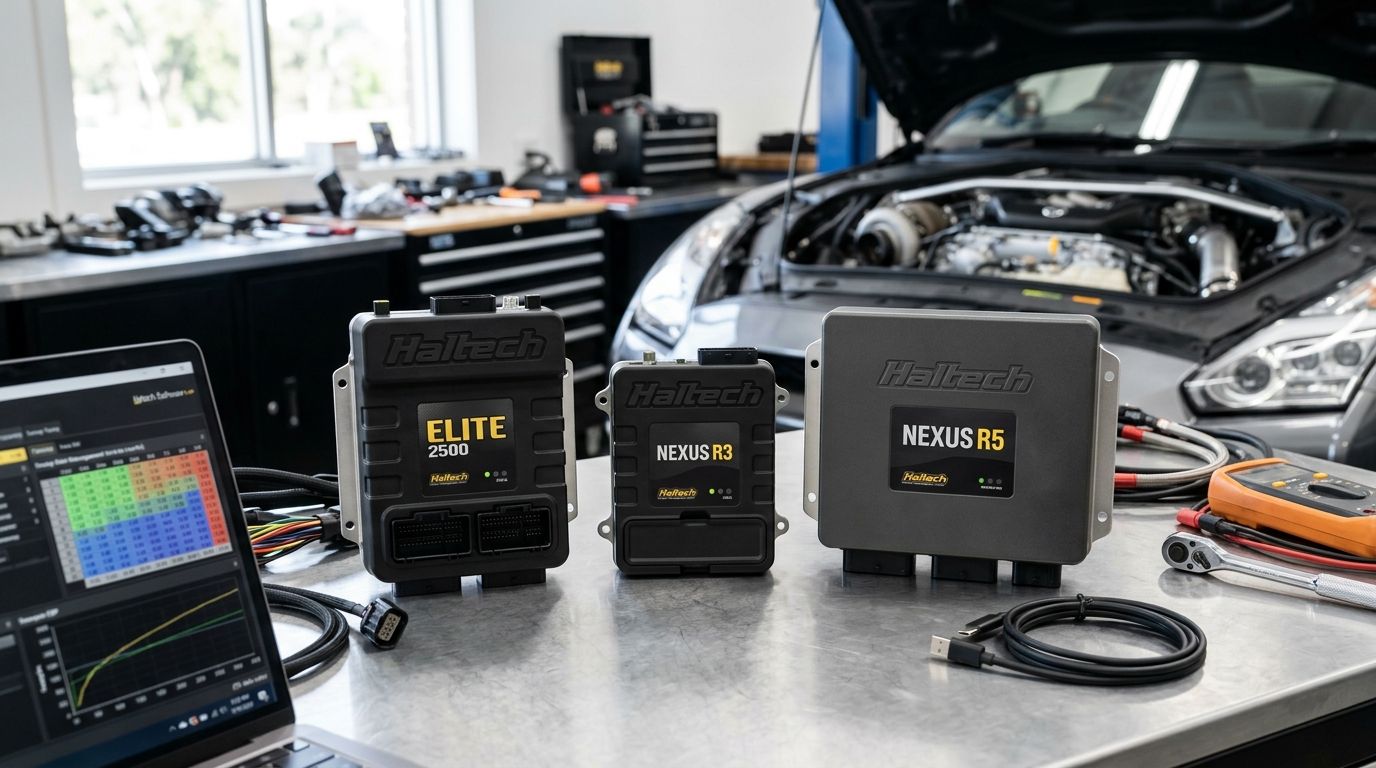
- Flag any aftermarket ECU limitation against the engine's factory wiring before quoting the job.
Get engine combination advice
Confirm target power, fuel type and platform before you order.
Track supply consistency and trade terms for repeat orders
A parts brand is only as good as the stock behind it when a shop has three engines on the bench at once.
- Confirm stock levels on core components before quoting a build timeline to a customer.
- Set up a trade account for repeat platforms to avoid per-order price and lead-time variation.
- Keep a shortlist of interchangeable part numbers across brands for when one line is backordered.
- Document which bearing, gasket and fastener brands the workshop has already validated on each platform.
- Review supplier technical support response times, not just catalogue depth, before committing to a brand.
Component tier comparison for professional builds
| Option | Best for | Key limitation |
|---|---|---|
| Cast or reconditioned OEM components | Warranty repairs and low-stress daily rebuilds | Doesn't hold clearance or tolerate boost above stock power levels |
| SPOOL forged H-Beam or X300 300M I-Beam conrods | Repeat high-horsepower turbo and naturally aspirated builds needing predictable bolt stretch | Higher upfront cost than reconditioned OEM rods |
| Billet crankshafts | Builds pushing beyond cast or forged crank RPM and torque limits | Longer lead time than off-the-shelf forged cranks |
| CP-Carrillo forged pistons | Workshops needing consistent piston specs across a high volume of builds | Ring and clearance spec must be matched per application, not interchangeable across brands |
| ARP fasteners | Any build where bolt failure isn't an acceptable risk | Stretch spec must be checked per kit, never assumed from torque alone |
Verdict: for a professional workshop building repeat high-output combinations in 2026, forged SPOOL conrods paired with a matched billet or forged crankshaft and ARP fasteners specified by stretch is the combination that holds up across multiple builds, not just one.
Common mistakes professional builders make
- Quoting a build off catalogue part numbers without checking current bearing or gasket stock, then blowing the promised timeline.
- Reusing old fastener torque figures across different rod or stud brands instead of checking each kit's stretch spec.
- Skipping a full rotating-assembly balance because the crank, rods and pistons "look standard" individually.
- Treating a camshaft swap as bolt-in without rechecking valve-to-piston clearance and spring pressure.
- Running one supplier for every component instead of confirming who actually holds stock on the parts breaking most often.
FAQ
What's the difference between engine parts for professional engine builders and parts for a single build?
Professional engine parts sourcing prioritises supply consistency and documented tolerances across repeat builds, not just one correct part for one engine. A workshop needs the same bearing clearance, fastener spec and rod brand to perform the same way on the fifth build as the first.
Are forged connecting rods necessary for every high-horsepower rebuild?
Forged conrods are necessary once a build exceeds the fatigue limits of cast or powdered-metal rods under sustained boost or high RPM. SPOOL H-Beam and X300 300M I-Beam conrods are built for that repeat high-load use rather than a single dyno pull.
How much bearing clearance should a turbocharged engine run?
Bearing clearance should follow the bearing manufacturer's published range for the specific journal size, typically set toward the wider end of that range on turbocharged applications running higher oil temperatures. Clearance outside spec in either direction shortens bearing life regardless of brand.
Is a billet crankshaft worth it over a forged crank?
A billet crankshaft is worth it once a build's target power and RPM exceed what a cast or standard forged crank is rated for. Below that threshold a forged crank is usually the more practical choice on lead time and cost.
Do ARP fasteners need to be torqued or stretched?
ARP rod bolts and head studs should be specified by stretch measurement where the manufacturer publishes a stretch figure, since stretch accounts for bolt friction and lubricant variance that a torque wrench reading alone doesn't capture. Torque figures are still used as a reference check.
How does Spool Imports support workshops sourcing engine parts at volume?
Spool Imports distributes brands including ARP, ACL Race Series, Kelford Cams, Cometic, Athena, Haltech and Ross Performance Parts alongside SPOOL's own forged conrods and billet cranks, and is Australia's largest CP-Carrillo dealer. Workshops get engine combination advice and component selection support alongside stock.
What's the difference between H-Beam and I-Beam connecting rods?
H-Beam rods are generally favoured for high-horsepower and high-RPM applications where beam strength under load matters most, while I-Beam rods such as SPOOL's X300 300M design suit a different balance of weight and stiffness. The correct choice depends on the specific engine's load case, not a blanket rule.
Should engine builders use one brand across the whole rotating assembly?
A workshop doesn't need one brand for the whole rotating assembly, but crank, rod and bearing clearances need to be checked together regardless of brand mix. Matching a crank from one supplier with rods from another works fine as long as journal sizes and clearances are verified against both spec sheets.
One last thing
Spool Imports is Australia's largest CP-Carrillo dealer, which matters less for the piston itself and more for what it means during a busy build schedule: stock depth on the exact bore and pin combination a workshop needs, rather than a six-week wait on a single part number holding up an otherwise finished engine.