Choosing between a Mickey Thompson ET Street R, a Hoosier Drag Radial, a Nitto NT05R and half a dozen other options gets confusing fast once horsepower and daily driving both matter. This guide ranks the drag radial tyres that actually suit a dual-duty street and strip build in 2026, based on construction, load rating and how each one behaves on the street between track nights.
- Mickey Thompson ET Street R is the best overall drag radial tyre for a street and strip build needing DOT-legal streetability with strip grip.
- Hoosier Drag Radial (D06) gives the most consistent 60-foot times for cars that rarely see public roads.
- Nitto NT05R holds up better than most drag radials on a daily-driven car doing occasional test-and-tune nights.
- BFGoodrich g-Force Drag Radial carries a higher load range for heavier or AWD platforms running big power.
- M&H Racemaster Radial Pro Drag favours repeatable launches over outright grip, which suits bracket racing.
Why this matters
A tyre upgrade is often the cheapest way to fix a build that's already making good power. Plenty of workshops spend money on a 1000hp Barra build guide worth of internal upgrades and then wonder why the car spins the tyres to 60 feet instead of hooking. The engine combination decides how much torque hits the ground; the tyre decides how much of that torque actually moves the car.
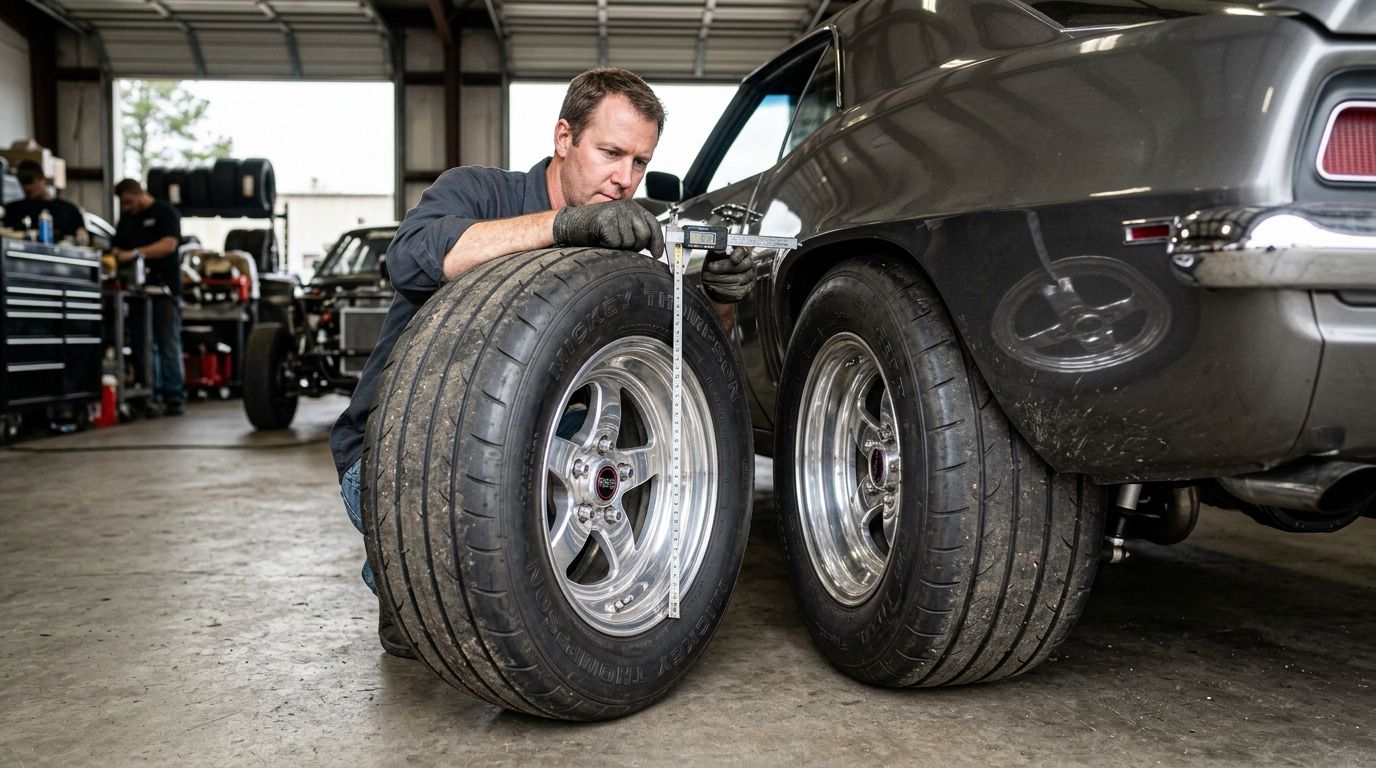
Drag radials sit between a street tyre and a full slick. They're DOT-approved, so they're street legal in most states, but the construction and compound are built around straight-line grip rather than cornering or long-term tread life. Picking the wrong one means either wearing a $400+ tyre out in a few strip passes, or running a tyre too soft to survive the drive home.
What makes the best drag radial tyre
- DOT-legal tread pattern and speed rating for a tyre that still has to pass rego and drive on the street
- Radial belt construction for consistent sidewall stiffness launch after launch, versus a bias-ply slick that flexes unpredictably at speed
- Load range matched to vehicle weight and power output, especially on heavier sedans or AWD platforms
- Compound designed for repeatable 60-foot times, not just a single big number on a warm track
- Size and wheel-width compatibility for the stance and gearing already locked in on the car
- Wet and cold-weather tolerance if the car is driven daily between track dates
Drag radial tyres at a glance
| Tyre | Best for | Standout feature | Key limitation |
|---|---|---|---|
| Mickey Thompson ET Street R | Dual-duty street and strip driving | DOT-legal dual-ply sidewall with a drag-specific tread compound | Tread life drops fast under repeated hard launches |
| Hoosier Drag Radial (D06) | Dedicated strip-only cars | Softer compound built purely for 60-foot grip | Wears quickly on the street and loses wet traction fast |
| Nitto NT05R | Daily-driven cars with occasional strip nights | More streetable compound with better wet grip than most drag radials | Gives up some outright 60-foot grip versus the D06 |
| BFGoodrich g-Force Drag Radial | Heavier or AWD high-horsepower builds | Reinforced sidewall for higher load capacity | Narrower size range than the Mickey Thompson and Hoosier lines |
| M&H Racemaster Radial Pro Drag | Bracket racing and repeatable ETs | Consistent launch characteristics pass after pass | Less outright grip than the class-leading drag radials |
1. Mickey Thompson ET Street R: best drag radial for street and strip dual duty
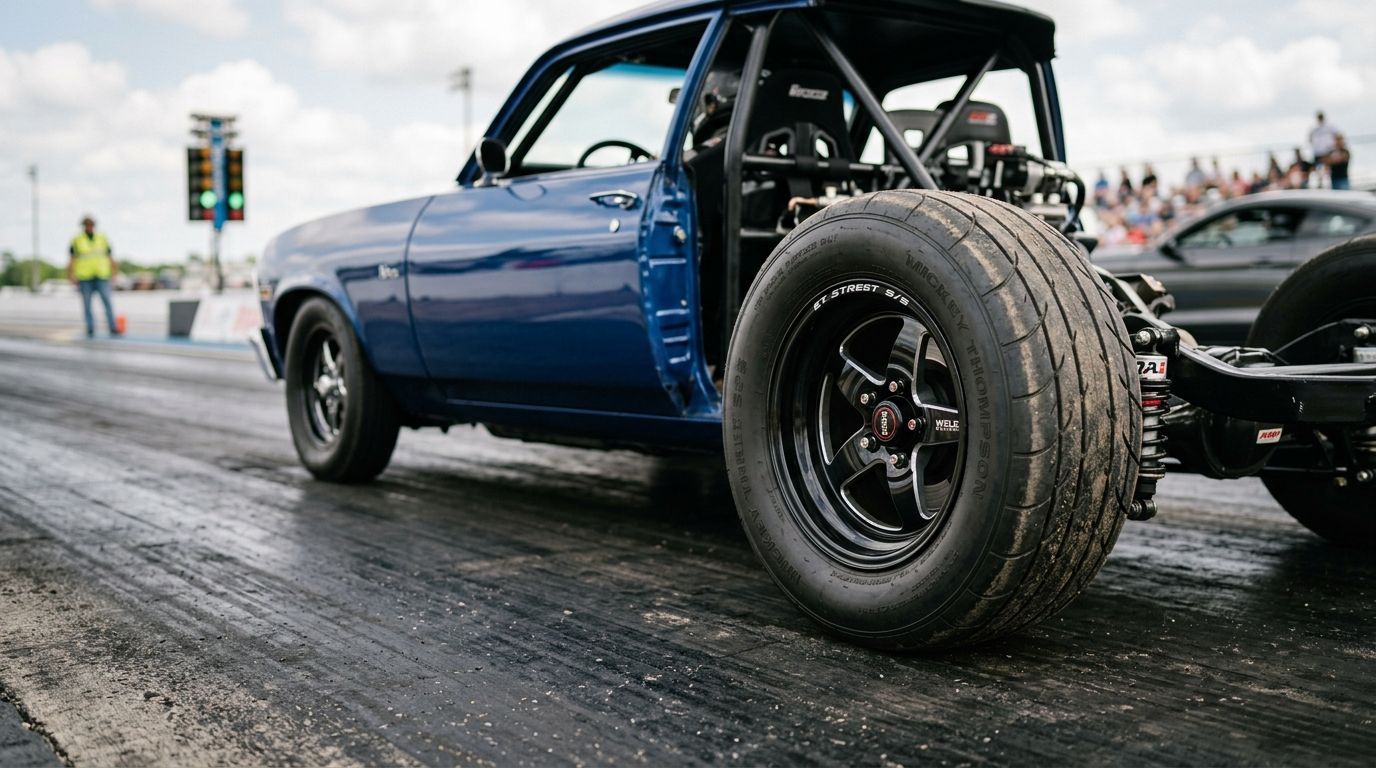
The ET Street R is a DOT-approved drag radial built around a dual-ply sidewall and a tread compound that's soft enough for strip grip but stable enough to drive home on. It's the tyre most workshops reach for first on a street/strip build because it doesn't force a choice between the two.
Mickey Thompson ET Street R pros:
- DOT-legal in common sizes including 275/60R15 and 315/60R15
- Dual-ply construction holds up to repeated launches better than single-ply drag radials
- Predictable behaviour transitioning from street to strip in the same session
Mickey Thompson ET Street R cons:
- Tread wears noticeably faster than a standard street tyre once launches get aggressive
- Not as sticky at 60 feet as a dedicated strip-only radial like the Hoosier D06
Best for: a street/strip build that needs to drive to the track, run all night, and drive home. Verdict: Buy for anyone running one tyre across both roles.
2. Hoosier Drag Radial (D06): best for dedicated strip-only cars
The D06 is built around outright 60-foot grip rather than street manners. It's common in drag radial classes where the car trailers to the track and never sees a public road on that tyre.
Hoosier Drag Radial pros:
- Softer compound produces some of the strongest 60-foot times in the drag radial category
- Widely raced in drag radial classes, so setup data is easy to find
- Radial construction stays more consistent than a bias-ply slick at higher trap speeds
Hoosier Drag Radial cons:
- Tread life drops sharply under repeated hard launches
- Wet traction is poor compared with a more street-oriented drag radial
- Not the tyre to leave on the car for the drive home
Best for: a car that's trailered to the strip and built around outright ET, not daily use. Verdict: Buy for strip-only cars; Skip for anything doing regular street kilometres.
3. Nitto NT05R: best for daily-driven cars with occasional strip nights
The NT05R is a more streetable drag radial, with a compound that copes better with wet roads and cold mornings than the harder-core options on this list. It gives up a little outright grip in exchange for a tyre that survives a normal commute.
Nitto NT05R pros:
- Better wet-weather tolerance than most dedicated drag radials
- Reasonable tread life for a tyre that still runs a drag-specific compound
- Common size range that suits a wide spread of street/strip platforms
Nitto NT05R cons:
- 60-foot times sit behind the Hoosier D06 on a prepped track
- Softer street compromise means it's not the pick for a dedicated drag class car
Best for: a daily-driven car that only sees the strip a handful of times a year. Verdict: Buy for daily-driver builds; Hold if the car is purely a track toy.
4. BFGoodrich g-Force Drag Radial: best for heavier or AWD high-horsepower builds
Heavier cars and AWD platforms load the tyre differently to a lightweight two-door, and the g-Force Drag Radial carries a higher load range to cope with that extra weight transfer under launch. It suits a build where the engine combination on something like a best LS3 stroker kit has already pushed the car well past factory power.
BFGoodrich g-Force Drag Radial pros:
- Reinforced sidewall handles higher vehicle weight without excessive flex
- Consistent launch behaviour on heavier sedans and wagons
- DOT-legal for street use between track sessions
BFGoodrich g-Force Drag Radial cons:
- Fewer size options than the Mickey Thompson or Hoosier ranges
- Not the first choice for a lightweight, low-power car where load range isn't the limiting factor
Best for: heavier or AWD cars where load capacity matters more than shaving tenths off the 60-foot. Verdict: Buy for heavy or AWD builds; Wait if the car is already light and low-power.
5. M&H Racemaster Radial Pro Drag: best for bracket racing and repeatable ETs
Bracket racing rewards consistency over outright grip, and the Racemaster Radial Pro Drag is built around launching the same way every pass. It won't top the 60-foot charts against a Hoosier D06, but predictability matters more in a bracket class than a single quick run.
M&H Racemaster Radial Pro Drag pros:
- Consistent launch feel run after run, which suits index and bracket racing
- DOT-legal construction for street use between meets
- Straightforward to dial in without chasing tyre pressure all night
M&H Racemaster Radial Pro Drag cons:
- Outright grip trails the class-leading drag radials
- Less common on Australian shelves than the Mickey Thompson or Nitto ranges
Best for: bracket racers prioritising repeatable ETs over a headline 60-foot number. Verdict: Buy for bracket racing; Skip if the goal is outright quickest ET.
“If the 60-foot time gets worse after adding power, the tyre needs to change before the engine does.”
How we ranked these drag radials
The order above comes down to street legality, load range against vehicle weight, and how consistent the 60-foot number stays across repeated launches. A tyre that only wins on outright grip but can't survive a wet commute or a heavier car isn't the right call for most street/strip builds in 2026, even if it posts the best number on a prepped surface.
Which drag radial tyre should you choose?
For most street/strip builds, the Mickey Thompson ET Street R is the sensible default: DOT-legal, dual-ply, and built to handle both roles without swapping tyres at the gate. Step up to a Hoosier Drag Radial only once the car is dedicated to the strip and trailered there. Heavier or AWD cars running serious power, like a stroked RB30 or a built LS platform, are better served by the load range on a BFGoodrich g-Force Drag Radial.
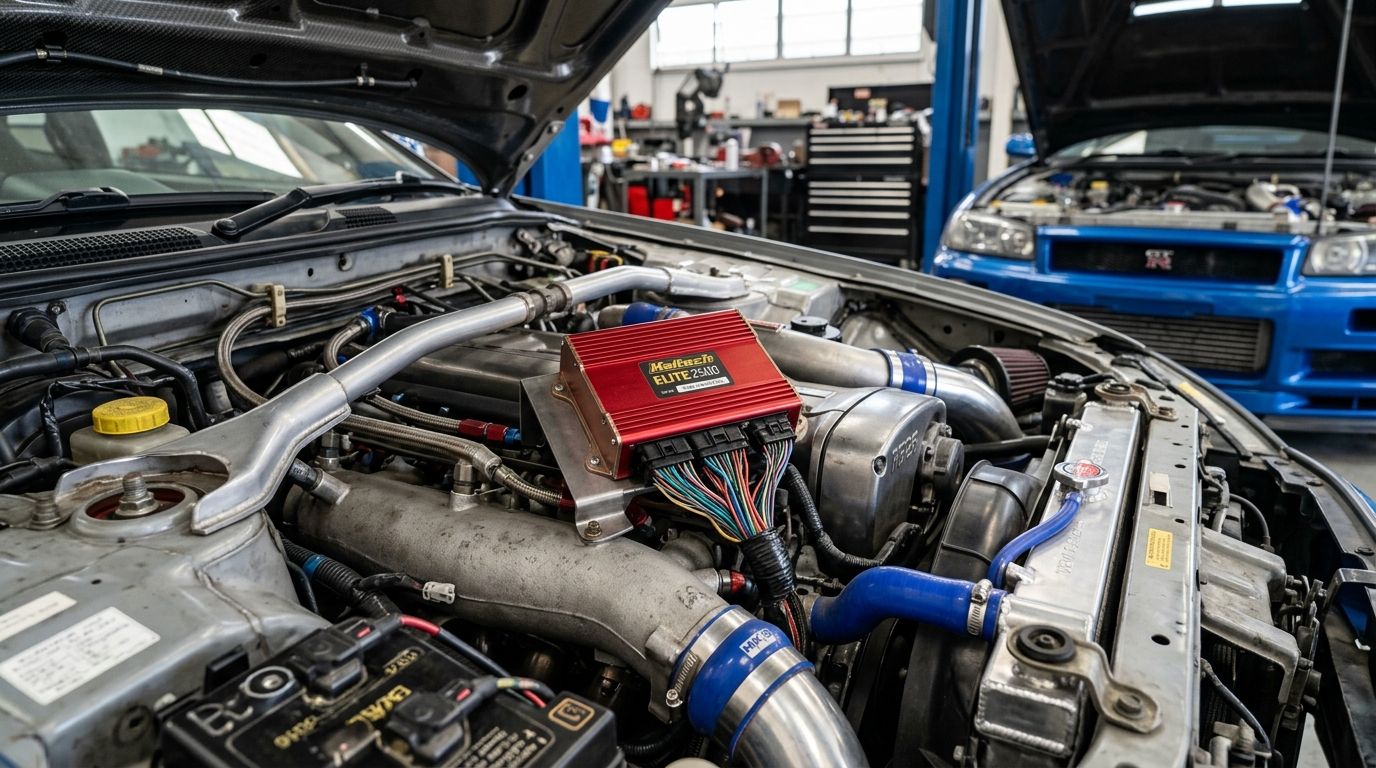
A six-cylinder combination such as an RB30 engine build guide setup or a RB25DET rebuild kit build can easily outrun a soft street tyre once the boost comes up, so matching tyre choice to the engine combination is as important as the parts list underneath it.
FAQ
What is the best drag radial tyre for a street and strip build?
The Mickey Thompson ET Street R is the best overall pick for 2026 because it's DOT-legal, dual-ply, and holds up to both street driving and strip launches without swapping tyres.
Are drag radial tyres legal for street use?
Most drag radials, including the Mickey Thompson ET Street R, Nitto NT05R and BFGoodrich g-Force Drag Radial, are DOT-approved and street legal. Some, like the Hoosier D06, are technically DOT-rated but wear too fast for regular street use.
How long do drag radial tyres last on the street?
Tread life drops sharply once launches get aggressive, and a tyre run hard at the strip every weekend will wear far faster than a standard street tyre. A more street-oriented option like the Nitto NT05R holds up better than a dedicated strip tyre like the Hoosier D06.
What size drag radial tyre should I run on my street car?
Common street/strip sizes include 275/60R15 and 315/60R15, but the right size depends on wheel width, gearing and the rear tub or guard clearance on the car. Check the specific tyre's size range before ordering.
Do drag radials work in the wet?
Wet performance varies a lot between models. The Nitto NT05R and Mickey Thompson ET Street R tolerate wet roads better than a dedicated strip radial like the Hoosier D06, which is built purely around dry 60-foot grip.
Should a 1000hp build run drag radials or slicks?
A build in the 1000hp range, like the combinations covered in the 1000hp Barra build guide, often needs a bias-ply slick or a heavy-duty drag radial such as the BFGoodrich g-Force to handle the load without excessive sidewall flex.
How much load rating do I need for a heavier drag radial car?
Heavier sedans and AWD platforms need a higher load range tyre to avoid excessive sidewall roll under launch, which is why the BFGoodrich g-Force Drag Radial carries a reinforced sidewall aimed at heavier vehicles.
What's the difference between a drag radial and a drag slick?
A drag radial is DOT-legal, street driveable, and uses radial belt construction, while a drag slick is track-only, bias-ply, and built purely for maximum grip with no tread pattern.
One last thing
A lot of builders chase trap speed when the number that actually decides the run is the 60-foot time, and that number lives or dies on tyre choice, not horsepower. Before spending more on the engine, check whether the current drag radial is actually the limiting factor at launch.