Choosing a turbo brand for a big-power six-cylinder swap comes down to bearing design, exhaust housing compatibility and how far the frame size scales — not badge preference. This guide compares Garrett, Borg Warner EFR, Precision Turbo & Engine, HKS and Turbonetics against those criteria for RB30, Barra, 1JZ/2JZ and TB42/TB45 platforms.
- Garrett wins overall for staged big-power six-cylinder swaps thanks to ball-bearing cartridges and a wide frame range.
- Borg Warner EFR suits a daily-driven RB25/RB30 or Barra needing early spool over outright peak power.
- Precision Turbo & Engine is the pick for drag and no-lift-shift six-cylinder builds running big boost.
- HKS bolts straight onto factory 1JZ-GTE and 2JZ-GTE manifolds for an OE-style single-turbo swap.
- Turbonetics is the budget entry point for a first six-cylinder turbo swap, with less headroom at the top end.
Why this matters
Brand choice gets more attention online than it deserves. What actually decides whether a six-cylinder swap makes power reliably is bearing type, turbine housing design and whether the exhaust manifold and downpipe are sized to match.
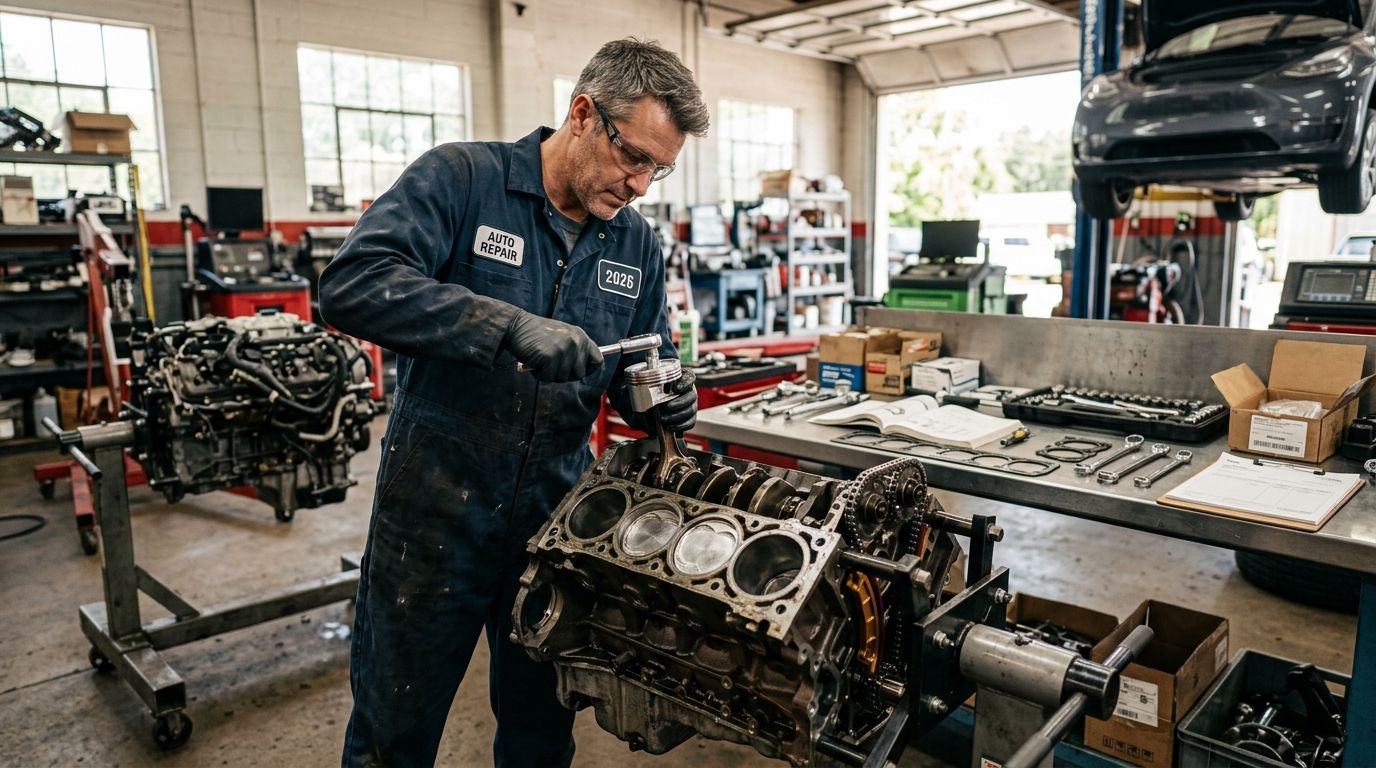
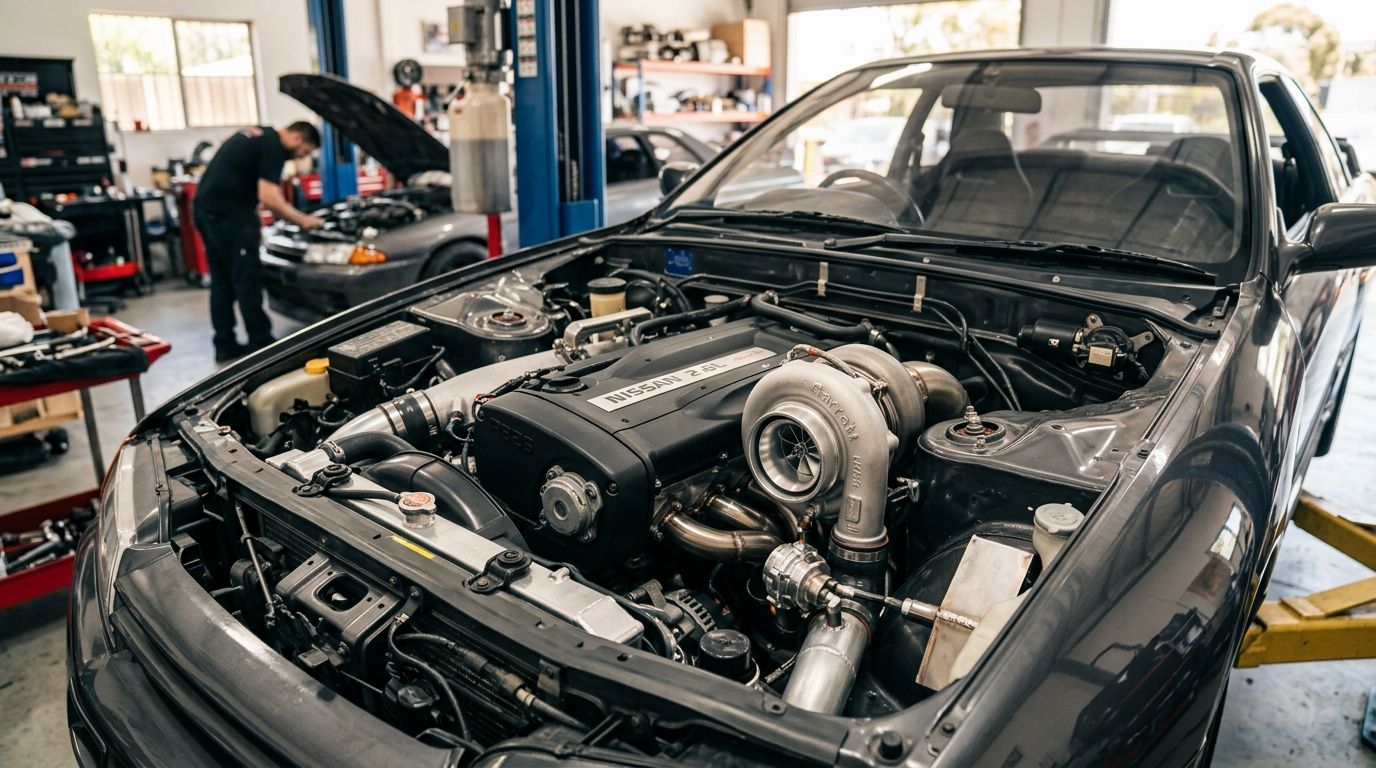
An RB30 (3.0L Nissan straight six), a Barra (4.0L Ford straight six), a 1JZ-GTE (2.5L Toyota straight six) and a 2JZ-GTE (3.0L Toyota straight six) all breathe differently. A turbo that spools well on a 2.5L single-cam factory manifold behaves differently bolted to a 4.0L twin-scroll aftermarket manifold on the same car in 2026. Get the RB30 engine build guide sorted first — turbo selection only makes sense once displacement, compression and target power are locked in.
Most six-cylinder swap failures traced back to turbo choice aren't actually a bad turbo. They're a mismatched manifold, an undersized wastegate, or a frame picked for a dyno number rather than the actual combination.
What makes the best turbo brand for a six-cylinder swap
- Bearing type — ball-bearing cartridges spool earlier than a journal-bearing unit of the same frame size.
- Turbine housing design — twin-scroll housings need a divided-pulse exhaust manifold; single-scroll housings run on a standard log or tubular manifold.
- Frame scalability — how far the same brand's range extends without switching manufacturers as power targets grow.
- Manifold and flange compatibility — bolt-on fit to factory or aftermarket manifolds without extra fabrication.
- Wastegate integration — internal wastegate simplicity versus external wastegate plumbing for bigger builds.
- Local parts and rebuild support — availability of cartridges, seals and actuators through Australian importers.
Turbo brands at a glance
| Brand | Best for | Standout feature | Key limitation |
|---|---|---|---|
| Garrett | Staged big-power six-cylinder builds | Ball-bearing cartridge, wide frame range | Large frames need a matched manifold and downpipe |
| Borg Warner EFR | Daily-driven spool response | Twin-scroll housing on a ball-bearing centre | Smaller frames run out of headroom at big power |
| Precision Turbo & Engine | Drag and no-lift-shift builds | Large-frame turbines built for sustained boost | Spools late without exhaust sized to match |
| HKS | OE-style 1JZ/2JZ swaps | Bolts to factory manifold flanges | Limited scaling past a factory-style single-turbo layout |
| Turbonetics | Budget-conscious single-turbo swap | Accessible frame sizes, broad compatibility | Journal-bearing options spool later, less top-end headroom |
1. Garrett: best turbo brand for staged big-power six-cylinder builds
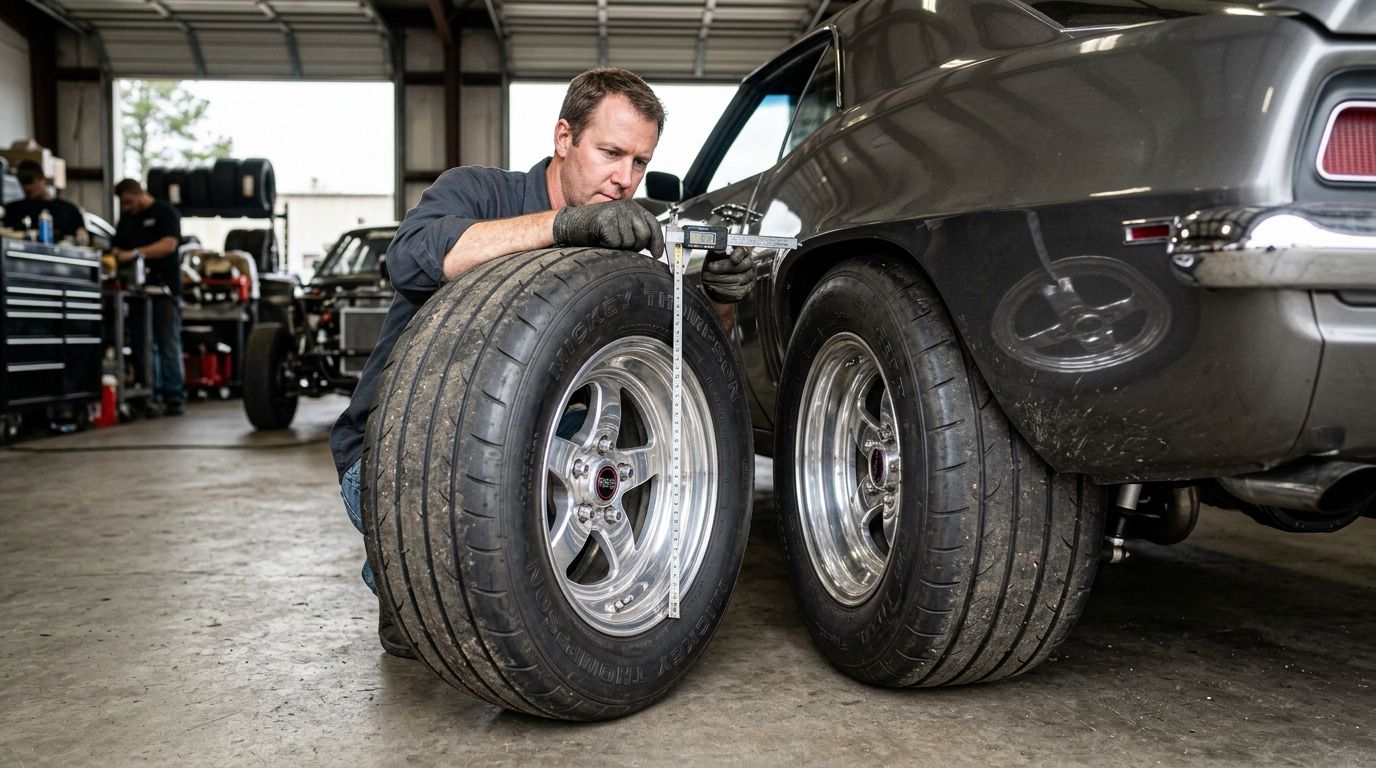
Garrett's ball-bearing turbos use forged, milled compressor wheels designed to hold up under sustained high boost, and the range scales from mild street frames through to units built for four-figure power targets on the same platform family. That range is why Garrett shows up across RB30, Barra and 2JZ builds targeting genuinely big numbers rather than a one-off bolt-on.
Garrett pros:
- Ball-bearing cartridge spools faster than a journal-bearing unit of equivalent frame size
- Forged compressor wheels tolerate high boost without cracking
- Frame range scales from street to staged big-power builds without a brand change
- Rebuild kits and cartridges are widely stocked through Australian importers
Garrett cons:
- Larger frames need a manifold and downpipe sized to match, or boost response suffers
- Ball-bearing cartridge rebuilds cost more than a journal-bearing service
Best for: RB30 and Barra builds with a staged power plan, not a single fixed target.
Verdict: Buy — the default pick when the build is going to grow past its first power target.
2. Borg Warner EFR: best turbo brand for a daily-driven spool response
Borg Warner's EFR line pairs a ball-bearing centre section with a twin-scroll turbine housing, built around the divided-pulse exhaust pairing that six-cylinder engines naturally produce. On an RB25, RB30 or Barra running a divided manifold, that combination gets boost into the mid-range earlier than a same-frame single-scroll turbo.
Borg Warner EFR pros:
- Twin-scroll housing matches the natural firing-order pairing on a straight six
- Ball-bearing centre section spools earlier in the rev range
- Integrated wastegate options simplify plumbing on a daily-driven build
Borg Warner EFR cons:
- Smaller EFR frames run out of headroom before the biggest RB30 or Barra combinations do
- Twin-scroll housing needs a manifold built for the divided pulse, not a generic log design
Best for: a six-cylinder daily that needs response low in the rev range as much as top-end output.
Verdict: Buy — for a Barra or RB25/RB30 daily prioritising drivability over peak numbers.
3. Precision Turbo & Engine: best turbo brand for drag and no-lift-shift builds
Precision's larger frames and ball-bearing cartridges are built around sustained high boost rather than street drivability, which is why the brand turns up on drag-focused RB30 and Barra combinations running a transbrake or a no-lift-shift launch strategy. The range extends well past what a daily-driven turbo needs.
Precision Turbo & Engine pros:
- Large-frame turbines built for sustained high boost, not just peak-boost bursts
- Ball-bearing, no-lift-shift-capable designs suit clutch-kick and two-step launches
- Frame range extends into genuinely big power without switching brands
Precision Turbo & Engine cons:
- Spools late without an exhaust manifold and downpipe sized to match
- Less suited to a street-driven daily than to a dedicated track or drag car
Best for: a drag-focused RB30 or Barra build with a launch strategy already built into the tune.
Verdict: Buy — for dedicated drag builds; Skip for a street-only daily.
4. HKS: best turbo brand for OE-style Japanese six-cylinder swaps
HKS's GT-series turbos are built around the factory 1JZ-GTE and 2JZ-GTE manifold flanges, which is why the brand remains a common choice on a 1JZ or 2JZ swap that's staying close to the factory single-turbo layout. Bolt-on compatibility cuts the fabrication work compared to fitting an aftermarket housing to a stock manifold.
HKS pros:
- Bolts directly to factory 1JZ-GTE and 2JZ-GTE manifold flanges
- Reduces fabrication on a stock-manifold six-cylinder swap
- Established parts support through Japanese-performance importers in Australia
HKS cons:
- Frame sizes are tuned for factory-style manifolds, not aftermarket twin-scroll housings
- Scaling past a factory-style single-turbo layout usually means changing brands
Best for: a 1JZ or 2JZ swap keeping the factory single-turbo layout largely intact.
Verdict: Buy — for a factory-style single-turbo Japanese six swap; Hold if the plan is to go bigger later.
5. Turbonetics: best turbo brand for a budget-conscious single-turbo swap
Turbonetics offers journal-bearing and ball-bearing options in accessible frame sizes, making it a common entry point for a first six-cylinder turbo swap on an EL/EF Falcon 4.0-litre or an early RB engine. The trade-off is less headroom at the top end compared to Garrett's or Precision's largest frames.
Turbonetics pros:
- Accessible frame sizes lower the entry cost of a first turbo swap
- Broad compatibility with generic single-turbo manifolds
- Parts commonly available through performance importers
Turbonetics cons:
- Journal-bearing options spool later than a ball-bearing cartridge of the same frame size
- Big-power headroom is more limited than Garrett's or Precision's largest frames
Best for: a first single-turbo six-cylinder swap on a fixed budget.
Verdict: Hold — solid for a first swap, but budget for a brand change if the target power climbs later.
How we ranked
Each brand was measured against the same six criteria: bearing type, turbine housing design, frame scalability, manifold and flange compatibility, wastegate integration and local parts support. Garrett and Precision score highest on scalability; Borg Warner EFR and HKS score highest on bolt-on manifold compatibility; Turbonetics scores highest on accessible entry cost.
“A twin-scroll turbo bolted to a single-scroll manifold spools no better than a cheaper turbo — the manifold decides that, not the badge on the compressor housing.”
Sort the tune before the turbo arrives
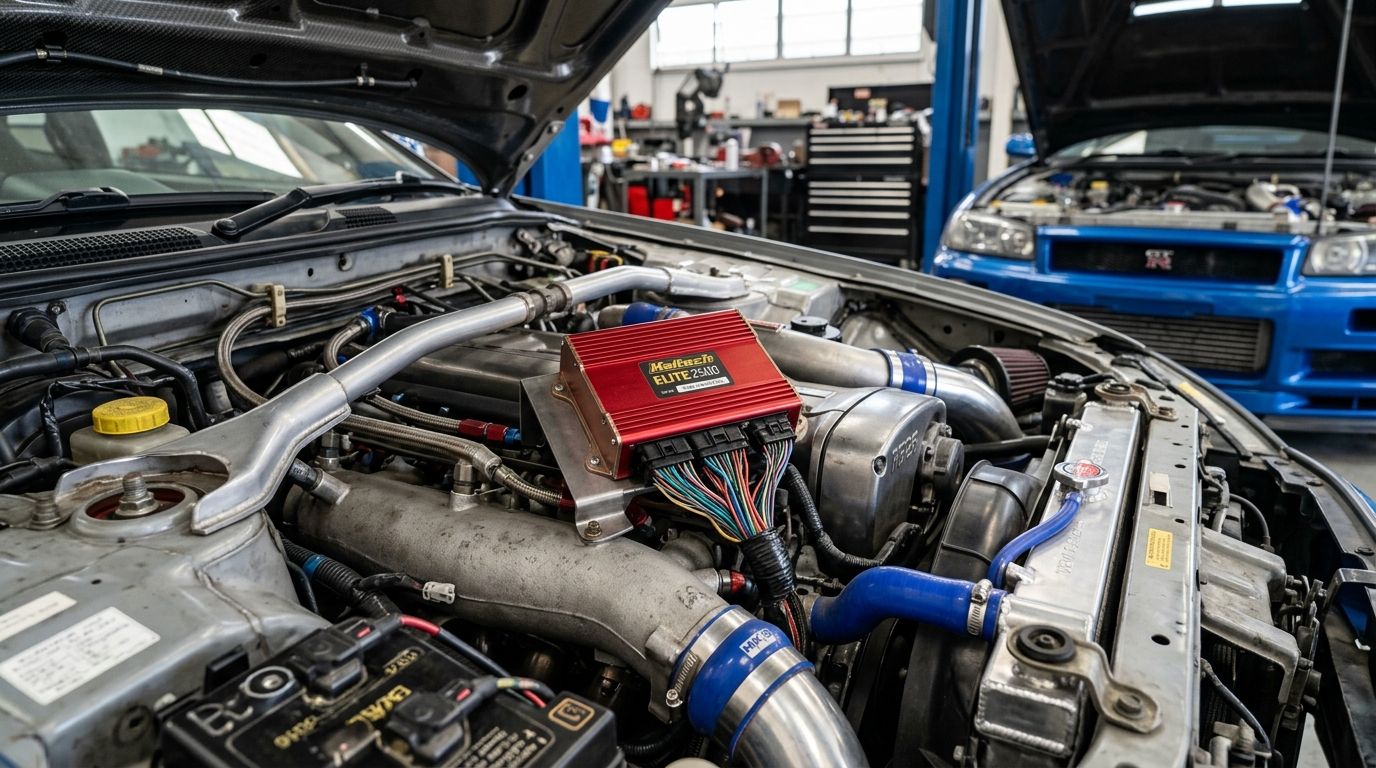
Get the ECU and wiring locked in for your turbocharged six-cylinder swap.
Which turbo brand should you choose?
For most staged six-cylinder builds running RB30 or Barra combinations, Garrett is the default pick in 2026 — the frame range scales with the build instead of forcing a brand change halfway through. Pick Borg Warner EFR if the car is a daily and low-rev response matters more than peak output. Pick Precision Turbo & Engine if the build is drag-only with a launch strategy already in the tune. Pick HKS if the 1JZ or 2JZ swap is staying close to factory layout, and pick Turbonetics if the budget is fixed and this is a first turbo swap rather than a final one.
Whichever brand gets picked, match it to an exhaust manifold built for a turbo engine swap before ordering — a twin-scroll turbo on a single-scroll manifold undoes most of the bearing advantage it's chosen for.
FAQ
What's the best turbo brand for a six-cylinder swap in 2026?
Garrett is the strongest overall pick for a staged big-power RB30 or Barra swap in 2026 because its frame range scales without changing brands. Borg Warner EFR, Precision Turbo & Engine, HKS and Turbonetics each suit narrower use cases.
Is Garrett or Borg Warner EFR better for a Barra swap?
Garrett suits a Barra build with a staged power plan that will grow over time, while Borg Warner EFR suits a Barra daily prioritising early spool over peak numbers. Both use ball-bearing cartridges; the difference is frame scalability versus low-rev response.
Does turbo brand matter more than turbo sizing?
Sizing matters more than brand for hitting a specific power target. Brand mainly changes bearing type, housing design and how far the same range scales if the target power moves later.
Can I run a twin-scroll turbo on a single-scroll RB30 manifold?
No — a twin-scroll turbine housing needs a manifold built around the divided pulse pairing to work as designed. Bolting it to a single-scroll manifold removes most of the spool advantage it's chosen for.
What bearing type spools fastest on a six-cylinder swap?
A ball-bearing cartridge spools faster than a journal-bearing unit of the same frame size because it has less rotating friction at low boost. Garrett, Borg Warner EFR and Precision Turbo & Engine all offer ball-bearing options.
Is HKS still a good option for a 1JZ or 2JZ swap in 2026?
Yes, HKS's GT-series turbos still bolt to factory 1JZ-GTE and 2JZ-GTE manifold flanges in 2026, which suits a swap staying close to the factory single-turbo layout. It scales less well than Garrett or Precision if the target power grows significantly.
What's the cheapest way to turbo a six-cylinder engine?
Turbonetics offers the most accessible frame sizes for a first single-turbo six-cylinder swap on a fixed budget. Expect less top-end headroom than Garrett's or Precision's largest frames if power targets climb later.
Do I need a bigger turbo for a stroker six-cylinder build?
A stroker build increases displacement and exhaust flow, which usually means stepping up frame size regardless of brand. Confirm the target power and cam profile before locking in turbo size.
One last thing
The most overlooked factor in a six-cylinder swap isn't the turbo — it's the wastegate sizing relative to boost target, which gets skipped more often than bearing type or frame size ever does. A turbo capable of big power still creeps past boost target if the wastegate can't bleed enough exhaust flow, regardless of the badge on the compressor cover.