A stroker kit is worth it in 2026 when the goal is more displacement and more torque from an engine block you already own, without touching turbo size, gearing or the rest of the driveline. It is not worth it on a tight-budget rebuild, on a block that is not suited to the increased stroke, or on a car that gets sold before the extra cost of clearancing, balancing and retuning pays back in usable power.
- A stroker kit is worth it in 2026 for torque and displacement gains on an existing block, not for cheap horsepower.
- Machining, balancing and retuning add real cost on top of the crank, rod and piston set.
- RB30 and LS3-based combinations are the most common Spool Imports stroker builds for Australian workshops.
- A stroker kit without a matched crank, rods and clearance check risks bearing failure and short engine life.
Why this matters
A stroker kit changes the stroke of the crankshaft to increase swept volume, which shifts the torque curve down the rev range and lifts total capacity without a bigger block or a bigger turbo. That sounds like free power, but the crank has to clear the block and rods, the pistons have to suit the new compression height, and the balance of the whole rotating assembly has to be redone. Skip any one of those steps and the stroker kit becomes a reliability problem instead of a power upgrade. Platform-specific displacement gains vary a lot, and the stroker kit displacement gains by engine platform breakdown covers what each common combination actually adds in capacity.
Is a stroker kit worth it in 2026?
The answer depends on what the engine is being built for. Compare a standard-displacement rebuild against a stroker kit on the same block before deciding.
| Factor | Standard rebuild | Stroker kit |
|---|---|---|
| Displacement | Unchanged | Increased, platform-dependent |
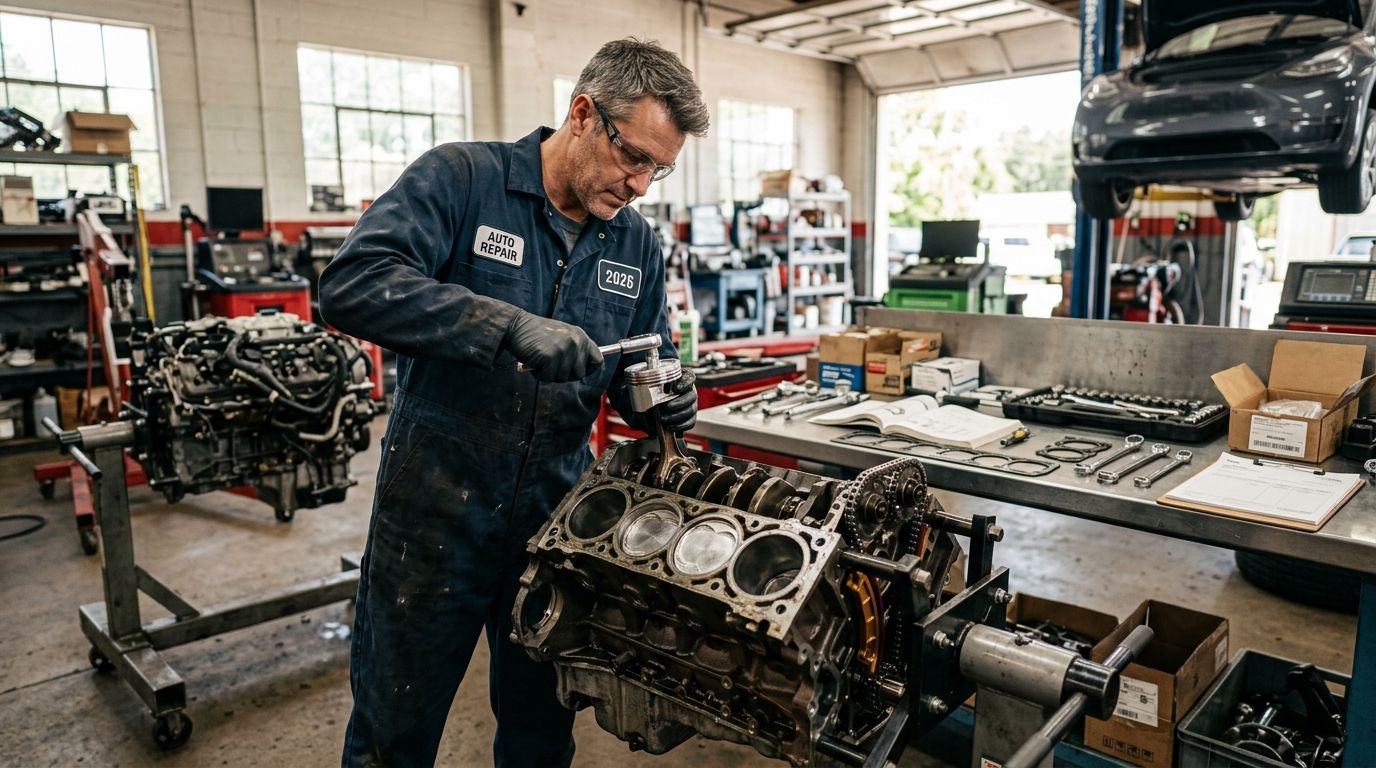
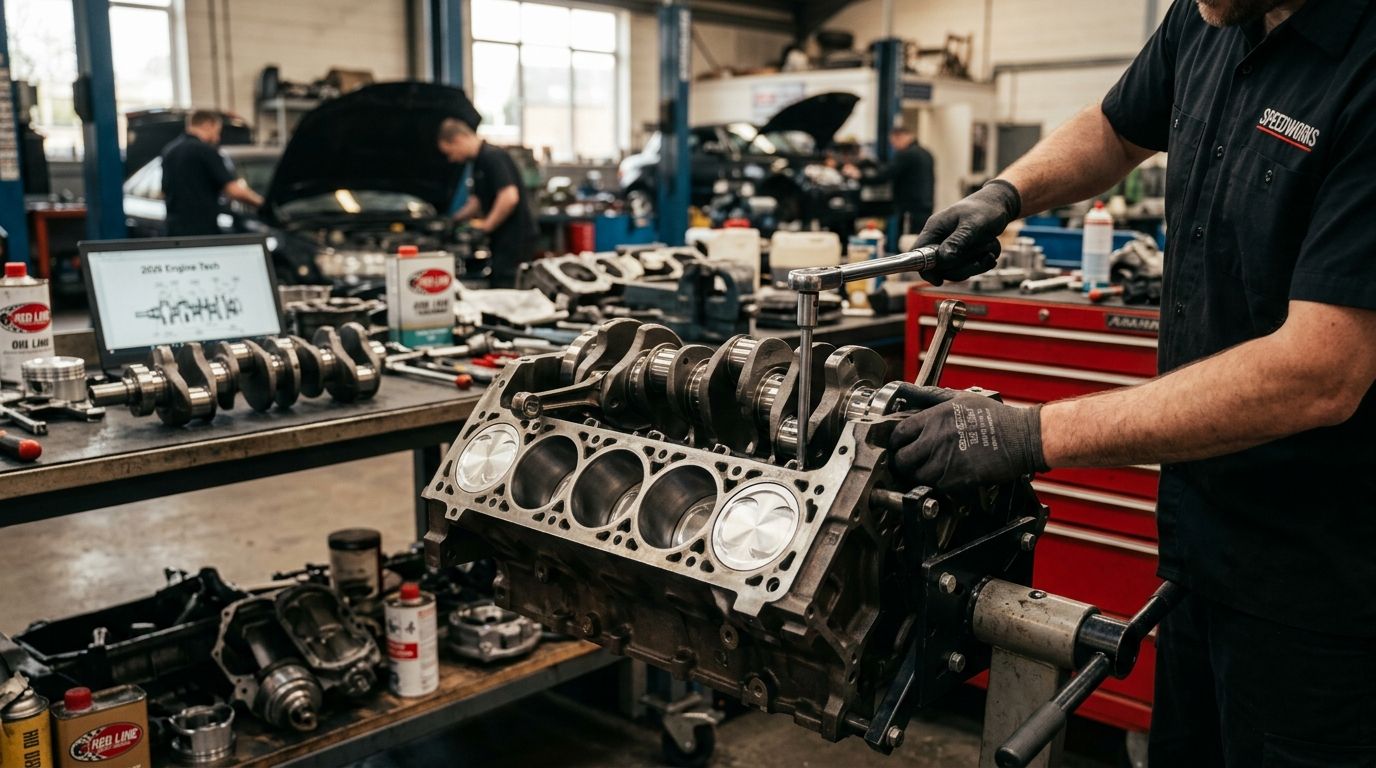
| Machining required | Standard hone, deck, balance | Crank/rod/piston clearance check, block clearancing, full balance |
| Power delivery | Factory-style curve | More torque lower in the rev range |
| Reliability risk | Low if parts are matched | Higher without correct clearance and balancing work |
| Best for | Like-for-like rebuilds, budget-limited builds | Capacity-limited platforms chasing torque without more boost |
Verdict: a stroker kit is worth it in 2026 when the block, crank and rod combination is matched and machined correctly — it is not worth it as a shortcut around proper clearancing.
When a stroker kit makes sense
- The factory block has room in the deck height and bore spacing to run a longer stroke without piston-to-block interference.
- The build targets more torque and drivability rather than a higher redline.
- Boost or induction upgrades are already planned or fitted, and more base capacity is being used to reduce reliance on peak boost.
- The engine is being fully rebuilt anyway, so the extra machining labour is happening on the bench regardless.
- A tow rig, daily or street car needs stronger low-RPM response rather than top-end horsepower.
When to skip a stroker kit
- The budget only covers standard-bore forged pistons and conrods, and the extra crank, balancing and clearance machining pushes the build past what it can return in usable power.
- The block is a known weak casting at longer strokes without a documented, verified combination.
- The goal is a high-RPM, naturally aspirated combination where a shorter stroke and lighter rotating assembly suit the rev range better.
- The car is a short-term project or resale build where the extra spend will not be recovered.
RB-series straight-six stroker kits
The RB platform is one of the most common straight-six stroker applications in Australia, with the factory block used as the base for a longer-stroke crankshaft and matched conrods. Bore spacing and deck height limit how far the stroke can go before piston-to-block clearance becomes the constraint, which is why crank, rod length and piston compression height all need to be selected as a set rather than upgraded individually. The RB30 stroker kit guide for a bigger capacity straight-six build covers the crank and rod combinations that suit street and drag-focused RB builds. High-RPM RB stroker combinations also put more load through the valvetrain, which is a separate decision from the bottom end.
LS-based V8 stroker kits
LS engines are a common stroker base because the block architecture accepts a longer stroke with well-documented clearance limits, and the aftermarket support for cranks, rods and pistons is deep. A stroker LS build on a VE Commodore or similar platform typically pairs a longer-stroke crank with H-Beam or I-Beam conrods matched to the target power level and RPM range. The best LS3 stroker kit for a high-output VE Commodore build walks through how bore, stroke and rod selection interact on that platform specifically, rather than treating an LS stroker kit as one generic product.
Why stroker kit outcomes vary
- Block casting limits. Some factory blocks have thinner cylinder walls or less deck material at longer strokes, which caps how far a stroker combination can safely go.
- Rod length and piston compression height. These have to be calculated together with the new stroke, not selected off a generic parts list.
- Balancing quality. A stroker crank changes the reciprocating mass of the whole assembly, and poor balancing shows up as vibration and bearing wear well before catastrophic failure.
- Bearing clearance. Longer-stroke cranks change bearing loading, which is why clearance specs need checking against the actual parts fitted, not assumed from the standard-stroke setup.
- Machining shop experience with the platform. A shop that has clearanced the specific block and stroke combination before will catch interference issues a generic machinist may miss.
- Intended use. A drag-only combination and a daily-driven stroker on the same block can call for different piston and ring choices even at the same displacement.
Do stroker kits reduce reliability?
A stroker kit does not reduce reliability by itself, but a poorly matched or poorly balanced one does. The failure point is almost always clearance or balance, not the extra displacement itself — a correctly machined and balanced stroker assembly runs as reliably as a standard-stroke rebuild at the same power level.
Do I need a billet crank for a stroker kit?
A billet crank is not mandatory for every stroker build, but it becomes the safer option once the stroke length or target power level pushes past what a cast or forged factory-style crank is rated for. The guide to choosing a billet crankshaft for your build sets out where a billet crank earns its place over a standard forged option on a stroker combination.
Can I run a stroker kit without forged pistons?
Running a stroker kit without forged pistons is possible on mild, naturally aspirated street combinations, but it removes margin as boost, compression or RPM increase. Forged pistons handle the higher cylinder pressure and thermal load of a boosted or high-output stroker build with more consistent clearance behaviour than a hypereutectic or cast piston at the same power level.
Get help matching a stroker combination
Confirm crank, rod and piston fit for your platform before you order.
FAQ
Is a stroker kit worth it in 2026?
A stroker kit is worth it in 2026 when you need more displacement and torque from an existing block without changing the turbo or gearing. It is not worth it on tight-budget rebuilds or blocks not suited to the increased stroke.
How much extra machining does a stroker kit need?
A stroker kit needs a full clearance check between the crank, rods and block, plus a complete balance of the rotating assembly. This is on top of the standard hone, deck and bore work of any rebuild.
Does a stroker kit increase horsepower?
A stroker kit increases displacement, which typically lifts torque across the rev range more than it lifts peak horsepower on its own. Peak power gains depend on the rest of the combination, including heads, cam and induction.
What is the difference between a stroker kit and a standard rebuild?
A standard rebuild replaces worn parts at the factory stroke and bore. A stroker kit changes the crank stroke to increase swept displacement, which requires matched rods and pistons and extra clearance machining.
Do I need a billet crankshaft for a stroker build?
A billet crankshaft is not required for every stroker build, but it becomes the safer choice once stroke length or target power exceeds what a standard forged crank is rated for.
Which engine platforms suit a stroker kit best?
RB-series straight-six and LS-based V8 platforms are among the most common stroker applications, with well-documented crank, rod and piston combinations available for each.
Can a stroker kit hurt reliability?
A stroker kit itself does not hurt reliability, but incorrect clearance or poor balancing on a stroker assembly does. Correctly machined and balanced stroker builds run as reliably as standard-stroke rebuilds at the same power level.
Is a stroker kit worth it on a diesel tow rig?
A stroker kit can be worth it on a diesel tow rig because the extra displacement adds low-RPM torque, which suits towing use better than a high-RPM power curve.
One last thing
The part of a stroker build most builders underquote is not the crank or rods — it is the balancing and clearance-check labour, which has to happen every time regardless of which brand of parts goes in. Get that quoted alongside the parts list before deciding if a stroker kit is worth it for your specific block in 2026, not after the machine work has started.