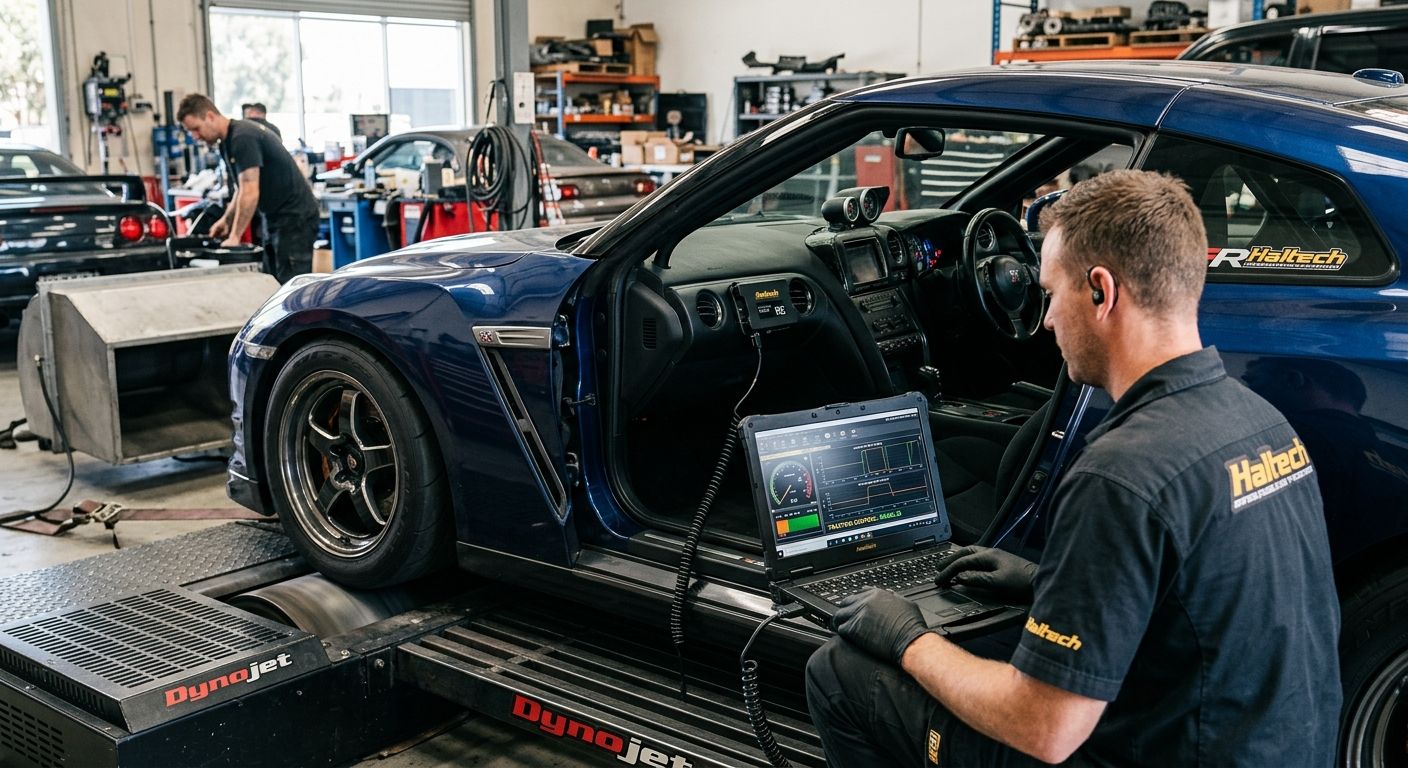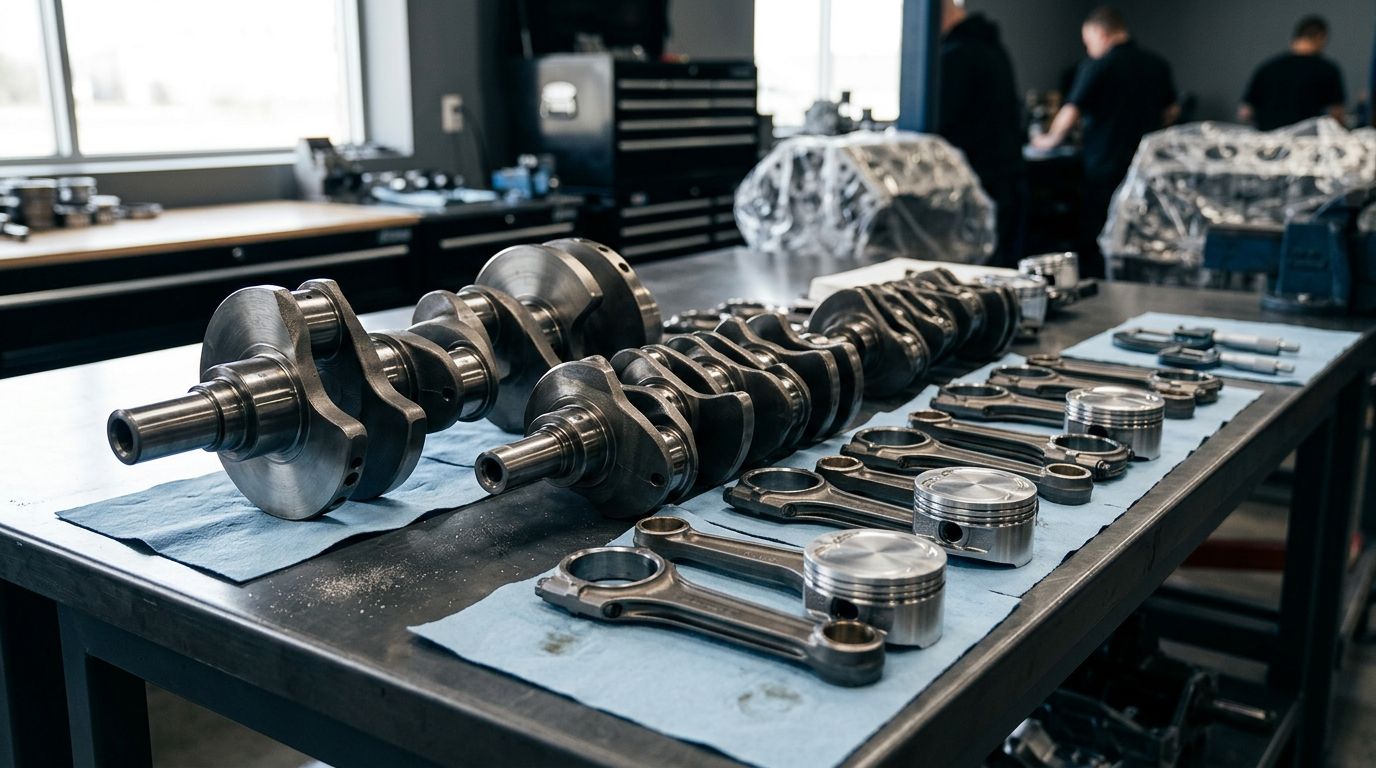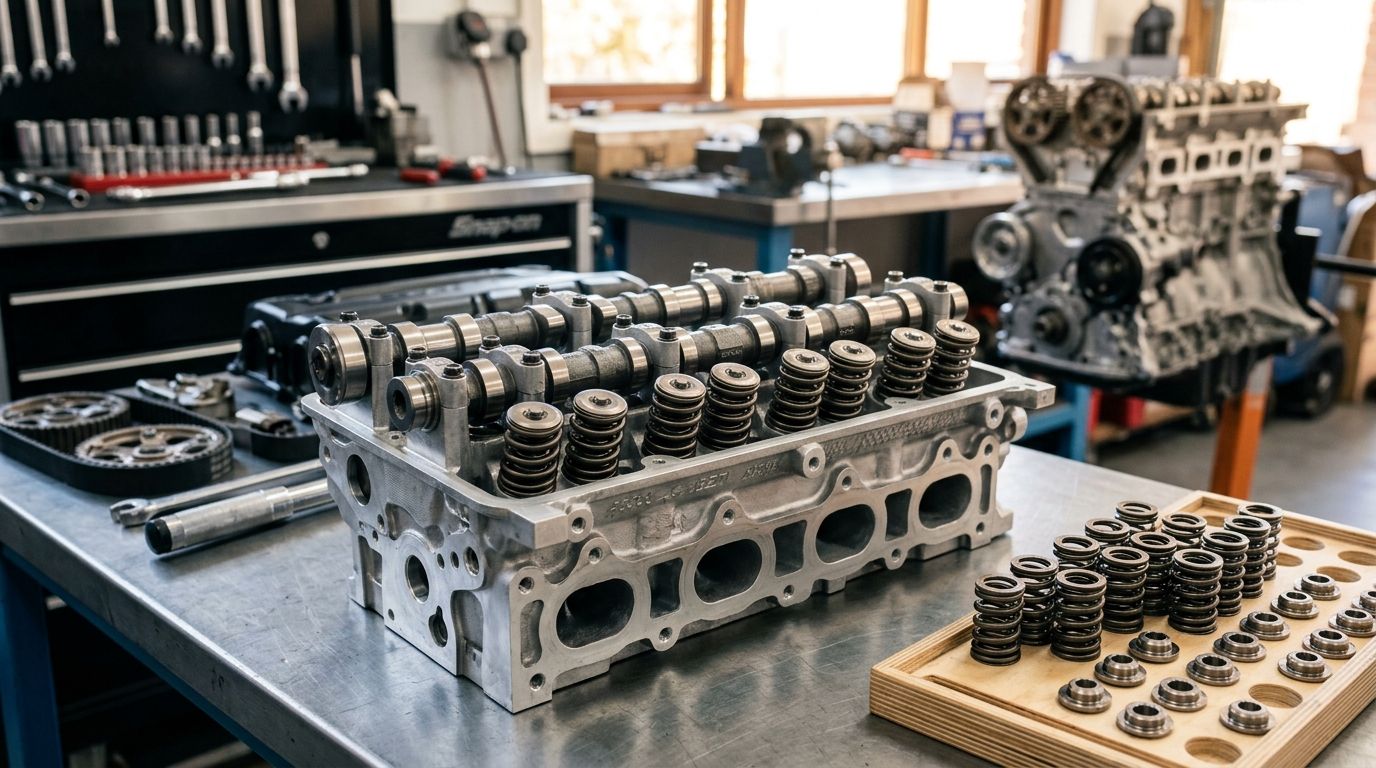
High-revving RB25 and RB30 stroker builds put more load on the valvetrain than the factory spring was ever designed for — heavier retainers, longer strokes and aggressive cam profiles all push spring pressure requirements up. This guide ranks the valve spring options that suit different RB stroker combinations, from a mild street rebuild to a nitrous-assisted race engine.
- Kelford Cams dual valve springs are the default pick for most RB25/RB30 stroker builds running an upgraded cam.
- Beehive single springs suit mild street strokers keeping stock-like lift and lower reciprocating mass.
- GSC Power-Division and Supertech dual springs cover high-lift race cams and extreme rev-ceiling builds respectively.
- PAC Racing Springs RPM Series is built for nitrous and high-boost applications needing higher open pressure.
- Spring selection only works when matched to cam lift, retainer weight and coil-bind clearance — not picked in isolation.
Why this matters
An RB25 or RB30 stroker build changes the reciprocating mass in the valvetrain the moment you fit a bigger cam, lighter retainers or push the rev ceiling past what the factory spring was rated for. Get the spring wrong and you get valve float, spring surge or a snapped spring at the top of the rev range — not a slow decline in power. The RB30 engine build guide covers where valve springs sit in the wider build sequence; this guide goes deeper on the spring decision itself.
RB25 and RB30 heads use a 24-valve DOHC layout with shim-under-bucket adjustment, which means spring selection also has to account for bucket and shim mass on top of the valve and retainer. That's a fixed mechanical constraint every option below has to work within.
Best overall for most RB stroker builds: Kelford Cams Dual Valve Springs. Best for mild street strokers: beehive/conical single springs. Best for high-lift race cams: GSC Power-Division dual springs. Best for extreme rev-ceiling builds: Supertech dual springs. Best for nitrous or high-boost seat pressure: PAC Racing Springs RPM Series.
What determines the right valve spring
- Spring configuration — single beehive/conical vs conventional dual spring, matched to cam lift and duration
- Seat and open pressure — needs to rise with reciprocating mass and rev target, not be maxed out by default
- Coil-bind clearance at max lift — the single most common cause of a spring failure that gets blamed on the wrong part
- Retainer compatibility — steel vs titanium retainer weight changes what spring pressure is actually needed
- Wire material and manufacturing — chrome silicon vs chrome vanadium wire, ovate vs round wire construction
- Rev ceiling and duty cycle — a spring rated for sustained high-rpm running is not the same product as one rated for short bursts
Valve springs for RB stroker builds at a glance
| Option | Best for | Standout feature | Key limitation |
|---|---|---|---|
| Kelford Cams Dual Valve Springs | Cam-driven RB25/RB30 stroker builds | Matched kits sold alongside Kelford cam profiles | Overkill for a mild street stroker keeping factory-like lift |
| Beehive/Conical Single Spring | Mild street strokers, stock-like lift | Lower reciprocating mass than a dual spring | Limited headroom if cam lift or rpm target increases later |
| GSC Power-Division Dual Springs | High-lift race cam profiles | Higher open pressure margin at aggressive lift | Needs verified retainer and spring pocket clearance |
| Supertech Dual Springs | Extreme rev-ceiling builds | Built for sustained high-rpm duty cycles | Not necessary for street-driven combinations |
| PAC Racing Springs RPM Series | Nitrous or high-boost seat pressure needs | Higher seat pressure for load spikes under boost/nitrous | Higher installed load increases valvetrain wear if over-specified |
1. Kelford Cams Dual Valve Springs — matched to cam-driven RB stroker builds
Kelford Cams builds valve springs as a matched pair with its own camshaft profiles, which removes the guesswork of pairing a spring from one manufacturer with a cam from another. Spool Imports distributes Kelford Cams across the RB platform, so a Kelford cam and matched spring kit is a single, verified combination rather than two separate purchasing decisions.
Kelford Cams Dual Valve Springs pros:
- Spring pressure and coil-bind clearance are pre-matched to the cam's lift and duration
- Dual spring design gives margin for higher rpm than a single spring at the same lift
- Sourced through the same distributor supplying the cam, simplifying warranty and fitment questions
Kelford Cams Dual Valve Springs cons:
- Only makes sense as a matched pair — buying the spring without the matching cam profile loses the main advantage
- More spring than a mild street stroker needs if lift and rpm stay close to factory
Best for: RB25/RB30 stroker builds running an upgraded Kelford cam profile and targeting meaningful rpm gains over stock.
Verdict: Buy when the cam is already a Kelford profile — the matched-kit approach removes the risk of guessing spring pressure against an unfamiliar cam.
2. Beehive/Conical Single Spring — for mild street strokers keeping stock-like lift
A beehive or conical single spring tapers in diameter toward the top, which lets the coils get closer together without coil-binding despite using fewer coils than a straight-sided single spring. That geometry keeps reciprocating mass down, which matters on an RB stroker where the crank is already adding rotating mass elsewhere in the bottom end.
Beehive/Conical Single Spring pros:
- Lower installed mass than a dual spring, reducing valvetrain load at a given rpm
- Simpler single-spring design with fewer failure points than a dual spring
- Well suited to a stroker build that keeps cam lift close to factory
Beehive/Conical Single Spring cons:
- Limited pressure headroom if the cam or rpm target grows later in the build
- Not the right choice once lift or duration moves into race-cam territory
Best for: RB25/RB30 stroker builds targeting street reliability with a mild cam upgrade, not a rev-ceiling chase.
Verdict: Buy for a mild street stroker; Skip if the cam spec or rpm target is likely to grow.
3. GSC Power-Division Dual Springs — for high-lift race cam profiles
Once cam lift moves into genuine race territory, seat and open pressure both need to increase to control the valve through a faster, more aggressive lobe profile. GSC Power-Division's dual spring construction is built around that higher-lift use case rather than a street cam's more moderate lift figures.
GSC Power-Division Dual Springs pros:
- Higher open-pressure margin suited to aggressive race cam lift
- Dual spring construction gives a wider working range than a single spring at the same lift
- Common choice where the cam profile itself is already a race-spec grind
GSC Power-Division Dual Springs cons:
- Requires the head's spring pocket and retainer clearance to be verified before fitment
- More pressure and mass than a street stroker with a moderate cam needs
Best for: RB stroker builds running a high-lift race cam where a street-spec spring is already at its limit.
Verdict: Buy for a genuine race cam profile; Hold if the current cam spec doesn't demand it yet.
4. Supertech Dual Springs — for extreme rev-ceiling builds
Sustained high-rpm running is a duty-cycle problem as much as a pressure problem — a spring can survive a short burst at a given rpm and still fail under the same load held for longer. Supertech's dual spring line is built around that sustained high-rpm duty cycle rather than a single peak rpm number.
Supertech Dual Springs pros:
- Built for sustained high-rpm operation, not just a momentary rev spike
- Dual spring design spreads load across two coils rather than one
- Suits a build where the rev ceiling is a daily-use target, not an occasional redline
Supertech Dual Springs cons:
- Unnecessary cost and complexity for a street-driven stroker that rarely sees its redline
- Needs the rest of the valvetrain — retainers, locks, pushrods if applicable — rated for the same duty cycle
Best for: RB stroker builds where high rpm is held for extended periods, not just touched briefly.
Verdict: Buy for a genuine high-rpm race build; Skip for a street-driven stroker.
5. PAC Racing Springs RPM Series — for nitrous and high-boost seat pressure
A sudden load spike from nitrous activation or a boost spike puts a different kind of stress on a valve spring than a steady high-rpm cam does — the spring needs enough seat pressure to hold the valve closed against that spike, not just enough open pressure to control it at max lift. PAC Racing Springs' RPM series is built around that higher seat-pressure requirement.
PAC Racing Springs RPM Series pros:
- Higher seat pressure suited to load spikes from nitrous or a hard boost spike
- Widely used across boosted six-cylinder platforms outside the RB world too
- Available in configurations to suit different retainer and cam combinations
PAC Racing Springs RPM Series cons:
- Higher installed load increases wear on the cam lobe and lifter/bucket if over-specified for the actual power level
- Not the right pick if the build is naturally aspirated or running mild boost only
Best for: RB stroker builds running nitrous or aggressive boost where seat pressure, not just open pressure, is the limiting factor.
Verdict: Buy for nitrous or high-boost combinations; Wait on this option if boost levels are still moderate.
How this ranking works
Each option above is ranked against the same six criteria: spring configuration, seat/open pressure, coil-bind clearance, retainer compatibility, wire material and rev ceiling/duty cycle. None of the five is a universal answer — the ranking is a decision tree by use case, not a single winner across every RB stroker build.
“A valve spring is only as good as the cam profile and retainer it's matched to — pressure numbers on their own don't tell you if it will survive on your engine.”
Which valve spring should you choose?
For most RB25 or RB30 stroker builds running an upgraded cam and targeting a genuine rpm gain over stock, Kelford Cams Dual Valve Springs are the default choice because the spring is matched to the cam rather than guessed against it. Drop to a beehive/conical single spring if the build stays mild and street-focused. Move up to GSC Power-Division or Supertech once the cam spec or rpm target moves into race territory, and choose PAC Racing Springs RPM Series specifically when nitrous or high boost is adding seat-pressure load the others weren't built for.
Plan the rest of your RB stroker build
See where valve springs fit against the rest of the combination.
FAQ
What's the difference between single and dual valve springs on an RB engine?
A single beehive or conical spring uses one tapered coil and carries less installed mass, while a dual spring uses two nested coils for higher pressure margin at aggressive cam lift. RB stroker builds with a mild cam usually suit a single spring; race-lift cams need the dual configuration.
Do I need dual valve springs for a mild RB25 stroker build?
No — a beehive or conical single spring is usually enough if cam lift and rpm target stay close to factory figures. Dual springs become necessary once lift, duration or rpm ceiling move into race-cam territory.
What causes valve float in a high-revving RB stroker?
Valve float happens when spring pressure can't control the valve's mass fast enough at high rpm, letting it lose contact with the cam lobe. It's more likely on a stroker build once heavier retainers or an aggressive cam profile are added without upgrading the spring.
Can beehive springs handle boost on an RB30 stroker?
Beehive springs handle moderate boost fine as long as cam lift stays mild, since boost pressure itself doesn't load the valvetrain the way cam lift and rpm do. High boost combined with an aggressive cam is where a dual spring or a higher seat-pressure option like PAC Racing Springs RPM Series becomes necessary.
How do I know if my valve springs are coil-binding?
Coil-bind happens when the spring's coils stack solid before the cam reaches full lift, which shows up as a hard mechanical limit measured with the spring compressed on a spring tester. It has to be checked against the actual cam lift being installed, not assumed from the spring's advertised rating.
Should valve springs be matched to the camshaft profile?
Yes — spring pressure, coil-bind clearance and installed height all need to suit the specific cam's lift and duration, not just the engine platform. A spring rated for one cam profile can float valves or bind coils on a different profile with more lift.
What retainers pair with dual valve springs on an RB head?
Retainer weight changes the effective spring pressure needed, so steel and titanium retainers aren't interchangeable without reconsidering spring choice. Titanium retainers reduce reciprocating mass and are commonly paired with race-spec dual springs for that reason.
How often should RB valve springs be replaced?
Valve springs lose free length and pressure over time, particularly under sustained high-rpm use, so they're a standard check item at any head rebuild rather than a lifetime part. A spring tester check during a rebuild will show whether pressure has dropped below spec.
One last thing
Most valve spring failures on RB stroker builds in 2026 still come back to coil-bind clearance, not raw spring pressure — a spring rated well beyond what the cam needs can still fail if it stacks solid before the lobe reaches full lift. Check installed height and coil-bind margin against the actual cam being fitted before assuming a higher-pressure spring is the fix.