A stock Barra bottom end handles roughly 450-500rwhp on factory boost and can be pushed toward 550-600rwhp with a tune, better fuel and supporting mods before the factory rod bolts and pistons become the failure point. That ceiling assumes a healthy, low-kilometre engine — a tired factory bottom end with worn bearings or stretched rod bolts fails well before that number.
- A stock Barra handles roughly 450-500rwhp on factory boost and up to 550-600rwhp with a supporting tune before the bottom end becomes the risk.
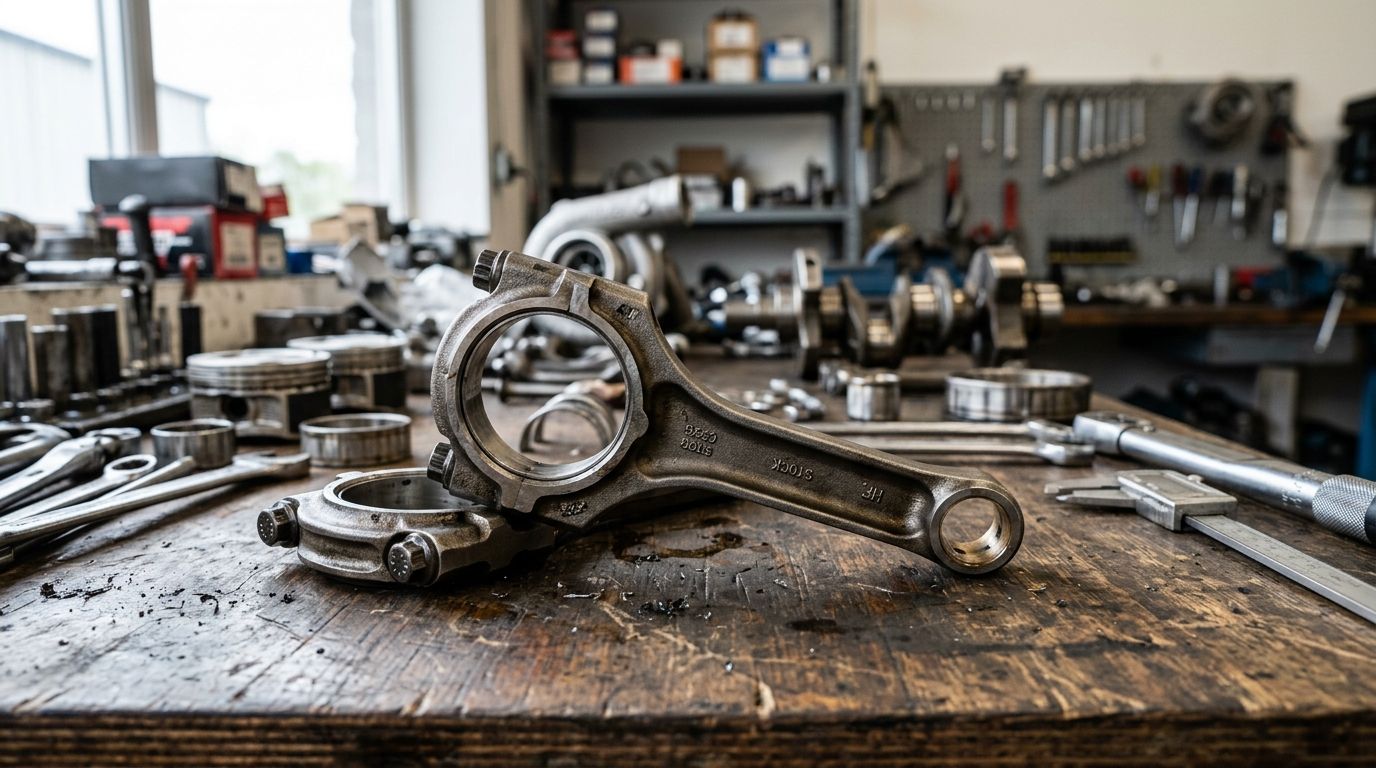
- Factory rod bolts and cast pistons are the weak points, not the block or crank.
- Boost level, fuel type and driving style all move the safe ceiling up or down.
- Past 600rwhp, forged pistons and aftermarket conrods stop being optional.
Why this matters
Every Barra tuning conversation in 2026 eventually lands on the same question: how far can you push the factory internals before you're gambling with a bottom end failure. Get the number wrong and you're looking at a bent rod through the block, not a warranty claim.
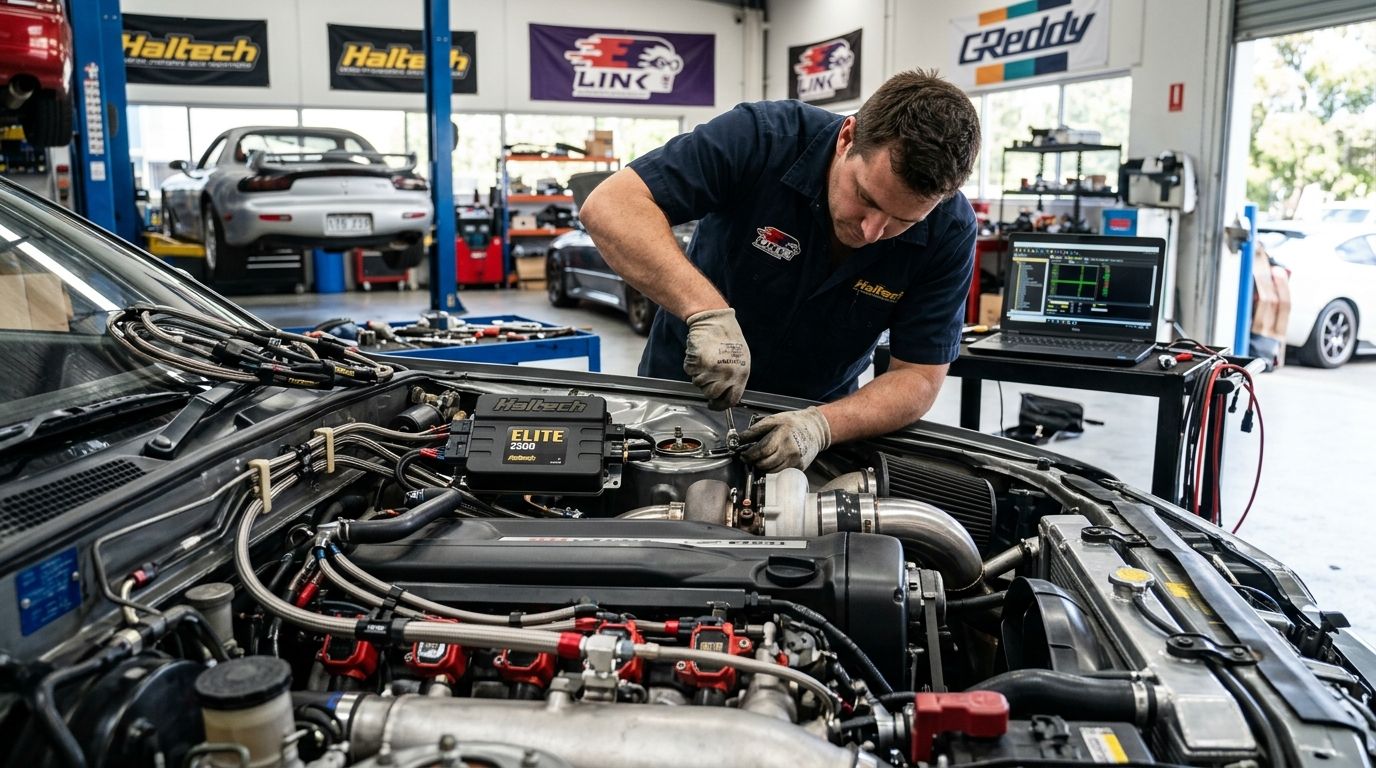
The Barra's factory bottom end — cast pistons, powdered-metal conrods, factory rod bolts — was engineered for a specific power window, not for repeated hard launches at 600rwhp+. Workshops that build these engines every week treat that window as a guideline, not a guarantee, because fuel quality, boost control and driving style all move the goalposts.
How much horsepower can a stock Barra handle?
The honest answer is a range, not a single number, because the factory bottom end's limit depends on how the power is made and how it's driven. The table below breaks down the general consensus among Australian Barra tuners and workshops.
| Power level | Bottom end risk | Typical scenario |
|---|---|---|
| Up to 450rwhp | Low | Factory boost, conservative tune, street driving |
| 450-500rwhp | Moderate | Mild boost increase, E85 or better fuel, regular street use |
| 500-600rwhp | Elevated | Increased boost, aggressive tune, occasional drag launches |
| 600rwhp+ | High | Repeated hard launches, high boost, marginal fuel supply |
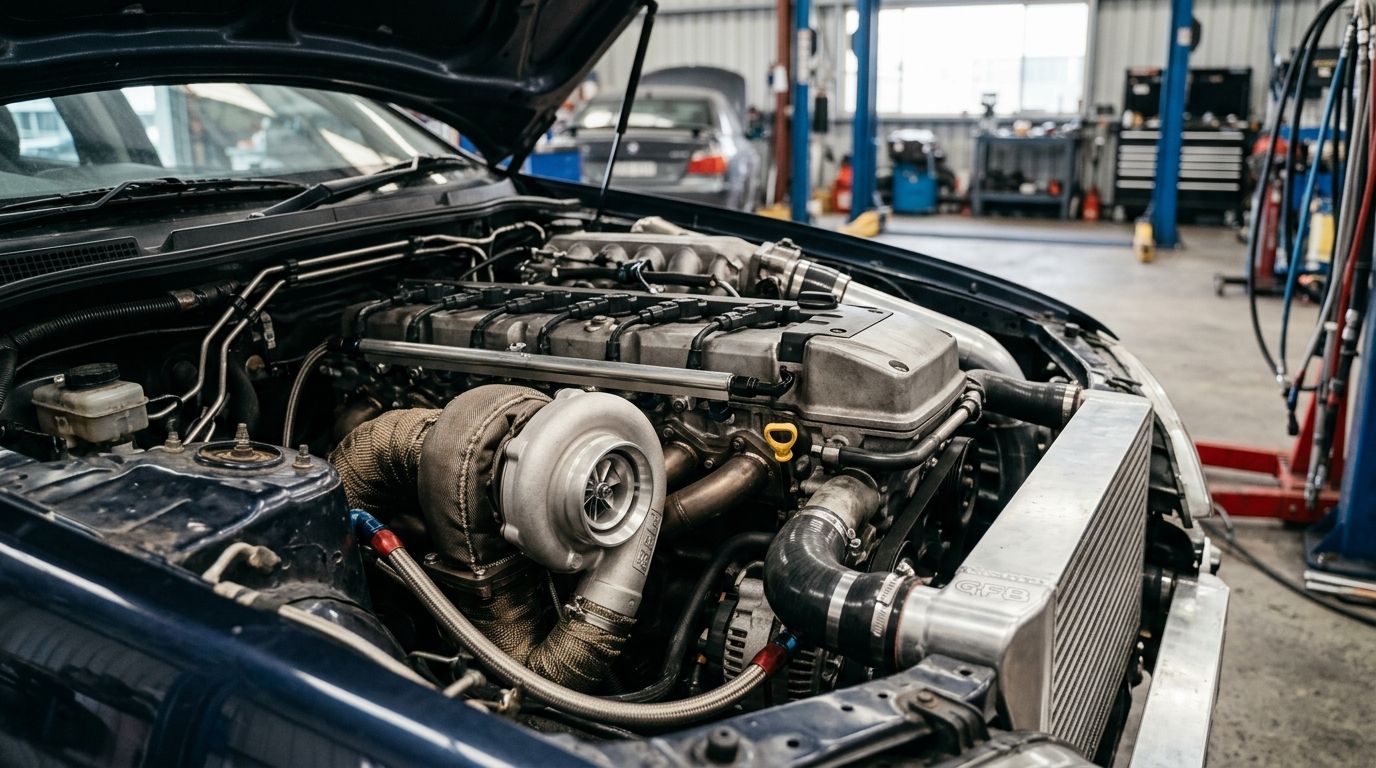
Stock turbos on BA through FG X Barras run factory boost levels in the 14 to 20psi range depending on the model, and most of that safe window sits inside those factory pressures. Once boost climbs meaningfully past factory spec to chase bigger numbers, the rod bolts and piston skirts are doing more work than they were designed for.
Stock bottom end on factory boost: 450-500rwhp
At or near factory boost, with a clean tune and pump fuel, the stock Barra bottom end holds up reliably for street driving and highway use. This is the zone most daily-driven XR6 Turbos, 240T, 245T and 270T Barras sit in without issue.
Verdict: safe for daily use.
Stock bottom end on increased boost: 500-600rwhp
Push boost above factory levels with a supporting tune, upgraded fuel delivery and better intercooling, and the stock bottom end can reach 550-600rwhp — but the margin for error shrinks fast. Hard launches, E85 without proper tuning support, or a marginal fuel pump all pull that ceiling down.
Verdict: workable short-term, not a long-term plan for regular drag use.
Beyond 600rwhp: stock components become the limiting factor
Past roughly 600rwhp, the factory rod bolts and cast pistons stop being a sensible bet regardless of how good the tune is. This is the point where builders planning serious power — see the 1000hp Barra build combination guide — start speccing forged internals rather than pushing the stock bottom end further.
Verdict: upgrade before you get here.
Why the stock Barra's horsepower limit varies
- Boost level — every psi above factory spec increases cylinder pressure and rod bolt loading.
- Fuel type — E85 changes cylinder pressure and combustion characteristics compared to pump fuel, and needs a tune built around it, not just a fuel swap.
- Driving style — hard launches and repeated wide-open-throttle pulls load the bottom end far harder than steady highway driving at the same peak number.
- Engine condition — kilometres, service history and any existing wear on bearings or rod bolts all reduce the safe ceiling.
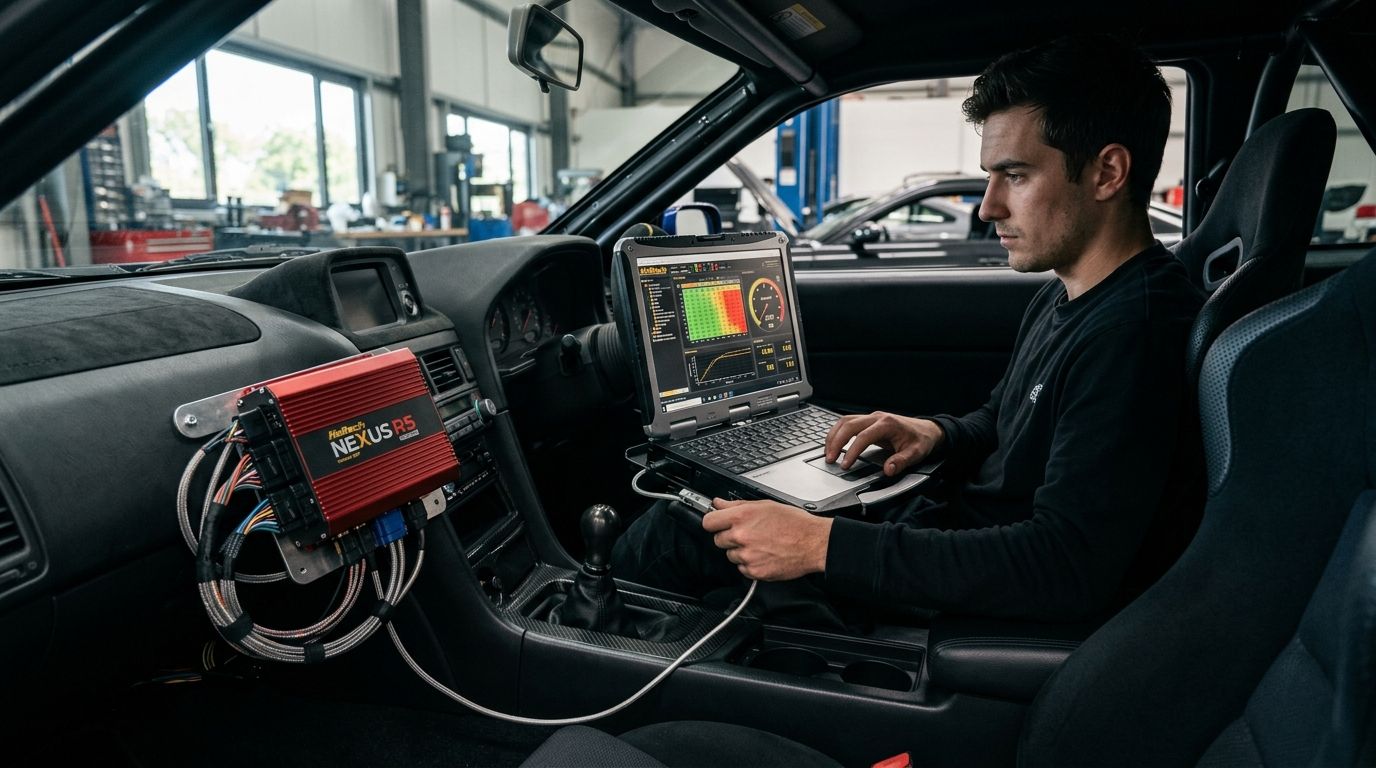
- Tune quality — a conservative, well-datalogged tune protects the bottom end; an aggressive tune chasing peak numbers doesn't.
- Supporting fuel system — a fuel pump or injectors running near their limit under boost is its own failure mode, separate from the bottom end.
What's the weak point in a stock Barra when pushed hard?
The factory rod bolts stretch under repeated high cylinder pressure, and that stretch is what precedes most stock Barra bottom end failures. Cast pistons can also crack around the ring lands under sustained detonation or excessive boost, which is why builders targeting real power look at rod bolt upgrades — see the conrod bolt guide for high-horsepower builds — before the factory bolts get anywhere near their limit.
Can a stock Barra handle E85 fuel?
A stock Barra can run E85, but the fuel switch alone doesn't raise the safe horsepower ceiling — it needs a tune built around the different combustion characteristics and enough fuel delivery to support it. Treat E85 as a tuning variable, not a free horsepower upgrade on stock internals.
Should you upgrade rods and pistons before tuning past 500rwhp?
Yes — once a build is targeting sustained numbers past 500-550rwhp, forged pistons and aftermarket conrods remove the bottom end as the failure point entirely. SPOOL forged pistons are built for that exact scenario, and pairing them with a matched conrod and bolt combination is the standard approach among workshops building Barras for real power — see the forged piston selection guide for how the options compare.
One last thing
Most stock Barra bottom end failures in 2026 aren't caused by one big power number — they're caused by a marginal engine getting pushed at the same power level it handled fine a year earlier. Kilometres and heat cycles matter as much as the dyno sheet, so an engine with a known service history and no prior detonation events has more margin left than the number on the tune alone suggests.
FAQ
How much horsepower can a stock Barra handle?
A stock Barra bottom end handles roughly 450-500rwhp on factory boost and up to 550-600rwhp with a supporting tune before rod bolts and pistons become the failure risk. Beyond that, forged internals are the safer path.
What horsepower does a stock XR6 Turbo make from the factory?
Factory XR6 Turbo power figures vary by model year, but all sit well under the 450-500rwhp ceiling the stock bottom end can safely handle with a tune.
Do stock Barra rod bolts fail at high boost?
Yes, factory rod bolts stretch under sustained high cylinder pressure, and that stretch is the most common precursor to a stock Barra bottom end failure past 500-600rwhp.
Is 500rwhp safe on a stock Barra bottom end?
500rwhp sits at the upper edge of the safe range for a healthy stock Barra bottom end, provided the tune is conservative and the engine has no existing wear.
Does E85 let a stock Barra make more power safely?
E85 doesn't raise the stock bottom end's safe horsepower ceiling on its own — it changes combustion characteristics and needs a tune and fuel system built around it.
When should you upgrade a Barra to forged pistons?
Once a build targets sustained power past 500-550rwhp, forged pistons and matched conrods remove the bottom end as the limiting factor for the build.
Can a stock Barra handle repeated drag launches at 600rwhp?
Repeated hard launches at 600rwhp or above put the stock bottom end well into the high-risk zone, even with a good tune, because launch loads exceed steady-state driving loads.
What's the biggest factor in how much power a stock Barra can take?
Boost level above factory spec is the single biggest factor, since every psi increase raises cylinder pressure and rod bolt loading directly.
Get help planning your Barra build
Send your target power and fuel type for component advice.