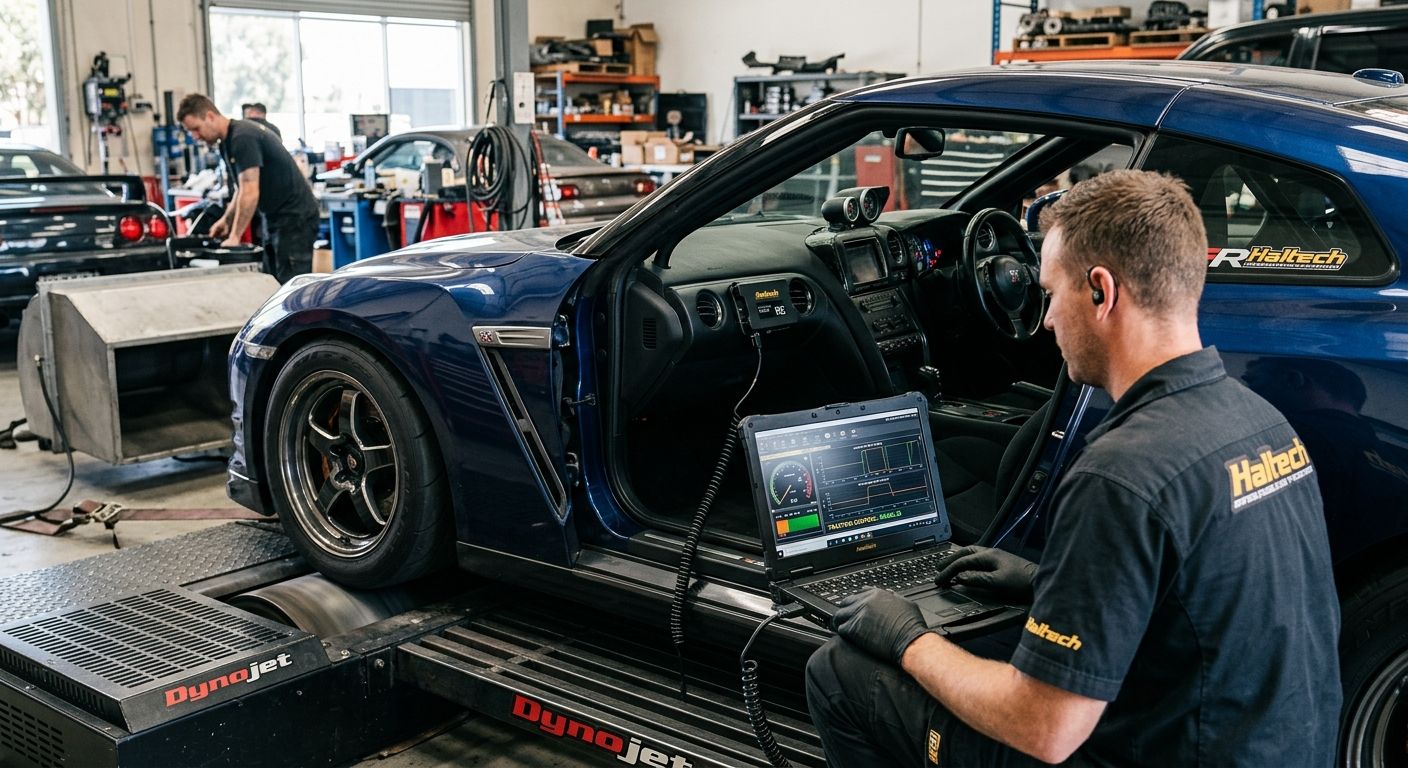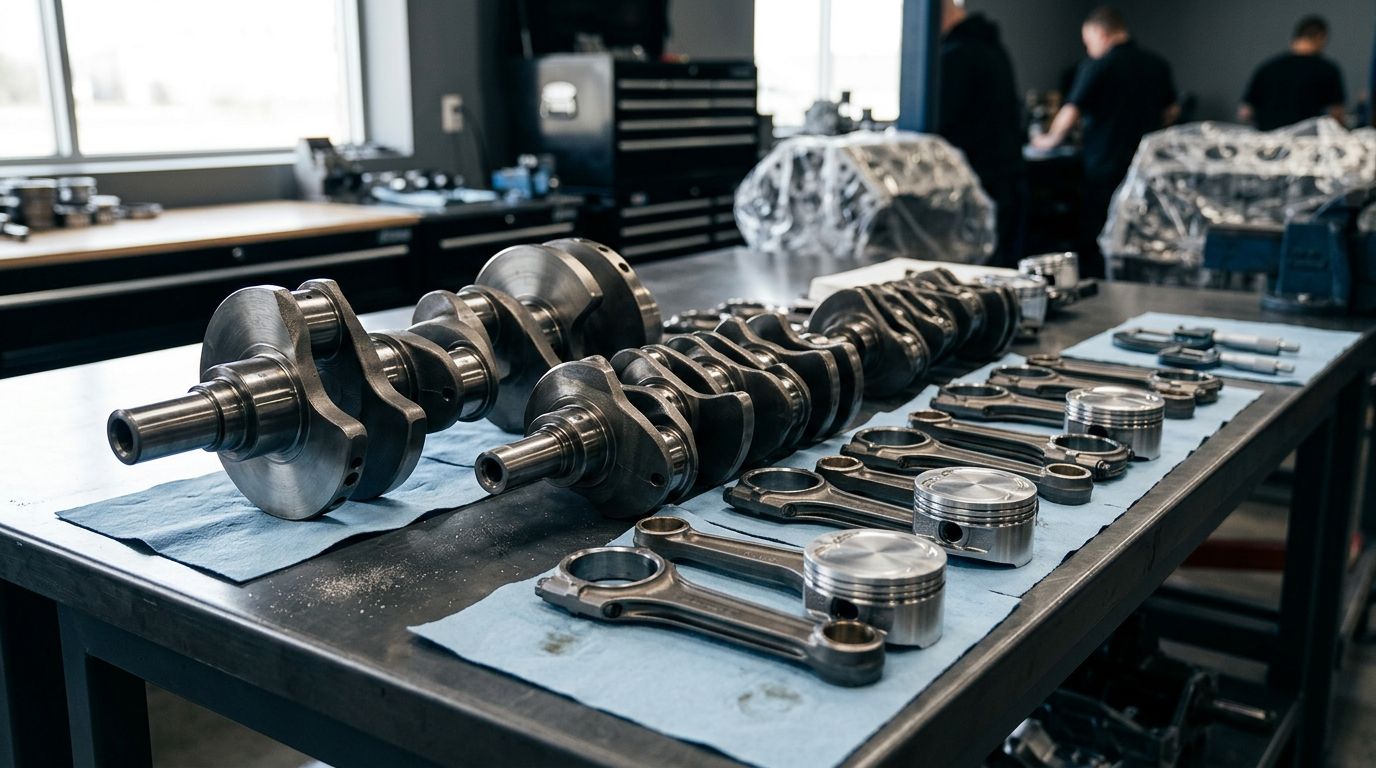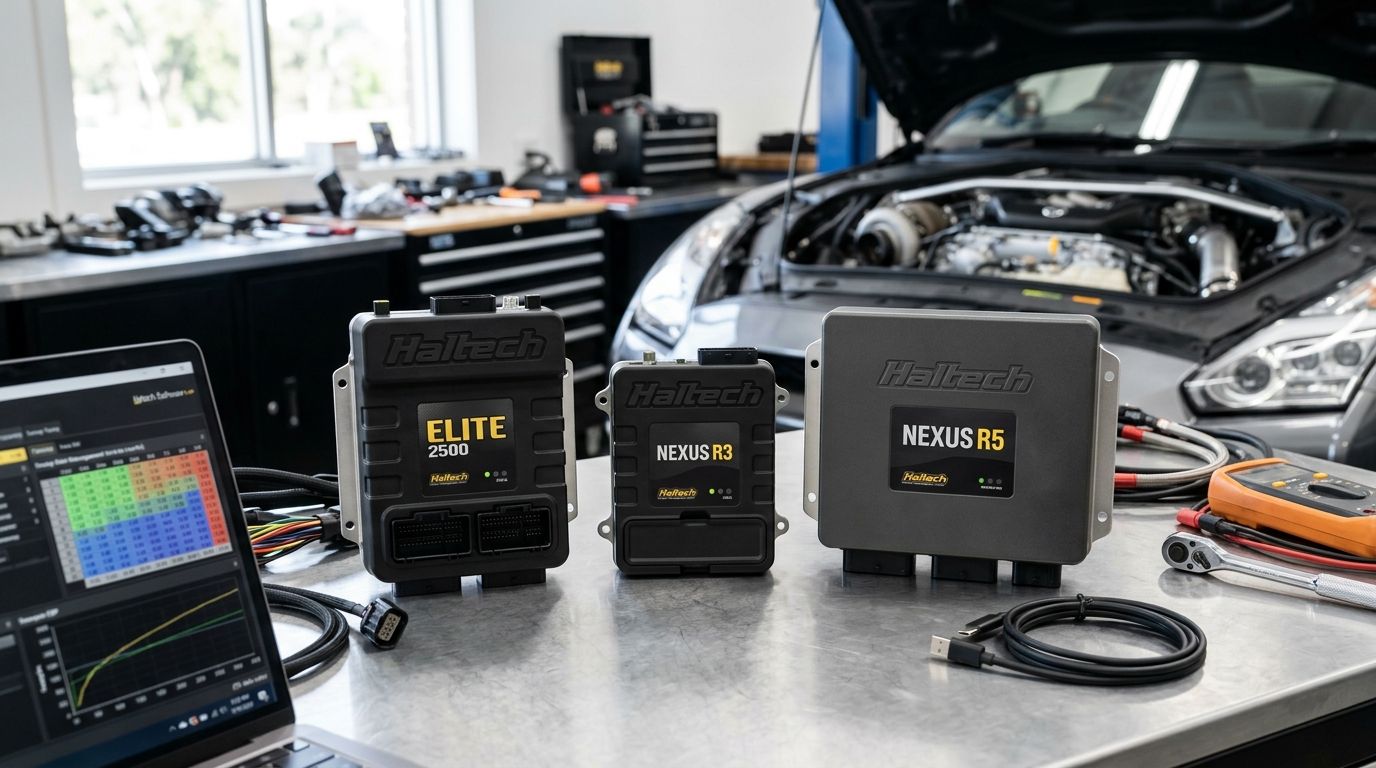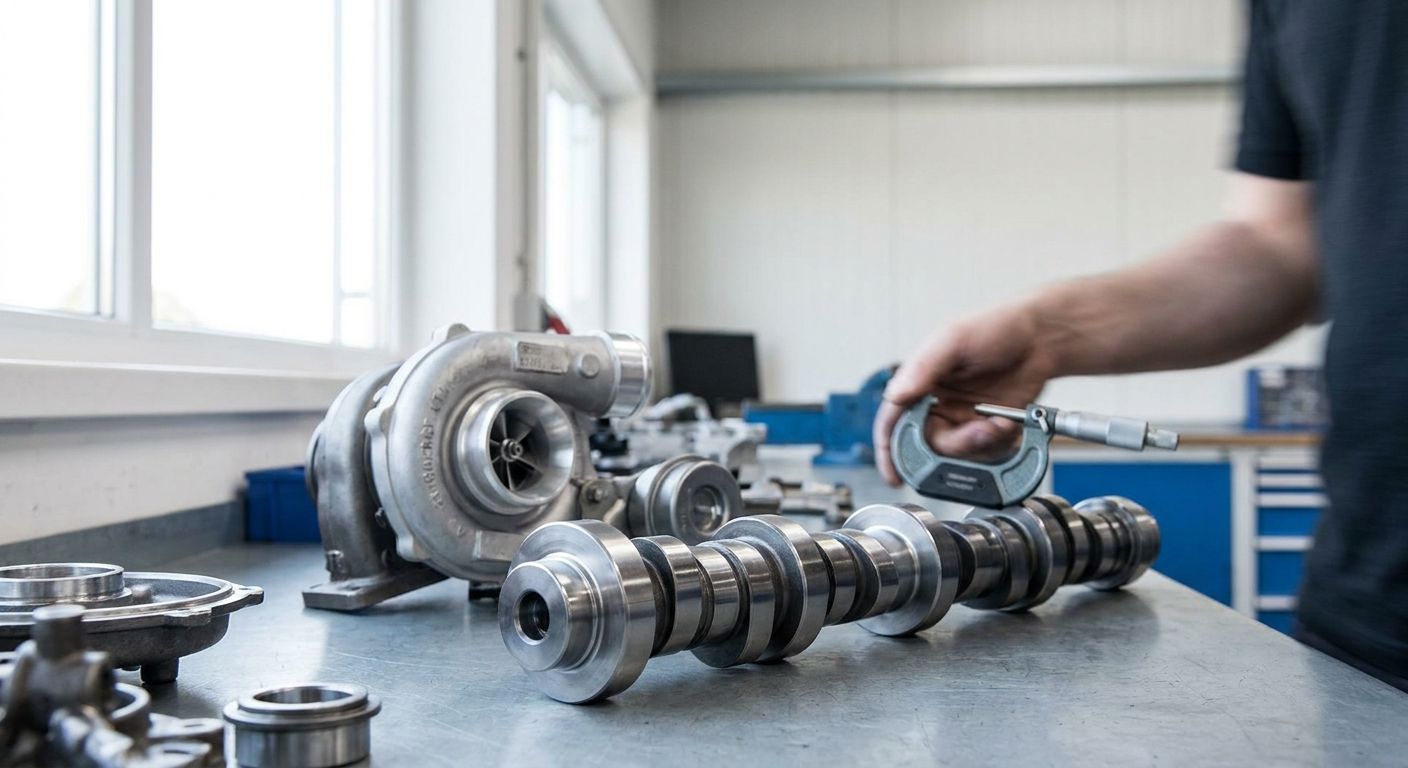
Choosing a camshaft profile for a turbocharged Barra build comes down to matching duration, lift and lobe separation angle to your turbo size, boost target and how the car gets driven day to day — not picking whatever grind made the most horsepower on a dyno sheet for someone else's combination.
- Match camshaft duration and LSA to turbo size and boost target, not to a horsepower number on a forum post.
- Mild street turbo Barra builds need a shorter-duration, tighter-LSA profile for idle quality and low-lag response.
- High-boost street/strip and drag Barra combos need longer duration and matched valvetrain — springs, retainers, pushrods.
- Custom billet regrinds solve combinations where no off-the-shelf grind matches the turbo, fuel and target power.
- The best camshaft for a Barra turbo build is the one specced against your actual turbo and boost curve, not a generic stage number.
Why this matters
A camshaft that's wrong for a turbocharged Barra doesn't just cost power — it costs driveability, boost response and sometimes valvetrain reliability. Too much overlap on a small-turbo street build bleeds boost back through the exhaust valve at low RPM and kills spool. Too little duration on a big-turbo drag combination chokes the head's flow before the turbo even gets going.
Spool Imports works through camshaft selection with Barra builders every week, and the same question comes up: "what cam do I need for my turbo?" The honest answer is that turbo size, boost target, fuel type and the rest of the valvetrain package all sit ahead of any single "best" camshaft.
What makes the right camshaft profile for a turbo Barra
Four engineering factors decide whether a profile suits a given Barra combination, ahead of any brand name on the cam card:
- Duration at .050 lift — longer duration shifts the power band up in RPM and generally needs more boost or RPM to make sense of it.
- Lobe separation angle (LSA) — tighter LSA increases overlap and low-lift flow, which helps naturally aspirated engines but can hurt low-boost turbo response.
- Valve lift — higher lift needs valve springs, retainers and sometimes pistons rated for the extra travel and seat pressure.
- Turbo size and boost target — a big single turbo wants more duration to feed it; a stock-frame or hybrid turbo wants a shorter, quicker-spooling profile.
- Fuel and tune — E85 and higher-octane pump fuel tolerate more aggressive overlap and duration than 98 octane on a stock ECU map.
- Intended use — daily driver, street/strip or dedicated drag combination changes what idle quality and low-RPM manners you can trade away.
At a glance: camshaft profile comparison for turbo Barra builds
| Profile category | Best for | Standout trait | Key limitation |
|---|---|---|---|
| Mild street turbo profile | Daily-driven Barra under moderate boost | Stock-like idle and driveability | Limits top-end gains on bigger turbos |
| High-flow street/strip profile | Stronger mid-range with a bigger single turbo | Broader powerband under boost | Rougher idle, needs supporting fuel system |
| Solid-lifter big-duration profile | Dedicated drag or track Barra combos | Holds RPM and flow at high boost | Needs matched springs, retainers, oiling |
| Custom billet regrind | Combinations that don't fit an off-the-shelf grind | Specced to your exact turbo and target power | Longer lead time, needs a proven cam grinder |
1. Mild street turbo profile: best camshaft for daily-driven Barra builds
This is the entry point for most Barra XR6 Turbo and 240T/245T street builds running a factory-style turbo or a mild hybrid, staying under roughly 20-25 psi with a stock-based fuel system.
A mild profile keeps duration short and LSA reasonably wide. That combination protects idle vacuum, keeps the factory ECU's idle and cold-start tables working properly, and avoids bleeding boost back through the exhaust valve during overlap at low RPM.
Mild street turbo profile pros:
- Retains near-stock idle quality and driveability
- Works with factory-style valve springs in most cases
- Fast boost response even on a stock-frame turbo
- Lowest risk when tuning on pump fuel
Mild street turbo profile cons:
- Leaves top-end power on the table if you later upgrade to a bigger single turbo
- Not the right choice once you're targeting four-digit power
Verdict: Buy if the car is driven daily and boost stays moderate — this is the safe, correct default for the majority of street Barra turbo builds in 2026.
2. High-flow street/strip profile: best camshaft for a bigger single turbo Barra
Once a Barra moves to a bigger single turbo — think a 62-76mm compressor wheel targeting 500-700rwkw — the mild profile starts to choke head flow before the turbo has even finished spooling. A longer-duration, moderate-lift profile opens the head up to match the extra air the bigger turbo is trying to force through it.
This category sits between a stock-style grind and a full drag cam. It's the profile most street/strip Barra builds land on once they outgrow a factory-frame turbo but still need the car to idle and drive on the street between passes.
High-flow street/strip profile pros:
- Broader powerband that matches a bigger single turbo's boost curve
- Noticeably stronger mid-range and top-end over a mild street grind
- Still streetable with the right tune and supporting valvetrain
High-flow street/strip profile cons:
- Rougher idle and reduced low-RPM manners compared to a mild profile
- Usually needs upgraded valve springs for a high-revving Barra build to control valve float at the higher lift and RPM this profile targets
- Demands a bigger fuel system to avoid running lean under the extra boost
Verdict: Buy for street/strip Barra builds sitting on a bigger single turbo — this profile is doing the job it's specced for once you're past 500rwkw.
3. Solid-lifter big-duration profile: best camshaft for a drag or track Barra combination
Dedicated drag and track Barra builds targeting 800rwkw and up run into a different problem: the engine spends most of its life at high RPM and high boost, so it needs duration and lift that would make a street car undriveable. This is where a solid-lifter or big-duration hydraulic roller profile takes over.
These grinds are built for RPM range and flow, not idle quality. Combined with a properly built valvetrain — matched springs, retainers, pushrods and often upgraded oil pump gears for reliability to handle the higher oil demand at sustained high RPM — this category is what dedicated Barra drag builds are running through 2026.
Solid-lifter big-duration profile pros:
- Holds head flow and power at high boost and high RPM
- Matches the demands of Barra combinations pushing toward or past 1000hp — see the 1000hp Barra engine combination guide for how the rest of the combination needs to scale with it
- Built for sustained track or strip use, not commuting
Solid-lifter big-duration profile cons:
- Poor idle quality and low-RPM driveability, often near-undriveable on the street
- Requires a full matched valvetrain package, not just the cam on its own
- Needs supporting fuel, ignition and exhaust flow — including a properly sized exhaust manifold for a turbo engine swap — to actually use the extra duration
Verdict: Buy only for a dedicated drag or track Barra build with the rest of the combination specced to match — Skip it on anything that still needs to drive to work.
4. Custom billet regrind: best camshaft for a bespoke Barra turbo combination
Some Barra combinations don't fit neatly into an off-the-shelf category — an unusual turbo size, a specific fuel (E85 versus 98 octane), a particular RPM ceiling, or a target power figure that sits between two standard grinds. A custom billet regrind, cut to a spec built around your actual combination, is the answer here rather than compromising on a catalogue profile.
This is where engine combination advice matters more than any single part number. The camshaft is specced against the turbo's compressor map, the target boost curve, the fuel system and the rest of the valvetrain, rather than picked off a shelf and hoped for.
Custom billet regrind pros:
- Specced precisely to your turbo, fuel and target power, not a generic stage
- Avoids the compromises of forcing an unusual combination onto a standard grind
- Can be matched to unusual valvetrain geometry or non-standard head work
Custom billet regrind cons:
- Longer lead time than a stocked profile
- Costs more to develop than picking a catalogue grind
- Only worth it once you know your turbo, fuel and target power with confidence
Verdict: Hold for most builders until the rest of the combination — turbo, fuel system, target power — is locked in. Once it is, this is the right move for a combination that doesn't fit a standard grind.
“Match the camshaft to the turbo and boost target, not the turbo to whatever cam happened to be in stock.”
How this ranking was built
Each profile category above is ranked against the six criteria listed earlier — duration, LSA, lift, turbo size, fuel and intended use — rather than against horsepower claims from unrelated builds. The order runs from the most common Barra turbo combination (mild street) through to the least common (custom billet), matching how most Barra builds actually progress over time.
Which camshaft profile should you choose?
For most turbocharged Barra builds still doing daily driving duty, the mild street turbo profile is the default correct answer — it protects idle quality and driveability while still supporting moderate boost. Step up to the high-flow street/strip profile once a bigger single turbo is in the plan and 500rwkw-plus is the target. Reserve the solid-lifter big-duration profile and custom billet regrinds for dedicated drag and track builds where the rest of the combination — valvetrain, fuel, exhaust — has already been specced to match.
If your combination doesn't cleanly fit one of these categories, that's the sign to work through the spec with someone who can look at the turbo, fuel plan and target power together before the cam gets ordered.
FAQ
What's the best camshaft for a Barra turbo build?
There's no single best camshaft for every Barra turbo build in 2026 — a mild street profile suits daily-driven cars under moderate boost, while bigger single-turbo and drag combinations need longer duration and a matched valvetrain package. The right profile depends on turbo size, boost target and how the car is driven.
Do I need upgraded valve springs with a turbo Barra camshaft?
Any profile beyond a mild street grind generally needs upgraded valve springs to control valve float at the higher lift and RPM involved. Factory Barra springs are matched to the factory cam, not an aftermarket profile.
Will a bigger camshaft hurt boost response on a Barra turbo build?
Yes, if the duration and lobe separation angle don't match the turbo size. A longer-duration profile on a small, quick-spooling turbo increases overlap and can bleed boost back through the exhaust valve at low RPM, slowing spool rather than helping it.
Can I run a drag-spec camshaft on a daily-driven Barra?
Technically yes, but idle quality and low-RPM driveability suffer heavily. Solid-lifter, big-duration profiles are built for sustained high RPM and high boost, not commuting, and are better reserved for dedicated drag or track builds.
Does fuel type change which camshaft profile suits a Barra turbo build?
Yes. E85 tolerates more aggressive overlap and duration than 98 octane pump fuel on a stock-based ECU tune, which opens up more profile options once the fuel system and tune are built around E85.
When does a custom billet camshaft regrind make sense for a Barra?
A custom regrind is worth it once turbo size, fuel and target power are locked in and no off-the-shelf profile matches the combination closely enough. It's rarely the right first step before those variables are settled.
What else needs upgrading alongside a bigger Barra turbo camshaft?
Valve springs, retainers and often pushrods need to be matched to the new lift and RPM range, and oiling capacity should be checked for sustained high-RPM use. The camshaft is one part of a matched valvetrain package, not a standalone upgrade.
One last thing
The camshaft is almost never the part that limits a Barra turbo build on its own — the valvetrain package around it usually fails first if it isn't upgraded to match. A bigger profile without matched springs and retainers just moves the failure point from the cam card to the valve springs at higher RPM.