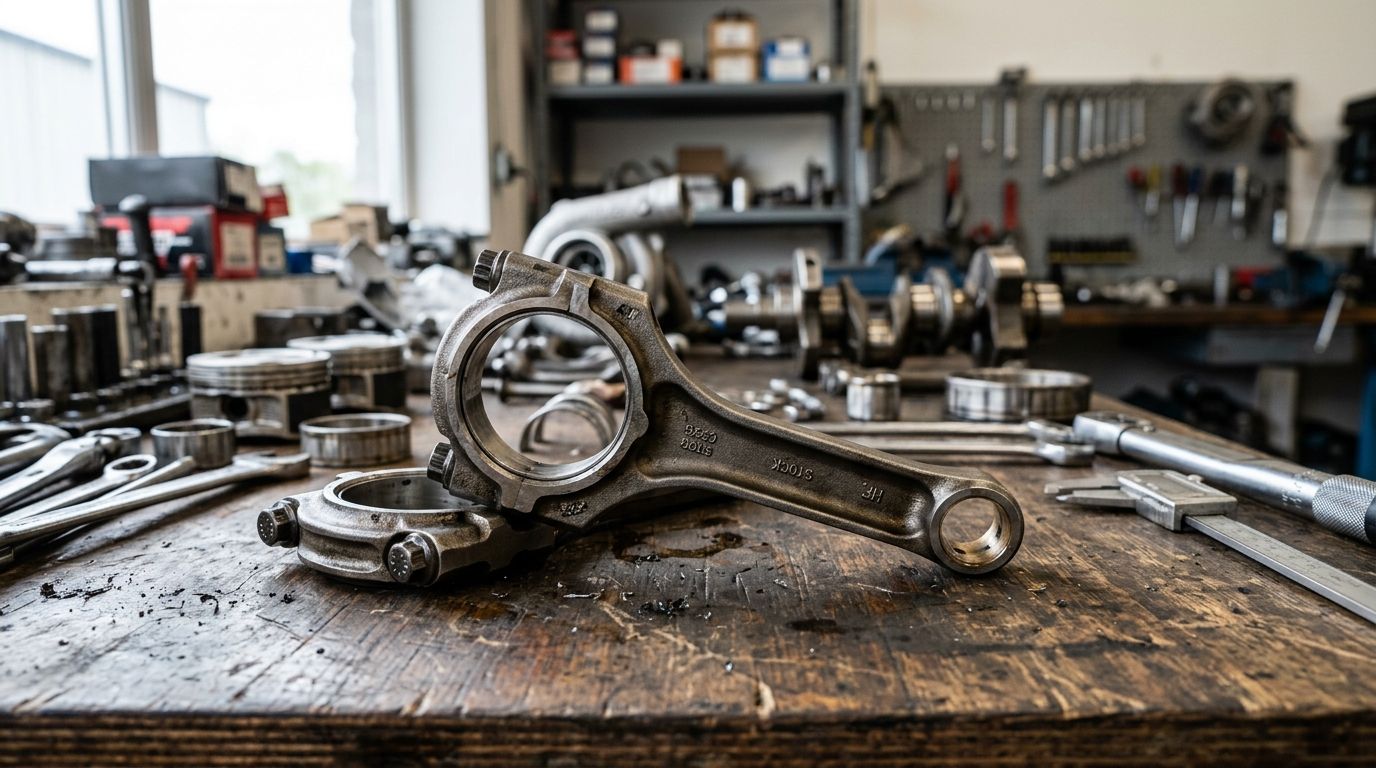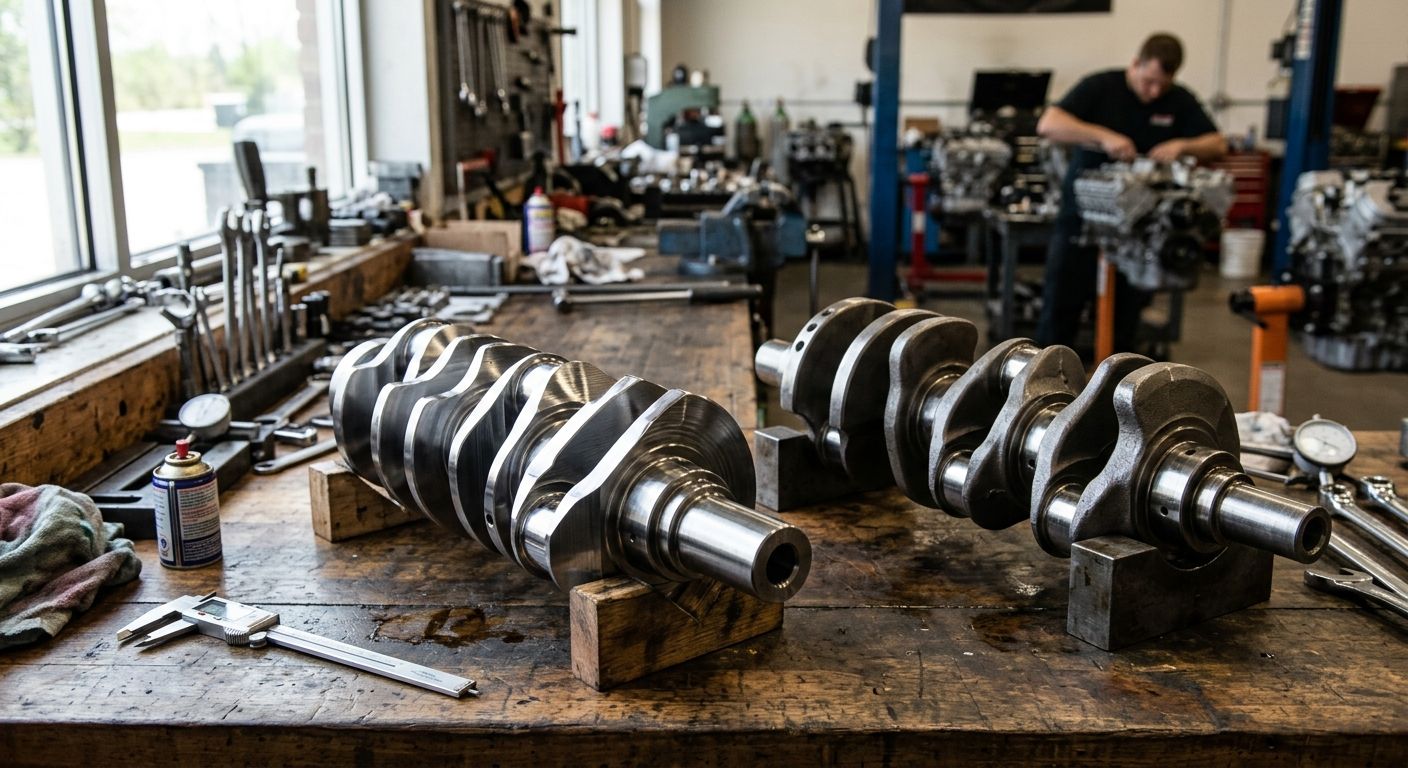
A billet crankshaft is worth it over a forged crank when your build needs a custom stroke, a forced-induction power target beyond what the forged option was designed for, or repeated high-rpm competition duty — for a stock-stroke street or strip engine, a quality forged crank still does the job in 2026.
- A billet crankshaft is worth it over forged for custom stroker builds, forced induction and competition-spec engines in 2026.
- Forged cranks machined from 4340 chromoly steel remain the stronger buy for street and mild performance builds on stock stroke.
- Billet crank stock allows custom stroke, journal and counterweight machining that a forging die cannot produce.
- Choose a billet crankshaft when no forged option exists for your target stroke or engine platform.
- Forging still wins on fatigue resistance and lead time for common stroke lengths in 2026.
Why this matters
The crankshaft sits at the centre of the rotating assembly, and it's the single hardest part to replace mid-build once pistons, conrods and bearings are matched around it. Get the material call wrong and you either pay for machining you didn't need or run a forged crank past what it was engineered for.
Spool Imports covers the selection process in more depth in the billet crankshaft selection guide, which walks through stroke, journal and material options by platform. The short version: billet buys you flexibility and fatigue margin at the top end, forged buys you a proven, faster-to-source part for everything else.
Is a billet crankshaft worth it over forged in 2026?
The answer comes down to whether a forged crankshaft actually exists for your stroke length, journal spec and engine platform — and whether your intended rpm ceiling and duty cycle sit inside what that forged part was designed to survive.
| Factor | Billet crankshaft | Forged crankshaft |
|---|---|---|
| Starting material | Machined from a solid billet, typically 4340 or 4330V chromoly steel | Forged under pressure from a steel billet, then machined |
| Grain flow | No forging grain-flow benefit; strength comes from raw material grade and heat treatment | Forging aligns grain flow to the crank shape, adding fatigue resistance |
| Custom stroke or journal specs | Machined to any specified stroke, journal diameter or counterweight profile | Limited to whatever the forging die was designed to produce |
| Typical application | Custom stroker combinations, forced-induction competition engines, platforms with no forged option | Stock-stroke and moderate stroker builds, street and strip performance engines |
| Lead time | Machined to order — longer production lead time | Usually stocked or shorter lead time for common applications |
| Best for | Builds needing a stroke, journal or counterweight spec no forged crank covers | Builds staying within an available forged crank's stroke and journal range |
A billet crank is the right call the moment your stroke or journal spec falls outside what a forged crank offers — everything else is a strength-versus-lead-time trade-off.
Billet crankshafts: where the extra machining pays off
- Custom stroke lengths. Stroker builds that push past what a forged crank was designed for need a billet crank machined to the exact stroke and rod journal spec.
- Forced induction beyond the forged crank's design envelope. Turbo or supercharged combinations targeting sustained high cylinder pressure benefit from the counterweight and journal flexibility billet machining allows.
- Competition duty cycles. Engines run at sustained high rpm for full race distances put more fatigue cycles through the crank than a street engine sees in years.
- Platform gaps. Some engine platforms simply don't have a forged crank option in the stroke you want — billet is the only route to that combination.
Verdict: worth it when your stroke, journal spec or duty cycle sits outside what a forged crank on that platform was built to handle.
Forged crankshafts: still the right call for most builds
- Stock-stroke and mild stroker engines. A forged 4340 crank at the factory or common aftermarket stroke covers the vast majority of street and strip builds.
- Faster turnaround. Forged cranks in common applications are typically available faster than a custom billet spec.
- Proven fatigue life. Forging grain flow gives forged cranks a genuine fatigue-resistance advantage over billet at equivalent material grade, for the loads they were designed around.
- Lower total build cost. Spending the budget on pistons, conrods, bearings and valvetrain instead of a billet crank often does more for a street or moderate power build.
Verdict: worth it for street, daily-driven and moderate power builds where the stroke and journal spec you want already exists as a forged option.
Why the billet vs forged decision varies
- Target stroke length. If no forged crank covers the stroke you're chasing, billet is the only path — see how stroke changes translate into displacement in the stroker kit displacement gains by platform breakdown.
- Aspiration type. Forced induction combinations load the crank differently to naturally aspirated engines and often push builders toward billet sooner.
- Competition rpm ceiling and duty cycle. A crank doing full race distances at sustained high rpm sees a different fatigue load than one doing weekend street driving.
- Engine platform. Some platforms have a deep forged crank catalogue; others have limited or no forged options at certain strokes.
- Rebuild frequency. A crank expected to survive multiple seasons of competition without a rebuild justifies the billet spend differently than a once-a-year track day engine.
- Budget across the whole rotating assembly. The crank is one part of a matched system — pistons, conrods and bearings all need to suit the same power target.
Is a billet crankshaft stronger than a forged crankshaft?
A billet crankshaft isn't automatically stronger than a forged crank — forging's grain-flow alignment gives a genuine fatigue-resistance advantage at equivalent material grade. Billet's real advantage is machining flexibility: custom stroke, journal and counterweight specs that a forging die physically can't produce.
Do I need a billet crank for a stroker build?
Not every stroker build needs a billet crank — many common stroker combinations are covered by an off-the-shelf forged crank at the standard stroker length. Billet only becomes necessary once your target stroke, journal size or engine platform falls outside what forged options cover.
Can a forged crankshaft handle a turbocharged engine?
Yes, a forged crankshaft handles turbocharged engines across the vast majority of street and strip builds running factory or common aftermarket stroke. Billet only becomes the better call once cylinder pressure, rpm ceiling or duty cycle push past what the forged option on that platform was engineered around.
Confirm your crank spec before you order
Match stroke, journal and material to your target power and platform.
FAQ
Is a billet crankshaft worth it over forged in 2026?
A billet crankshaft is worth it in 2026 when your stroke, journal spec or duty cycle falls outside what an available forged crank was designed for. For stock-stroke and mild stroker street builds, a forged crank remains the better value.
What material are billet crankshafts made from?
Billet crankshafts are machined from a solid bar of steel, commonly 4340 or 4330V chromoly. The whole crank is cut from one piece rather than shaped under a forging press.
Are forged crankshafts strong enough for turbo builds?
Yes, forged crankshafts handle turbocharged engines across most street and strip builds running factory or common stroker specs. Billet only becomes necessary once cylinder pressure or rpm ceiling exceeds the forged crank's design envelope.
Does a billet crankshaft last longer than a forged crank?
Not automatically. Forging's grain-flow alignment gives forged cranks a genuine fatigue-resistance edge at equivalent material grade; billet's advantage is custom machining, not inherent longevity.
Can I get a custom stroke on a forged crankshaft?
Forged crankshafts are limited to the strokes the forging die was designed to produce, so custom or unusual stroke lengths generally require a billet crank instead.
Do race teams always use billet crankshafts?
Not always. Many competition builds run forged cranks when the stroke and duty cycle sit within the forged part's design range; billet gets used when the combination needs a spec forging can't provide.
How do I know if my platform has a forged crank option?
Check the available stroke, journal and material specs for your specific engine platform before assuming billet is required. Spool Imports' billet crankshaft selection guide covers this by platform.
One last thing
The crank isn't the part that decides whether your build survives its intended power and duty cycle on its own — it's one component in a matched rotating assembly. A billet crank paired with the wrong conrods, bearings or piston-to-wall clearance still fails; treat the crank, pistons and conrods as one system, not three separate purchases.