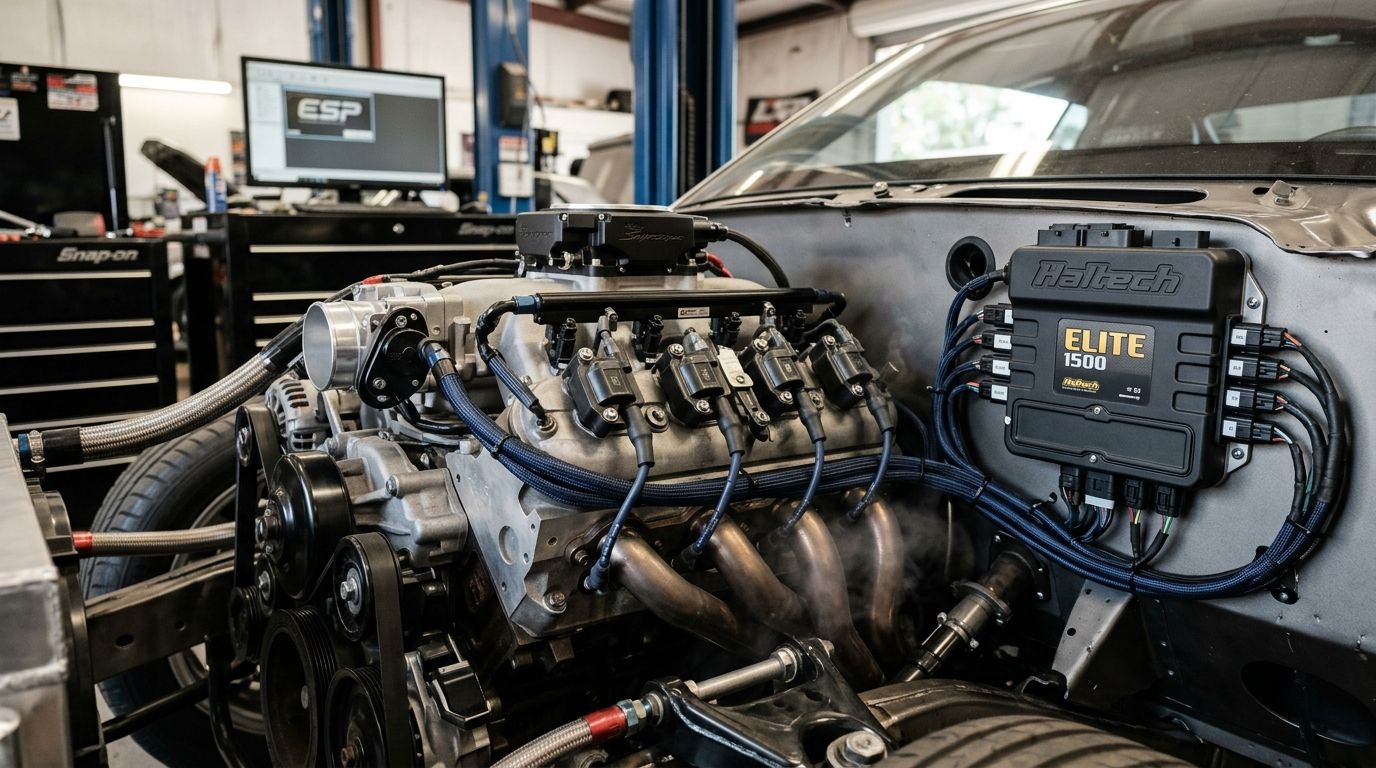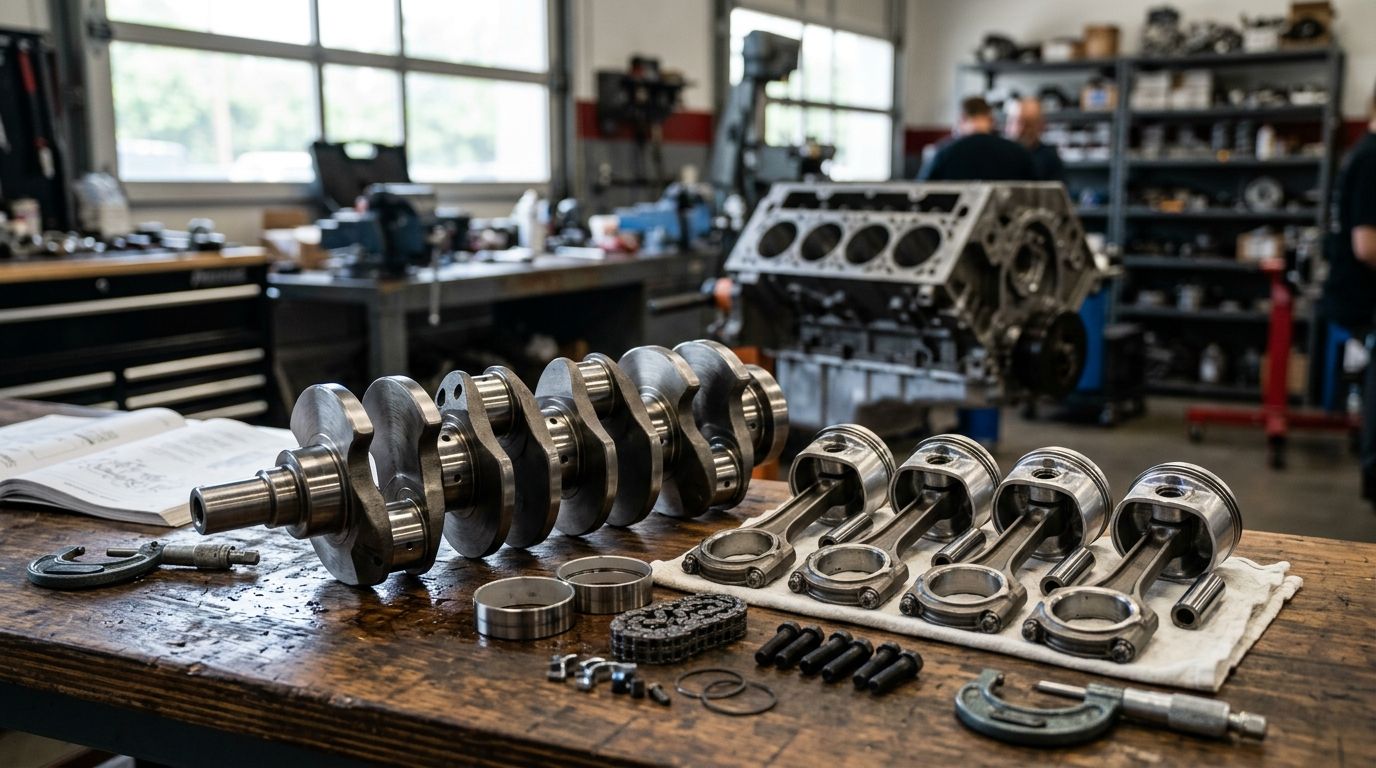
A stroker kit's price is set almost entirely by three variables: crankshaft construction (forged vs billet), connecting rod material and brand, and how much machining the block needs to accept the larger rotating assembly — not by a single fixed retail figure. Because those variables shift with engine platform, target power and whether you're running new pistons or reusing existing ones, Spool Imports quotes stroker kits individually rather than publishing one number that fits every build in 2026.
- Stroker kit cost is set by crankshaft type, conrod material and machining scope, not one fixed price.
- Machining and balancing labour is the most commonly underquoted line item on a stroker build.
- Billet cranks, forged conrods and matched pistons each move total cost independently — price them as a system.
- Platform (RB30, LS3, Barra) changes which components exist, which changes what the kit costs.
- Get an itemised quote separating parts from machine work before committing to a crank.
“Machining and balancing often cost more than the stroker kit parts themselves.”
Why this matters
A stroker kit is a bottom-end rotating assembly built around a longer-stroke crankshaft, matched connecting rods and pistons designed to run at the resulting deck height. Buyers shop by brand and part number, then get caught out when block work, balancing and clearancing arrive as a separate — sometimes larger — cost.
Understanding what actually drives stroker kit cost before you compare part numbers is what keeps a 2026 build inside budget. It also tells you whether the capacity gain justifies the spend at all.
How much does a stroker kit cost in 2026?
There is no single retail number that applies across engine platforms, because a four-cylinder stroker kit is a different scope of parts and machining than an RB30 or LS3 package. What does transfer platform to platform is where the money sits inside the kit.
| Component | Role in the kit | Cost impact |
|---|---|---|
| Crankshaft (billet vs forged) | Sets stroke length and rotating mass | High |
| Connecting rods (H-beam vs I-beam) | Transmit combustion load to the crank | Medium-high |
| Pistons (forged, matched compression) | Matched to bore, stroke and target compression | Medium |
| Bearings | Set and maintain rotating assembly clearances | Low |
| Machining (align hone, balance, clearancing) | Makes the parts work as one system | Medium-high, frequently underquoted |
The machining row is the one most builders leave out of their mental budget. Align honing, balancing the full rotating assembly and clearancing the block for rod and piston skirt travel is labour, and that labour scales with how much material the block actually needs removed.
Treat a stroker kit quote as two quotes: parts and machine work. A kit that looks affordable on the shelf can still blow the build budget once the machine shop itemises its side.
Why stroker kit cost varies
- Crankshaft construction — a billet crankshaft is machined from solid steel and typically costs more than a forged crank of the same stroke because of the extra machining time involved.
- Connecting rod material and beam design — H-beam rods, I-beam rods and materials such as 300M carry different production costs, and CP-Carrillo rods sit at a different tier again from budget alternatives.
- Piston specification — forged pistons matched to a specific bore, stroke and compression ratio cost more than off-the-shelf sizes.
- Machining scope the block demands — clearancing for a longer stroke, plus align honing and balancing, adds labour on top of parts.
- Engine platform — RB30, LS3 and Barra have a wide range of proven stroker components available; less common engines have fewer options and less machine shop familiarity.
- New versus reused ancillaries — bearings, fasteners and gaskets bought fresh with the kit add to the total against reusing hardware still inside spec.
Crankshaft choice sets the floor
Crankshaft type is usually the single biggest swing in a stroker kit's total cost, because it drives both material cost and machining hours. The guide to choosing a billet crankshaft for your build covers when billet earns the extra outlay over forged at a given power target — and when it doesn't.
Conrods: match the load, not the price tier
Rod choice on a stroker build is a load question. Longer stroke changes rod angle and side loading, so the rod spec needs to suit the intended rpm and cylinder pressure rather than defaulting to the most expensive option in the catalogue. SPOOL H-Beam and X300 300M I-Beam rods exist for exactly this reason: different beam designs for different load patterns.
Platform changes what's available, not just what it costs
Stroker component availability and displacement gain both differ by platform. The stroker kit displacement gains by engine platform reference breaks down how stroke translates to added capacity across common engines — and that capacity figure is what determines whether the parts and machining spend is justified.
Get your stroker combination quoted properly
Talk through crank, rod and machining scope before you commit to parts.
Related questions
Is a stroker kit worth it in 2026?
Whether a stroker kit is worth it in 2026 depends on whether you want added displacement for torque and response, or peak power that a well-built stock-stroke combination could also reach. The added machining and component cost only pays off when the build genuinely needs the extra capacity.
How much extra power does a stroker kit add?
The power gain comes from the displacement increase working with camshaft, head work, fuelling and boost — the crank alone does not set the final number. Treat the stroker as one element of a matched combination, not the whole answer.
Can you daily drive a built stroker engine?
Yes, if components and clearances are selected for street reliability rather than peak-power-only durability, and the tune matches the fuel and boost target. A drag-only stroker with tight clearances is a different build to one specced for daily use.
FAQ
What determines stroker kit cost in 2026?
Crankshaft construction, connecting rod material and machining scope determine stroker kit cost in 2026 more than any single part number. Engine platform matters too, because it changes which components are available and how much clearancing the block needs.
Is a billet crankshaft always more expensive than forged?
A billet crankshaft is generally more expensive than a forged crank of the same stroke because it is machined from solid steel and takes more machining time. Whether that cost is justified depends on target power and how hard the rotating assembly will be worked.
Does a stroker kit include machining?
No. A stroker kit covers the crankshaft, connecting rods, pistons and bearings, not the block work. Align honing, balancing and clearancing are quoted separately by the machine shop assembling the engine.
Do all engine platforms have the same stroker kit options?
No. Component availability differs by platform, with RB30, LS3 and Barra having a wider range of proven combinations than less common engines. Check platform-specific displacement gains before comparing kits across different engines.
Are H-beam rods necessary for a stroker build?
H-beam rods are not mandatory for every stroker build. Rod choice should match the target rpm and cylinder pressure, since a longer stroke changes rod angle and side loading, rather than defaulting to the most expensive option available.
Why do stroker kit quotes vary so much between shops?
Quotes vary mainly because of machining scope, labour rates and whether ancillary parts like bearings and fasteners are included or reused. Ask for an itemised quote separating parts from machine work before comparing.
Should I buy a stroker kit as a package or piece by piece?
A matched package reduces the risk of clearance and compatibility issues between crank, rods and pistons. Piecing a combination together works if you or your machine shop verify every clearance against spec first.
Does a stroker kit change how long an engine build takes?
Yes. The extra block clearancing and full rotating assembly balancing add machine shop time compared with a stock-stroke rebuild. Factor that into the schedule as well as the budget.
One last thing
The line item that wrecks stroker budgets in 2026 is almost never the crankshaft — it is the block clearancing nobody measured for until the parts arrived. Have the machine shop check rod and piston skirt clearance against the specific stroke you are ordering before the kit is paid for, not after.