Stroker kits for diesel tow rig workshops increase displacement by extending crankshaft stroke and matching forged pistons and connecting rods to the new dimension, aiming to lift low-rpm torque for towing rather than chase peak power. A tow rig stroker build prioritises rod ratio, bearing load and duty-cycle durability over the high-rev headroom a motorsport stroker kit is engineered for.
- Stroker kits for diesel tow rig workshops raise displacement through stroke length, not rpm, to add towing torque.
- Billet crankshafts and forged pistons matched to the new stroke handle sustained tow-duty load better than stock-stroke rebuilds.
- Rod ratio and piston compression height decide long-term reliability more than the displacement figure itself.
- Bearing clearance for constant load differs from clearance set for high-rpm motorsport builds.
- Spool Imports supplies billet crankshafts, forged pistons and conrods suited to custom-spec diesel stroker builds in 2026.
Why stroker kits matter for diesel tow rig workshops
Workshops building for Landcruiser, Patrol and similar diesel tow platforms are solving a different problem to a drag or circuit engine builder. The customer wants more torque at low rpm to move a loaded trailer or camper, and the engine has to hold that load for hours, not seconds. A stroker kit is one of the direct mechanical ways to get there: lengthen the crank stroke, and the same bore produces more displacement and more torque at a given rpm without relying on turbo boost alone.
The catch for this segment is duty cycle. A motorsport stroker build is set up for short bursts at high rpm and gets rebuilt on a schedule. A tow rig stroker build sits at moderate rpm under continuous load for long periods, which changes what matters in component selection: bearing clearance, oil control and rod ratio carry more weight than outright stroke length. Workshops that copy a race-spec stroker kit spec sheet onto a tow rig build without adjusting for duty cycle are the ones that see comebacks in 2026.
Building a stroker kit for a diesel tow rig
Assess the stock bottom end before adding stroke
Start with what the factory rotating assembly already tells you. Every stroke increase has to clear the block deck, the oil pan rails and the factory oiling galleries before any parts get ordered.
- Measure factory stroke, rod length and piston compression height as a baseline
- Check deck height and block-to-pan clearance for the target stroke increase
- Inspect the existing bores for wear, taper and any prior overboring
- Confirm the block casting has enough material at the pan rail for a longer-throw crank
- Note any existing main or rod bearing wear that points to prior overload
Select the crankshaft stroke and material
A stock-length crank reground or a factory stroker crank is the cheaper starting point, and it works for mild stroke increases where factory metallurgy still has margin. Where the workshop is chasing a bigger stroke or repeat heavy-tow use, the factory crank runs out of fatigue strength faster than a billet piece.
- Calculate the maximum stroke increase the block and pan will physically clear
- Check counterweight balance requirements change with any stroke increase
- Confirm crank flange and reluctor compatibility with the existing bellhousing and trigger setup
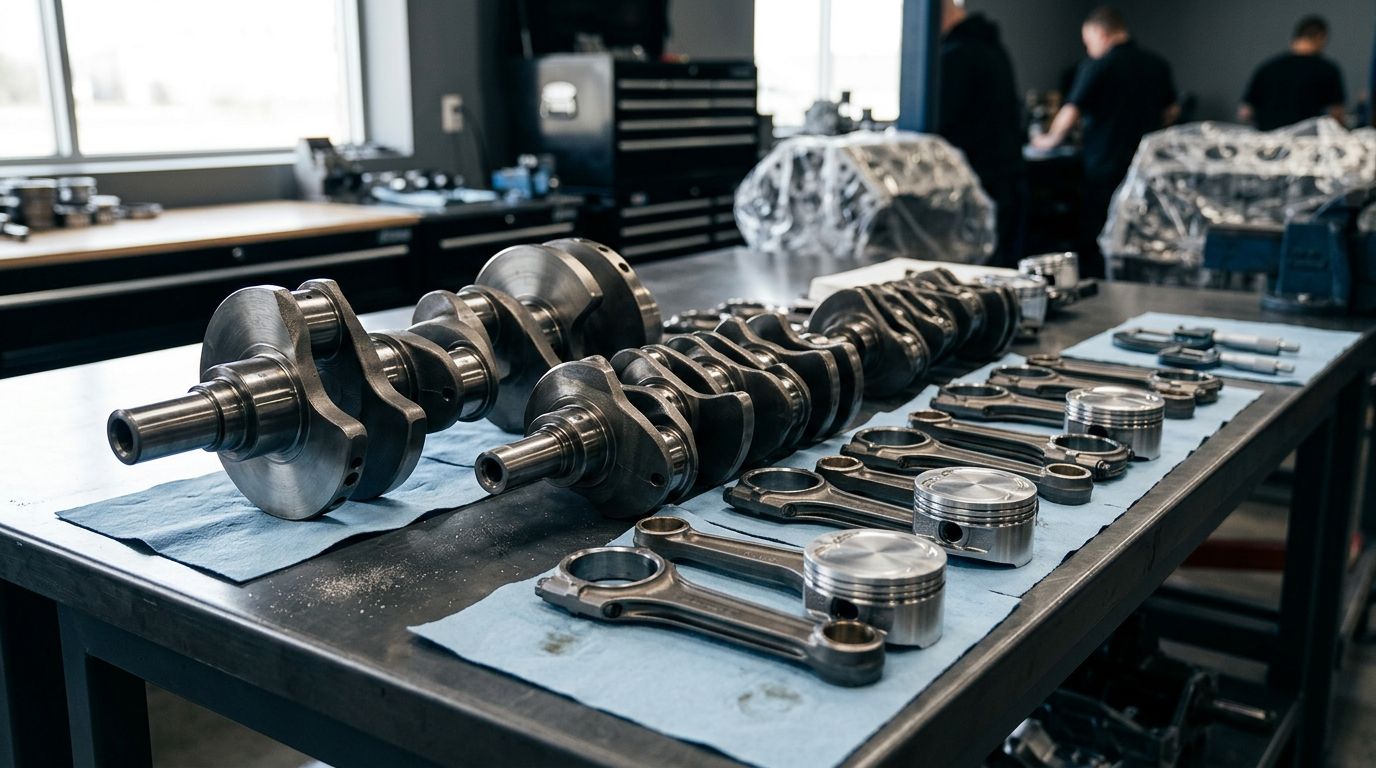
- Where load is high or stroke gain is significant, step up to a billet crankshaft for the added fatigue margin over a stock or reground unit — the billet crankshaft selection guide covers material and journal sizing in more detail
Match the connecting rod length and ratio
Rod ratio (rod length divided by stroke) sets piston side-load and how long the cylinder walls and rings last under continuous load. A shorter rod ratio increases side-load on the piston skirt, which matters more in a tow rig running for hours than in an engine only under load for a few seconds at a time.
- Calculate rod ratio for each rod-length option against the new stroke
- Choose forged steel or billet rods rated for the load duration, not just the peak cylinder pressure
- Confirm big-end bearing bore size matches the intended bearing clearance spec
- Check rod bolt stretch spec is rated for sustained cyclic load, not a single peak event
- The forged pistons and conrods guide breaks down how rod material and beam design change under continuous versus intermittent load
Choose piston compression height and ring pack
Compression height has to be recalculated every time rod length or stroke changes, or the piston sits proud of or below deck at top dead centre. Diesel combustion pressure runs higher than a petrol engine at the same displacement, which is established engineering knowledge and one reason ring pack selection matters more here than on a petrol stroker build.
- Recalculate compression height for the confirmed crank stroke and rod length combination
- Select a ring pack rated for the diesel combustion pressure and expected duty cycle
- Confirm piston skirt coating and pin bore size suit the higher, sustained cylinder load
- Check piston-to-valve clearance against any head or camshaft changes already planned
Set bearing clearance for continuous load
Bearing clearance for a motorsport engine is set to survive short, extreme rpm spikes. A tow rig engine needs clearance set for hours of sustained load at moderate rpm, which is a different calculation, not just a tighter or looser number picked at random.
- Set bearing clearance to the load duration and oil temperature the tow rig will actually see
- Match bearing crush and material to the increased rod and main journal load from the longer stroke
- Confirm oil pump volume and pressure still cover the added bearing surface area
- The engine bearing clearance reference explains how clearance targets shift between short-burst and sustained-load applications
Balance the rotating assembly
Every stroker build needs a full balance job once the new crank, rods and pistons are matched. Skipping this step on a diesel tow rig shows up as vibration and premature bearing wear well before it would on a lighter, higher-revving engine.
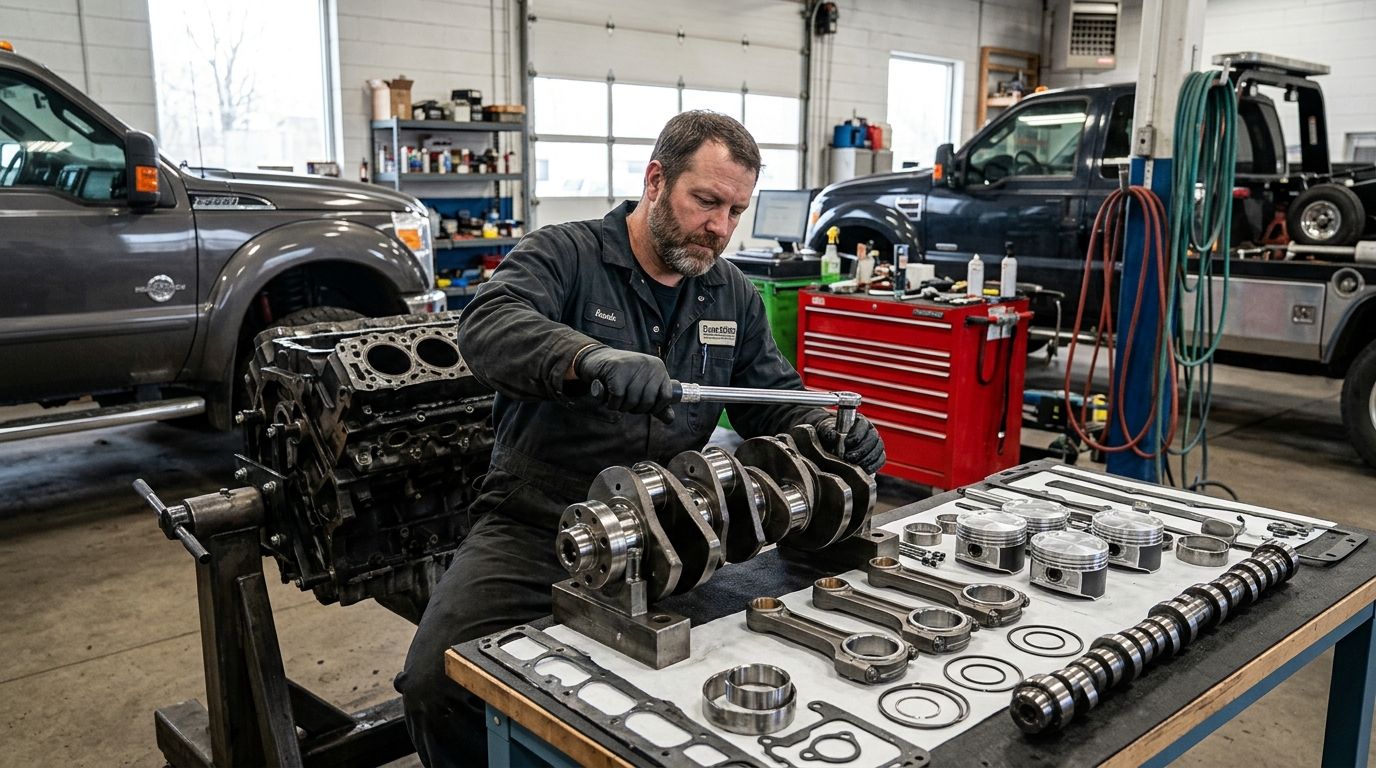
- Balance the assembled crank, rods, pistons and flywheel/flexplate as one matched set
- Re-check balance after any substitution of a single component post-assembly
- Confirm harmonic balancer selection accounts for the added rotating mass
Torque and fastener specs
Fastener stretch and torque values are not optional line items on a stroker build carrying sustained load. ARP studs and bolts are the standard trade reference point for main cap and rod bolt upgrades on this type of build.
- Torque main caps and rod bolts to the fastener manufacturer's stretch spec, not a generic figure
- Re-torque after initial heat cycling before the engine goes into full service
- Confirm head fastener spec matches the higher sustained cylinder pressure of the diesel platform
Confirm oil and cooling capacity for sustained tow load
A stroker build under continuous towing load generates more heat at the bearings and rings than the same engine at idle or light cruise. Oil capacity and cooling need to be checked against the new load, not assumed adequate because they worked on the stock-stroke engine.
- Confirm oil pan capacity and pickup location suit the towing angle and sustained load
- Check oil cooler sizing against the expected continuous duty cycle
- Verify oil pump gear condition and clearance, since worn gears show up faster under sustained load
“The rod ratio, not the stroke number, decides how long the bearings last under sustained tow load.”
Stroker kit options for diesel tow rig builds
| Option | Best suited to | Key limitation |
|---|---|---|
| Stock-stroke rebuild (OEM spec components) | Light-duty tow rigs replacing a worn factory bottom end | No torque gain over factory output |
| Mild stroker (factory block, upgraded crank stroke) | Most workshops adding towing torque without turbo or fuel system changes | Needs full block clearance and piston-to-wall verification |
| Billet stroker kit (billet crank, forged pistons, forged rods) | High-load commercial tow rigs and repeat heavy towing | Higher machining and balancing time, longer lead time |
| Custom big-stroke build | Extreme torque targets, tray-back and off-road load carriers | Requires full fuel, turbo and cooling system review, not a bolt-in |
Get engine combination advice
Talk through crank stroke, rod ratio and bearing spec for your tow rig build.
Common mistakes diesel tow rig workshops make
- Increasing stroke without checking piston-to-wall and rod big-end clearance against the block's existing oil galleries first.
- Reusing factory main and rod bearings rated for stock loads under a heavier, longer-stroke rotating assembly.
- Skipping the balance job after mixing a new crank with new pistons and rods, assuming factory balance still applies.
- Not re-checking oil pump volume and pressure for the added bearing surface area a longer stroke creates.
- Chasing a torque number without confirming the block deck and head gasket can seal against the diesel's sustained cylinder pressure.
FAQ
What is a stroker kit for a diesel tow rig?
A stroker kit for a diesel tow rig lengthens the crankshaft stroke and matches new pistons and connecting rods to it, increasing displacement to add low-rpm torque for towing. It differs from a motorsport stroker kit in how bearing clearance and rod ratio are set for continuous load rather than short high-rpm bursts.
How much extra torque does a diesel stroker kit add?
Torque gain depends on the stroke increase, rod ratio and any supporting fuel or turbo changes, not a single fixed figure. Workshops calculate it per build rather than quoting a generic number across different diesel platforms.
Is a billet crankshaft worth it for a diesel stroker build?
A billet crankshaft is worth it when the build targets a larger stroke increase or repeat heavy-tow duty, because it holds more fatigue margin than a reground or cast factory crank. For a mild stroke increase on light-duty towing, a factory-spec crank can still be adequate.
Do diesel stroker kits need forged pistons?
Forged pistons are the standard choice for diesel stroker builds because diesel combustion pressure runs higher than petrol at equivalent displacement. Cast pistons are not rated for the sustained cylinder pressure a stroked diesel tow engine produces.
What bearing clearance suits a tow rig engine?
Bearing clearance for a tow rig engine is set for continuous load at moderate rpm and oil temperature, which is a different target than clearance set for short high-rpm motorsport bursts. The exact figure depends on bearing material, journal size and expected duty cycle.
Can a workshop stroke a diesel engine without upgrading the turbo?
Yes, a mild stroke increase can add torque without a turbo change, provided the fuel system and cooling capacity already have margin. Larger stroke increases generally need the turbo, fuel delivery and cooling reviewed as one combination.
Is a mild stroker or billet stroker better for a commercial tow rig?
A mild stroker suits light to moderate towing where the factory block and crank still have margin. A billet stroker kit suits commercial or repeat heavy-tow use where sustained load and fatigue life matter more than upfront cost.
One last thing
The number workshops chase on a diesel tow rig stroker build is usually the stroke increase, but the number that actually determines whether the engine survives is rod ratio. Two builds with the same displacement gain can have very different bearing life depending on rod length alone, which is why rod selection deserves as much attention as the crank spec in 2026.