Track-prepped LS V8 builds lose oil pressure in sustained high-g corners long before they lose horsepower, and a wet sump pan can't fix that no matter how deep you make it. This guide ranks dry sump kit configurations for LS V8 engines by scavenge stage count, pan clearance and plumbing complexity so you can match a system to drag, endurance or oval-track use.
- Peterson Fluid Systems wins for endurance/road-course LS V8 builds running sustained cornering loads.
- Moroso suits shallow-pan drag LS V8 builds needing a bolt-on kit with minimal chassis modification.
- Dailey Engineering fits professional-level LS V8 race builds needing a custom-fit pan and pump.
- Aviaid is the practical pick for budget-conscious wet-to-dry LS V8 conversions.
- ARE suits weight-sensitive oval-track LS V8 classes needing a compact billet system.
Why this matters
An LS V8 running flat-out on track for 20+ minutes at a time behaves differently to one making a single quarter-mile pass. Sustained lateral g starves a wet sump pickup even when oil volume is adequate, and that starvation shows up as a spun bearing, not a warning light. Dry sump systems solve the starvation problem by pulling oil from a shallow pan into a remote tank using a multi-stage external pump, and the right configuration depends entirely on how the car is used, not on horsepower alone.
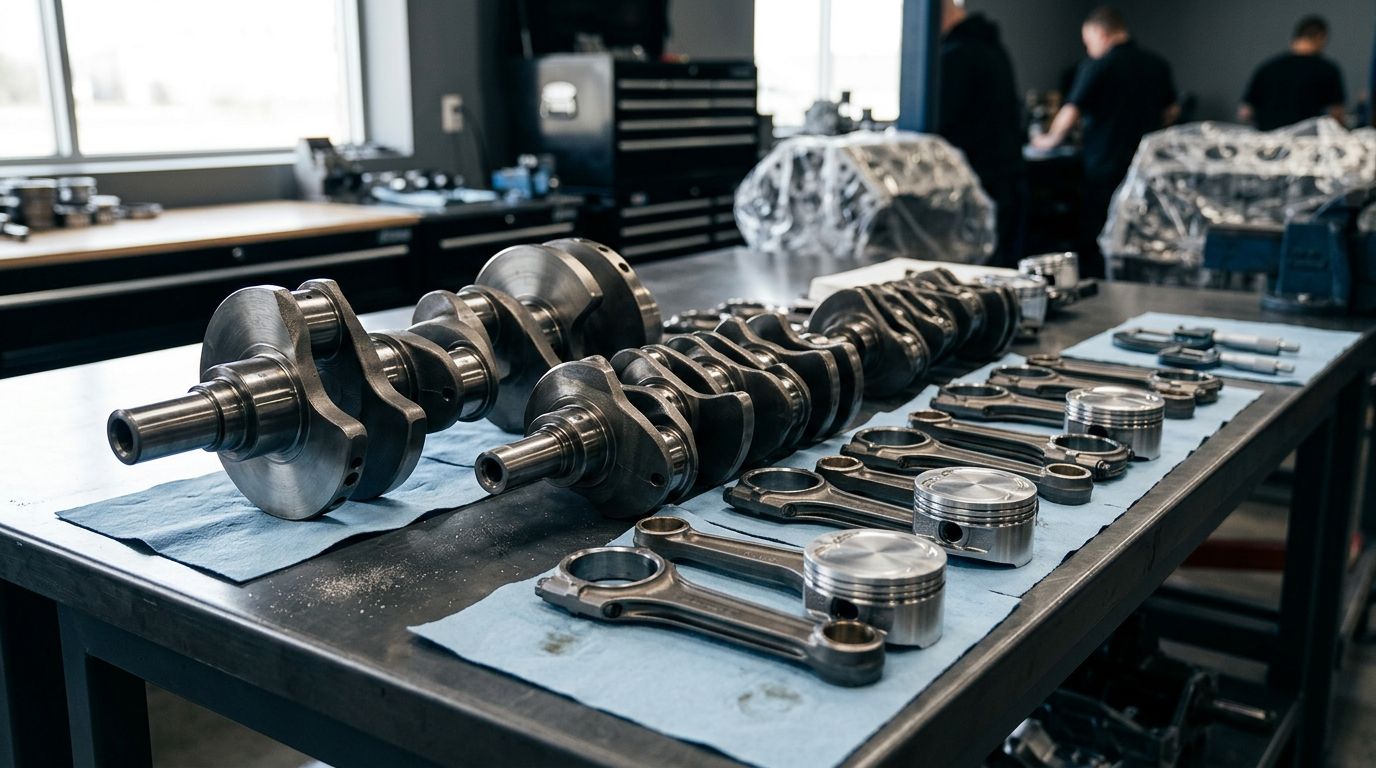
Getting the bottom end right matters just as much as the oiling system around it — a best-in-class LS3 stroker kit still needs consistent oil pressure under load to survive a full track day. The dry sump decision sits alongside those bottom-end choices, not after them.
What makes the best dry sump kit for an LS V8 track build
- Scavenge stage count — 2, 3 or 4-stage pump configurations, matched to how long and how hard the car corners
- Pan clearance — ground clearance for the specific LS block, chassis and ride height
- Tank/reservoir mounting — where the remote tank physically fits in the available chassis space
- Plumbing and mounting complexity — bolt-on kit versus custom fabrication
- Application track record — drag, endurance, oval or standing-mile use on LS platforms specifically
- Compatibility with the existing accessory drive and oil pan bolt pattern
At a glance
| System | Best for | Standout feature | Key limitation |
|---|---|---|---|
| Moroso dry sump | Shallow-pan LS V8 drag builds | Bolt-on kits built for common LS swap applications | Fewer stage options than pro-level systems |
| Peterson Fluid Systems | Endurance/road-course LS V8 builds | Multi-stage pumps proven under sustained cornering | Higher plumbing and mounting complexity |
| Dailey Engineering | Professional-level LS V8 race builds | Custom pan geometry matched to the chassis | Longer lead time for bespoke fitment |
| Aviaid | Budget-conscious wet-to-dry conversions | Broad application coverage for LS swaps | Still requires tank mounting and line routing |
| ARE (Automotive Racing Engines) | Weight-sensitive oval-track LS V8 classes | Compact, lightweight billet construction | Narrower LS-specific model range |
1. Moroso dry sump: best for shallow-pan LS V8 drag builds
Moroso builds complete dry sump kits aimed at engine swap applications, with pan geometry designed around common LS block dimensions. The kits are set up to bolt into an LS swap chassis without heavy fabrication, which is why they show up so often in drag-oriented LS builds where ground clearance is the priority, not sustained cornering load.
Moroso pros:
- Kits are packaged for LS swap applications rather than requiring ground-up plumbing design
- Shallow pan profile suits low ride height drag cars
- Simpler pump options keep the system approachable for a first-time dry sump install
Moroso cons:
- Fewer stage configurations available compared to endurance-focused systems
- Custom bracketry may still be needed depending on chassis and accessory drive
Moroso verdict: Buy if you're building a shallow-pan LS V8 for drag or standing-mile use and want a kit designed around LS swap dimensions rather than a from-scratch fabrication project.
2. Peterson Fluid Systems: best for endurance LS V8 builds under sustained cornering
Peterson has a long track record supplying multi-stage dry sump systems into endurance and road-course categories, including sustained-lap disciplines where oil control under continuous lateral g matters more than peak flow for a few seconds. That heritage is the reason it's the default recommendation for an LS V8 doing repeated track sessions rather than single passes.
Peterson pros:
- Multi-stage scavenge pump options built specifically for sustained cornering loads
- Remote tank designs give flexibility on where the reservoir sits in the chassis
- Established application history in circuit and endurance racing
Peterson cons:
- Plumbing runs are more involved than a bolt-on drag kit
- Custom mounting is usually needed outside factory race chassis
Peterson verdict: Buy for an LS V8 that spends real time on a road course or in endurance format, where a wet sump or a basic 2-stage system will eventually show oil pressure drop mid-corner.
3. Dailey Engineering: best for professional-level LS V8 race builds
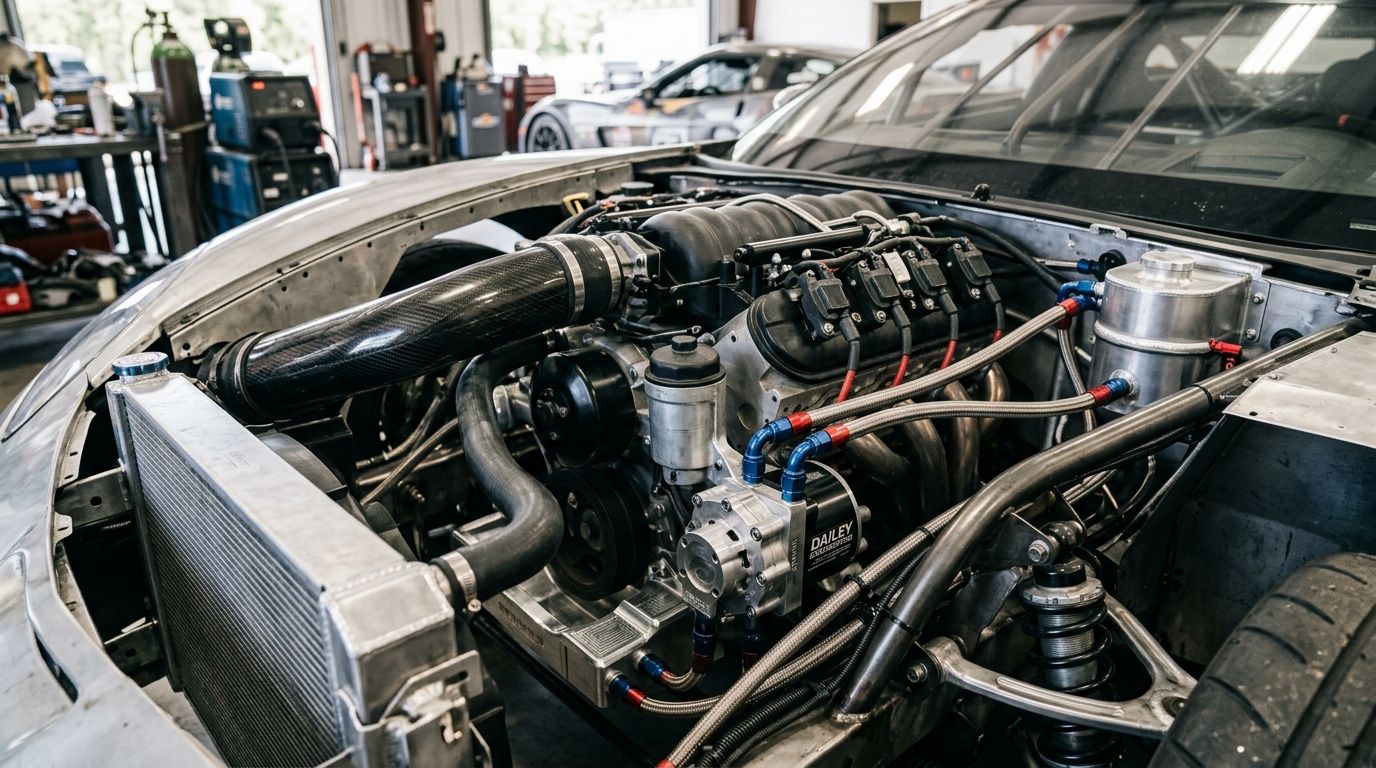
Dailey Engineering builds dry sump pans and pumps around the specific chassis rather than offering a one-size kit, which is why the brand turns up on Pro Mod and dedicated circle-track LS builds where every millimetre of clearance is engineered rather than assumed. This is the system for a build where a generic kit genuinely won't fit or won't perform.
Dailey pros:
- Pan geometry is tailored to the specific chassis and engine mounting position
- External pump options are built for sustained high-load racing use
- Proven in professional drag and oval racing categories
Dailey cons:
- Custom fitment usually requires direct consultation with the engine builder
- Lead times run longer than an off-the-shelf kit
Dailey verdict: Buy if a bolt-on system won't clear your chassis or your class rules demand a fully custom oiling solution — Wait if a standard kit will do the job at lower cost and shorter lead time.
4. Aviaid: best for wet-to-dry conversions on a budget-conscious LS V8 build
Aviaid has been in the dry sump business long enough to cover a broad spread of LS swap applications, and the brand is a common recommendation for a builder converting an existing wet sump LS V8 to dry sump without starting the project from a blank sheet. It sits between the bolt-on drag kit and the fully custom race system.
Aviaid pros:
- Broad LS application coverage for swap and conversion projects
- Multiple pump stage options across the range
- Long-established parts availability
Aviaid cons:
- Tank mounting and oil line routing still add real installation time
- Not purpose-built for one specific racing discipline the way Peterson or Dailey systems are
Aviaid verdict: Buy for a track-day LS V8 converting away from wet sump on a realistic budget, where the priority is proven parts availability over a bespoke fit.
5. ARE (Automotive Racing Engines): best for weight-sensitive LS V8 oval-track classes
ARE built its reputation on compact, lightweight billet dry sump systems for oval-track and circle-track racing, where every kilogram counts against a class minimum weight. For an LS V8 running in a weight-restricted category, the packaging advantage of a billet system can matter more than raw scavenge capacity.
ARE pros:
- Compact billet construction saves weight over cast alternatives
- Designed to fit tight engine bay clearance
- Established record in oval and circle-track racing
ARE cons:
- LS-specific model range is narrower than Moroso or Peterson
- Less common outside oval-track applications, so support and parts knowledge is more specialised
ARE verdict: Hold unless your class rules or chassis genuinely demand the weight and packaging advantage — for most road-course and drag LS V8 builds, Peterson or Moroso cover the job at lower complexity.
“Scavenge stage count matters more than tank size once an LS V8 is doing repeated laps under sustained cornering load.”
How we ranked these dry sump systems
Each system is ranked against the six criteria above, not against brand reputation. Moroso and Aviaid win on packaging simplicity for swap applications; Peterson and Dailey win on sustained-load scavenging; ARE wins on weight and clearance for a narrow set of oval-track classes. No single system wins across all six criteria, which is exactly why the ranking is use-case based rather than a single leaderboard.
A dry sump system only performs as well as the rest of the bottom end supporting it. If the block is already being built or rebuilt, check ARP fastener selection for a high horsepower LS engine and forged piston options for a high horsepower turbo build before finalising the oiling system, since pan clearance and pump drive routing both interact with bottom-end component choice.
Get engine combination advice
Talk through your LS V8 build with Spool Imports before locking in components.
Which dry sump kit should you choose?
For most track-prepped LS V8 builds doing repeated road-course sessions, Peterson Fluid Systems is the default pick — the multi-stage scavenge options handle sustained cornering without the fully custom lead time of a Dailey system. If the build is drag or standing-mile focused and ground clearance is the real constraint, Moroso is the practical choice. Reserve Dailey Engineering and ARE for builds where a generic kit genuinely won't fit the chassis or the class rules demand it.
FAQ
What's the best dry sump kit for an LS V8 track build?
Peterson Fluid Systems is the best dry sump kit for an LS V8 doing sustained road-course or endurance track sessions, because its multi-stage pumps are built for continuous cornering load rather than a single pass. Moroso is the better choice for drag or standing-mile LS V8 builds needing a shallow-pan bolt-on kit.
How many stages does an LS V8 dry sump pump need?
A 2-stage pump handles basic drag and street-track use, while 3 or 4-stage pumps are used on LS V8 builds doing sustained cornering where oil needs scavenging from multiple points in the pan. The right stage count depends on how long and how hard the car corners, not on horsepower alone.
Is a dry sump kit worth it for a street-driven LS V8?
A dry sump kit is rarely worth the added plumbing and mounting complexity on a purely street-driven LS V8, since wet sump systems with a baffled pan handle normal street driving fine. It becomes worth it once the car does regular sustained track sessions with sustained lateral g.
Can you run a dry sump system with a stock LS oil pan bolt pattern?
Most dry sump kits for LS V8 engines use a purpose-built pan rather than the factory bolt pattern, since the pan geometry itself is what enables the shallow clearance and scavenge point placement. Check the specific kit's pan against your block and chassis before ordering.
What's the difference between a dry sump and an accusump baffle system?
An accusump or baffled wet sump pan stores extra oil and manages surge inside the existing pan, while a dry sump removes oil from a shallow pan entirely into an external tank via a multi-stage pump. Dry sump systems handle sustained cornering better; baffle systems are a lower-cost step for occasional track use.
Do dry sump kits require an external oil cooler?
Most LS V8 dry sump installations run an external oil cooler alongside the remote tank, since the plumbing is already routed outside the block and the added surface area helps manage oil temperature under sustained load. Check the specific kit's recommendations for your application.
How does dry sump pan clearance affect ride height on an LS swap?
A dry sump pan is shallower than a wet sump pan because oil isn't stored in it, which is why dry sump systems are common on low-ride-height LS swaps. Pan depth still varies by manufacturer, so confirm ground clearance against your specific chassis before committing to a kit.
Which dry sump brand is best for oval-track LS V8 racing?
ARE (Automotive Racing Engines) is the common pick for weight-sensitive oval-track LS V8 classes because of its compact billet construction, though its LS-specific model range is narrower than Moroso or Peterson.
One last thing
The single most overlooked factor in dry sump selection isn't the pump, it's the accessory drive. A remote-mount pump needs a dedicated drive off the front of the crank, and retrofitting that drive onto an LS V8 already built with a stock harmonic balancer and pulley setup often forces a second round of parts changes. Sort the accessory drive and harmonic balancer before the dry sump kit arrives, not after.