Haltech ECUs decode a specific set of trigger patterns out of the box, and matching the right crank trigger kit to that decoding table is what separates a clean start-up log from a wiring headache. This guide ranks the five crank trigger kit configurations engine builders use with Haltech ECUs in 2026, matched to the build type each one actually suits.
- Haltech engine-specific billet trigger kits win for direct bolt-on fitment on supported platforms.
- OEM-retained crank and cam trigger setups are the best crank trigger kit for haltech ecu on a budget street build.
- ATI damper-integrated trigger wheels suit high-horsepower and drag applications running a Haltech ECU.
- Universal adjustable trigger wheels cover engine swaps with no factory Haltech-supported pattern.
- Flywheel-mounted triggers give the cleanest signal at high rpm on large-capacity stroker builds.
Why this matters
A Haltech ECU only reads what the trigger wheel tells it, and the wrong tooth pattern or sensor type turns a straightforward install into hours of trigger scope troubleshooting. Get the pattern wrong and you'll see erratic RPM readings, misfires under load, or a car that won't sync at all.
Most of the confusion comes down to three variables: tooth pattern, sensor type (Hall effect vs variable reluctance), and mounting position. Get those three right for your specific engine and which Haltech ECU suits your combination becomes a much easier decision, because the ECU and trigger kit need to agree on the same pattern before either one does its job.
Verdict up front: the Haltech engine-specific billet trigger kit is the best crank trigger kit for a Haltech ECU install on supported platforms, because it removes tooth pattern guesswork entirely. For budget street builds retaining a factory reluctor, the OEM-retained setup does the job without extra machining. For drag and high-horsepower combinations, the ATI damper-integrated trigger wheel earns its place by combining balancer and reluctor in one component.
What makes the best crank trigger kit for a Haltech install
- Tooth pattern support — Haltech's decoding library covers common patterns like 36-1, 60-2, 24+1 and OEM patterns such as Nissan's 360-tooth reluctor; the kit must match a pattern the ECU firmware actually decodes.
- Sensor type — Hall effect sensors output a consistent square wave regardless of cranking speed, while variable reluctance (VR) sensors need a minimum rpm to generate a clean signal.
- Mounting method — keyed, press-fit or bonded reluctor wheels each affect runout tolerance and how much crank nose machining is required.
- Cam sync requirement — sequential fuel and ignition control needs a cam signal alongside the crank signal; wasted-spark or batch-fire setups can run crank-only in some configurations.
- Signal integrity at high rpm — tooth count and air gap both affect how clean the signal stays as rpm climbs toward the redline.
- Physical clearance — sensor bracket position, damper diameter and accessory drive fitment all need to clear the reluctor wheel and sensor body.
Crank trigger kits at a glance
| Kit type | Best for | Standout feature | Key limitation |
|---|---|---|---|
| Haltech engine-specific billet kit | Direct-fit compatibility on supported platforms | Pattern pre-matched to Haltech decoding tables | Only available for platforms Haltech has released a kit for |
| OEM-retained crank + cam trigger | Budget street builds | No extra machining, keeps factory reluctor | Older reluctors can show wear-related signal noise |
| ATI damper-integrated trigger wheel | High-horsepower and drag builds | Balancer and reluctor combined in one unit | Higher cost than a standalone trigger wheel |
| Universal adjustable trigger wheel | Engine swaps with no factory pattern | Configurable tooth count for custom setups | Needs careful machining and trigger scope verification |
| Flywheel-mounted trigger | High-rpm stroker builds | Larger diameter gives more tooth resolution | Requires bellhousing access and correct sensor bracket |
1. Haltech engine-specific billet trigger kit: best for direct-fit compatibility
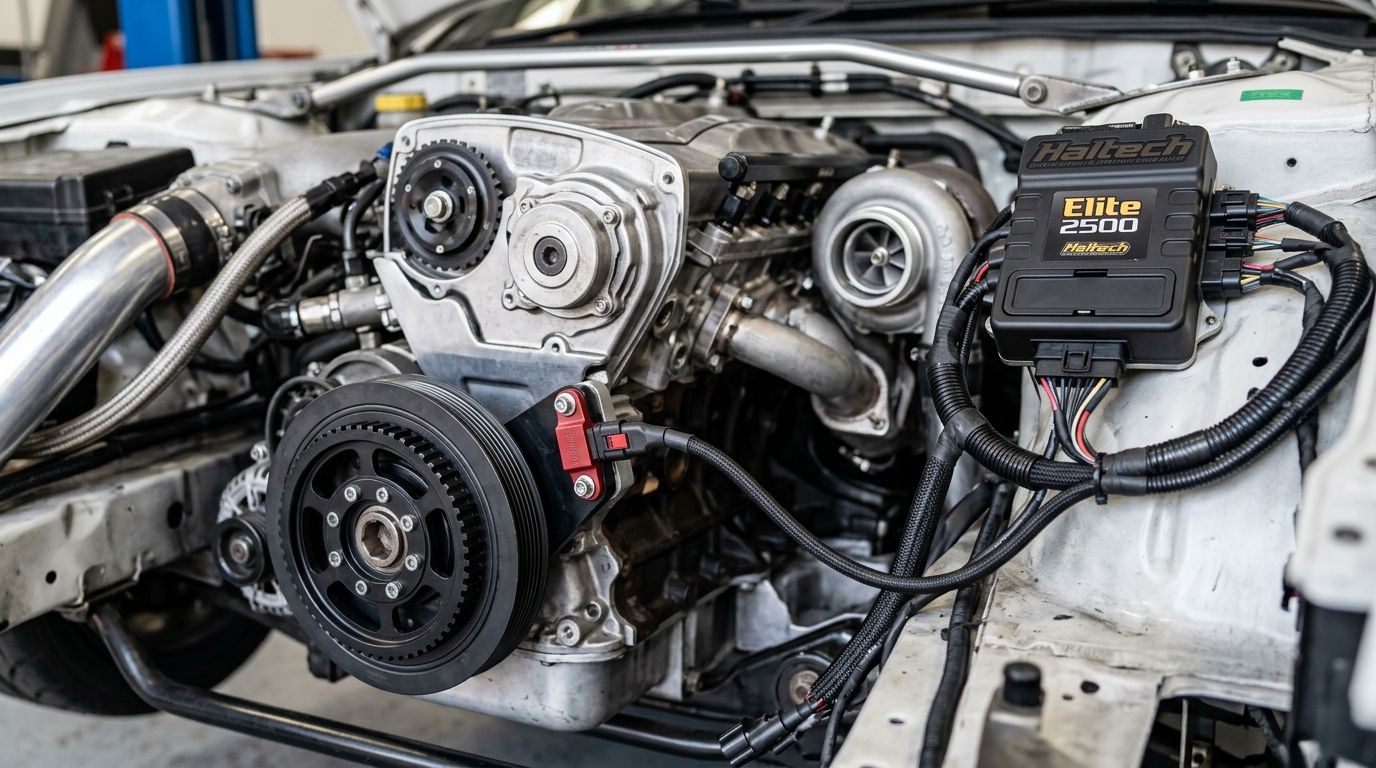
Haltech releases engine-specific trigger kits for popular platforms including Nissan RB, Toyota 2JZ and Ford Barra, matched precisely to the ECU's decoding tables. The kit bolts to the factory crank nose position and ships with a reluctor wheel already cut to a pattern Haltech firmware reads without a custom trigger table.
Haltech billet trigger kit pros:
- Pattern is pre-validated against Haltech's own decoding library
- No custom trigger scope work required for a supported platform
- Consistent signal quality across the kit
Haltech billet trigger kit cons:
- Limited to platforms Haltech has released a specific kit for
- Not a universal solution for uncommon engine swaps
Best for: engine builders running a supported platform who want a plug-and-play trigger setup with their Haltech ECU. Verdict: Buy when your platform is on Haltech's supported list.
2. OEM-retained crank and cam trigger: best for budget street builds
Retaining the factory crank reluctor and cam sensor keeps the trigger side of the install cheap and simple, since Haltech decodes most factory OEM patterns natively, including Nissan's 360-tooth crank signal used on RB-series engines. No machining, no new reluctor wheel, no extra sensor bracket to fabricate.
OEM-retained trigger pros:
- Lowest-cost option since no new hardware is needed
- Straightforward wiring using the factory sensor connectors
- Well-documented pattern in Haltech's software
OEM-retained trigger cons:
- A worn or damaged factory reluctor carries signal noise into the new ECU
- Not suitable if the factory reluctor has already been removed or damaged during a previous rebuild
Best for: street builds on a factory crank platform where the reluctor is in good condition. Verdict: Buy for a straightforward budget install; Skip if the factory reluctor is already damaged or missing.
3. ATI damper-integrated trigger wheel: best for high-horsepower and drag builds
An ATI Super Damper with an integrated trigger wheel puts the harmonic balancer and reluctor in one balanced assembly, which matters on engines making enough torque to flex a standard balancer under load. This is common on drag and high-output combinations where balancer failure risk goes up alongside cylinder pressure.
For background on why balancer selection matters on these builds, see the harmonic balancer guide for high-horsepower engines.
ATI damper-integrated trigger pros:
- Combines two functions in one properly balanced unit
- Reduces stack-up tolerance error between damper and trigger wheel
- Suited to sustained high-load, high-rpm use
ATI damper-integrated trigger cons:
- Costs more than a standalone trigger wheel and factory-style balancer
- Overkill for a mild street engine that doesn't need the extra durability
Best for: drag cars and high-horsepower street/strip builds already upgrading the balancer. Verdict: Buy for serious power builds; Hold for a mild street combination.
4. Universal adjustable trigger wheel: best for engine swaps with no factory pattern
Engine swaps into chassis without a factory-supported reluctor pattern need a universal trigger wheel with a configurable tooth count, commonly 36-1, 24-1 or 12-1, fitted to a custom crank pulley or hub. This is the fallback option when no engine-specific Haltech kit exists for the platform.
Universal trigger wheel pros:
- Works on almost any crank nose with the right hub adapter
- Tooth count can be matched to the exact Haltech firmware pattern needed
- Common choice for LS, K-series and rotary swaps without a dedicated kit
Universal trigger wheel cons:
- Requires machining work to mount correctly and true
- Needs verification on a trigger scope before the engine is started
Best for: engine swaps and non-standard platforms with no factory or Haltech-specific trigger option. Verdict: Buy, but budget time for setup and scope verification.
5. Flywheel-mounted trigger: best for high-rpm stroker builds
Mounting the reluctor at the flywheel or flexplate instead of the crank nose gives a larger diameter to work with, which means more teeth can be cut into the same rotation without the teeth becoming too small to read cleanly. That extra resolution helps on big-inch stroker combinations spinning to a high redline, where a small-diameter crank-mounted wheel runs out of usable tooth spacing.
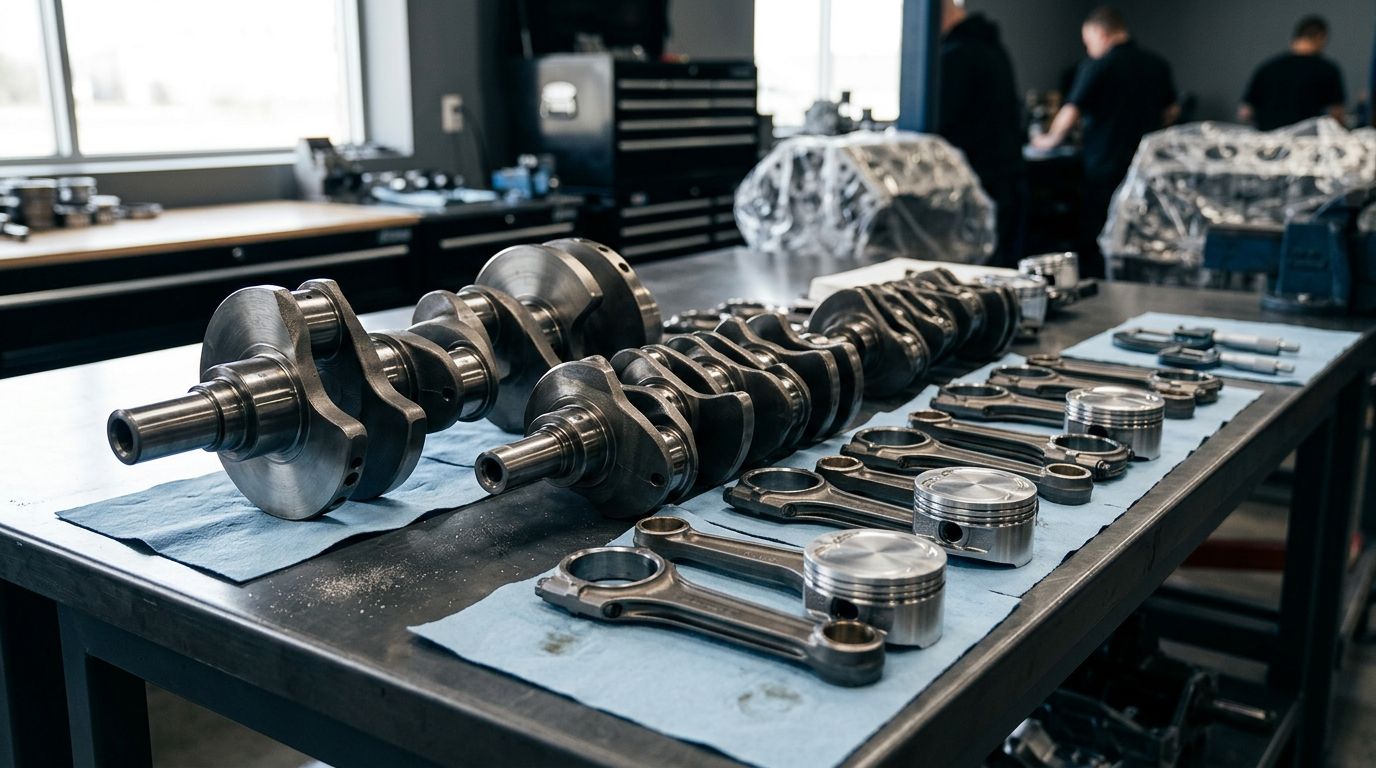
If you're speccing a stroker bottom end for this kind of high-rpm build, the crankshaft selection guide for choosing a billet crankshaft for your build covers how crank nose geometry affects trigger wheel mounting options.
Flywheel-mounted trigger pros:
- Larger diameter allows higher tooth counts for finer resolution
- Well suited to engines spinning past typical crank-nose trigger limits
Flywheel-mounted trigger cons:
- Needs bellhousing or transmission access to fit and service
- Sensor bracket has to be fabricated to suit the specific bellhousing
Best for: high-rpm stroker builds where crank-nose tooth resolution is the limiting factor. Verdict: Buy for dedicated high-rpm combinations; Skip on a standard street engine.
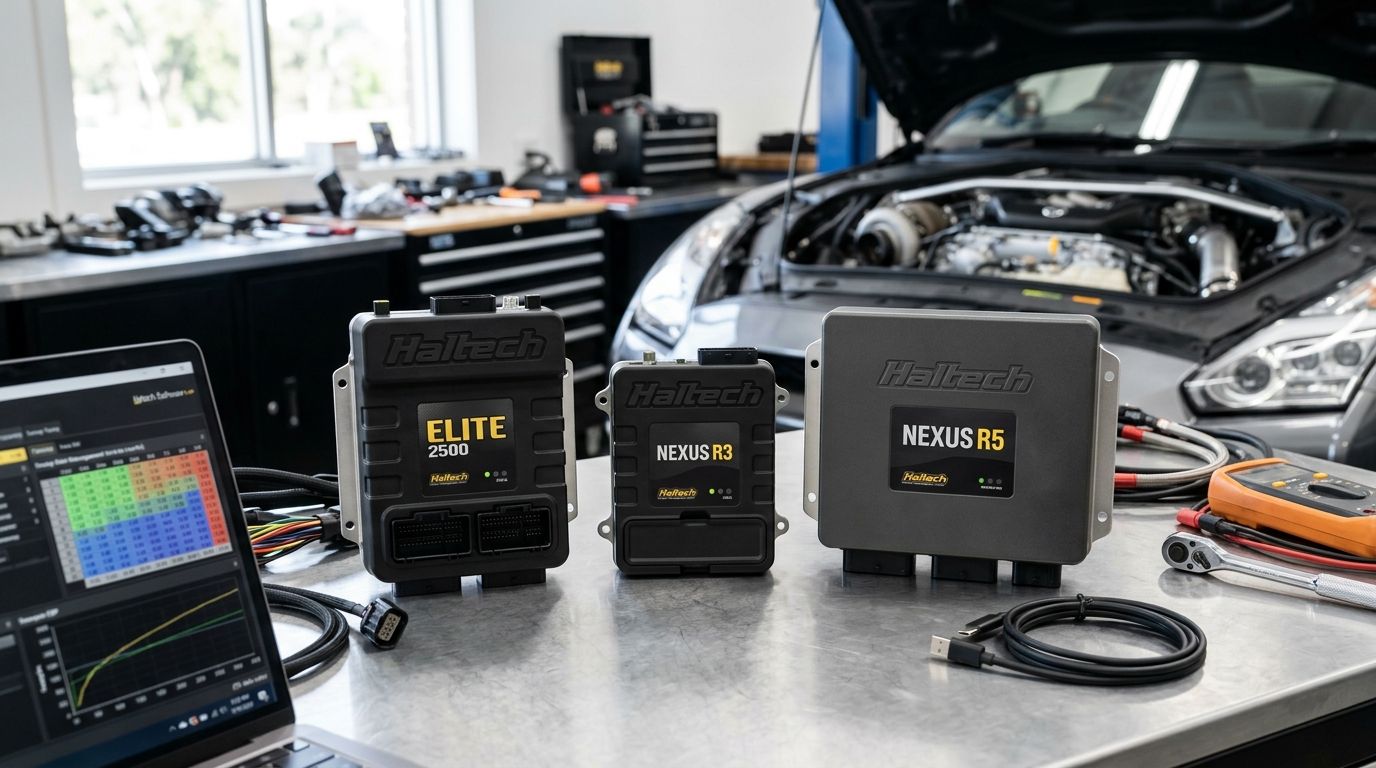
Compare Haltech ECU options
Match your trigger pattern to a Haltech ECU before you order the kit.
How we ranked
Each kit is ranked against the six criteria above: tooth pattern support in Haltech's firmware, sensor type, mounting method, cam sync requirement, signal integrity at rpm, and physical clearance. No kit wins on every criterion — that's why the ranking is a decision tree by use case, not a single leaderboard.
Which crank trigger kit should you choose?
If your platform has a Haltech-specific kit released for it, buy the engine-specific billet trigger kit and skip the custom trigger table work entirely. Running a factory crank platform on a budget build with a healthy reluctor, the OEM-retained setup is the practical call for 2026 street builds. Chasing four-digit power or drag numbers, spend the extra on the ATI damper-integrated trigger wheel. Swapping an engine into a chassis with no supported pattern, the universal adjustable trigger wheel is the only real option, and a high-rpm stroker build gets the cleanest signal from a flywheel-mounted trigger.
“The ECU only ever reads what the trigger wheel tells it — match the pattern first, tune second.”
FAQ
What is the best crank trigger kit for a Haltech ECU install?
For platforms with a Haltech-specific kit released, the engine-specific billet trigger kit is the best crank trigger kit for a Haltech ECU because the tooth pattern is pre-matched to the ECU's decoding tables. Budget street builds on a factory crank can retain the OEM trigger instead.
Does a Haltech ECU need a cam sync signal?
Sequential fuel and ignition control needs a cam signal alongside the crank signal. Batch-fire or wasted-spark setups can run on a crank-only trigger in some configurations, but sequential control needs both.
Is a Hall effect or variable reluctance sensor better for a Haltech trigger install?
Hall effect sensors give a consistent square wave signal regardless of cranking speed, which helps with cold starts. Variable reluctance sensors need a minimum rpm to generate a clean signal but are common on factory-style setups Haltech already decodes.
Can I use a universal trigger wheel with a Haltech ECU?
Yes, a universal adjustable trigger wheel works with a Haltech ECU as long as the tooth count is set to a pattern the firmware supports, such as 36-1 or 24-1. It needs correct machining and verification on a trigger scope before first start.
Why would I upgrade to a damper-integrated trigger wheel instead of a standalone one?
A damper-integrated trigger wheel, like the ATI Super Damper setup, combines the harmonic balancer and reluctor into one balanced unit, reducing stack-up tolerance error on high-horsepower and drag builds.
Do I need to replace the factory trigger wheel on a stock-bottom-end Haltech install?
Not if the factory reluctor is undamaged. An OEM-retained crank and cam trigger setup keeps cost and install time down since Haltech decodes most factory patterns natively.
What tooth patterns does Haltech support?
Haltech's decoding library covers common aftermarket patterns like 36-1, 60-2 and 24+1, plus a range of factory OEM patterns depending on platform. The specific kit or trigger table needs to match one of those supported patterns.
One last thing
A reluctor wheel that isn't running true shows up as timing scatter on the ECU log long before it shows up as a driveability complaint — it's worth checking runout with a dial gauge before the engine ever fires, not after a rough idle sends you back under the car.